

More news on this day
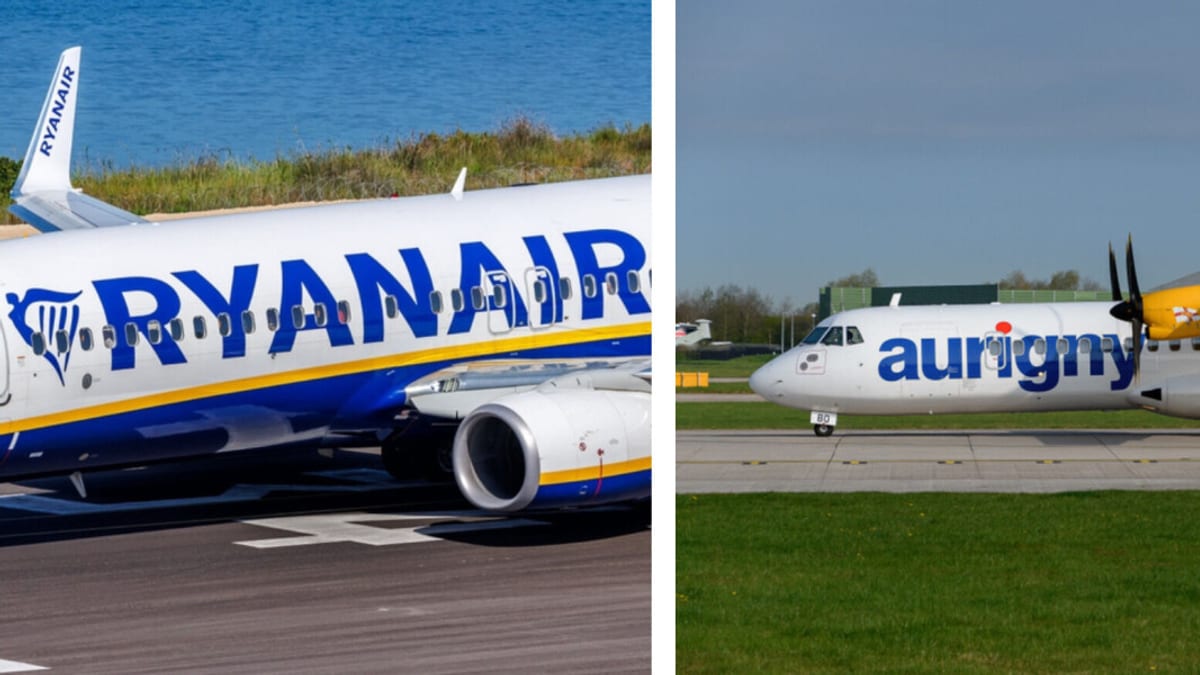
Ryanair is warning that a worsening jet fuel supply risk linked to tensions in the Middle East could force flight cancellations across its European network this summer, with routes between the Channel Islands and Paris already experiencing disruption.
Get the latest news straight to your inbox!
Fuel supply concerns raise risk of wider cancellations
Recent public statements from Ryanair leadership highlight mounting concern that jet fuel supplies for European airlines could be disrupted from June if instability in key producing regions persists. Industry coverage indicates that the carrier is assessing potential impacts on its summer schedule, one of the most important revenue periods of the year for low-cost airlines.
Reports suggest that Ryanair currently has sufficient fuel hedged and secured for near-term operations, and flights are continuing to run on schedule in early April. However, commentary from airline executives points to a scenario in which prolonged supply disruption could require targeted capacity cuts, particularly on leisure and regional routes where alternative connections exist.
Analysts following the sector note that the warning comes at a time when European demand for short-haul travel remains resilient, even as fuel prices and broader geopolitical risks increase. This combination heightens the stakes for airlines, which must balance ticket pricing, route profitability and reliability at the peak of the holiday season.
While there is no confirmation yet of broad-based cancellations, forward-looking guidance from Ryanair has shifted tone in recent days from purely growth-focused messaging to more cautious language that acknowledges the possibility of route adjustments if fuel supply tightens.
Channel Islands to Paris links already affected
Amid the broader warning, travelers in the Channel Islands are already seeing the impact on connectivity to the French capital. Publicly available schedule data and local media reports indicate that flights between Jersey and Guernsey and the Paris area have faced cancellations and withdrawals in recent months, shrinking direct options for island residents heading to the city.
Services involving Paris Beauvais, the main airport Ryanair uses for the French capital region, appear to be particularly sensitive to network reshuffles, as the airline prioritizes higher-volume city pairs during periods of uncertainty. For Channel Islands passengers, this has meant a growing reliance on connections through UK hubs such as London or regional French airports reached by other carriers.
Travel industry observers note that the loss or reduction of direct low-cost links can have a disproportionate effect on smaller island economies, where residents, students and business travelers often depend on a limited set of routes. In addition to leisure trips to Paris, many journeys involve onward rail connections to other parts of France and continental Europe.
Some itineraries that previously involved a single short-haul sector now require additional segments and longer travel times, raising costs and complexity for passengers. The situation underscores how fast-changing airline network decisions can ripple through peripheral regions when market conditions turn uncertain.
What summer travelers should expect
For now, Ryanair emphasizes through its public channels that scheduled flights are operating as planned, and that any passengers directly affected by route changes or cancellations are being contacted via email or text message. However, the airline’s recent fuel-related warnings, combined with the experience on Channel Islands to Paris routes, suggest that travelers should plan for a more fluid operating environment over the coming months.
Travel experts recommend that passengers with summer bookings involving the Paris region or other leisure destinations in southern Europe pay close attention to schedule updates. Monitoring bookings through airline apps and reconfirming flight times in the weeks and days before departure can help reduce surprises, particularly for those with tight connections or fixed event dates.
Flexible arrangements on accommodation and ground transport may also prove valuable if flight times shift or services are consolidated. In cases of cancellation, European rules provide for rerouting or refunds, but rebooking on popular routes at short notice can be challenging in the busy summer peak.
Families and groups traveling from the Channel Islands to Paris are being advised by local travel agents and consumer advocates to consider alternative routings, including connections via London, regional UK airports or mainland French cities reached by ferry and rail, in case remaining direct flights see further schedule changes.
Broader European aviation pressures
The warning from Ryanair comes against a backdrop of ongoing strain across the European aviation system. Recent months have seen disruption from air traffic control staff shortages, weather events and industrial action at various airports, all of which have contributed to waves of delays and cancellations across different carriers.
Data compiled by travel-rights and flight-tracking services shows that Europe has endured repeated days with hundreds of cancellations and thousands of delays, affecting major hubs including Paris Charles de Gaulle, London and Frankfurt. Although these events have not been driven solely by any single airline, they shape passenger expectations and leave the system with less resilience when new shocks emerge.
Fuel supply insecurity adds another layer of complexity for low-cost operators such as Ryanair, which typically run high aircraft utilization and tight turnarounds. If supply constraints intersect with peak holiday demand, airlines may opt to trim less profitable frequencies or seasonal routes in order to safeguard core services and maintain operational stability.
Industry commentators suggest that a combination of fuel risk management, potential rerouting of aircraft and more dynamic pricing is likely to define airline strategies through the 2026 summer period. Passengers, especially those traveling from smaller markets like the Channel Islands, are likely to feel those adjustments first through reduced choice and less direct connectivity.
Advice for affected Channel Islands and Paris passengers
For travelers already hit by cancellations between the Channel Islands and Paris, consumer organizations highlight the importance of documenting all communications with airlines and keeping records of any additional costs incurred as a result of disruption. Depending on the cause and timing of cancellations, some passengers may be entitled to compensation or reimbursement under European regulations.
Prospective travelers are being encouraged to book with clear awareness of fare rules, change conditions and refund policies, particularly on low-cost fares that can carry restrictions. Choosing payment methods that offer strong chargeback protections may also provide an added layer of security in case of schedule upheavals.
Those with essential trips, such as medical appointments, exams or time-sensitive business commitments in Paris, are advised to build in extra time and consider routing options that provide backup paths in case a particular sector is altered or withdrawn. This may involve traveling a day earlier than strictly necessary or splitting journeys across more than one carrier.
As Ryanair and other European airlines navigate a volatile mix of fuel uncertainty and strong demand, the experience of Channel Islands passengers serves as an early signal of how quickly connectivity to secondary destinations can change, and why close attention to travel plans will be crucial in the months ahead.