

More news on this day
Ryanair is warning that summer schedules could be disrupted across parts of its European network, with services to and from Paris particularly exposed as jet fuel supply risks, air traffic control pressures and ongoing constraints in French airspace converge ahead of the peak holiday season.
Get the latest news straight to your inbox!
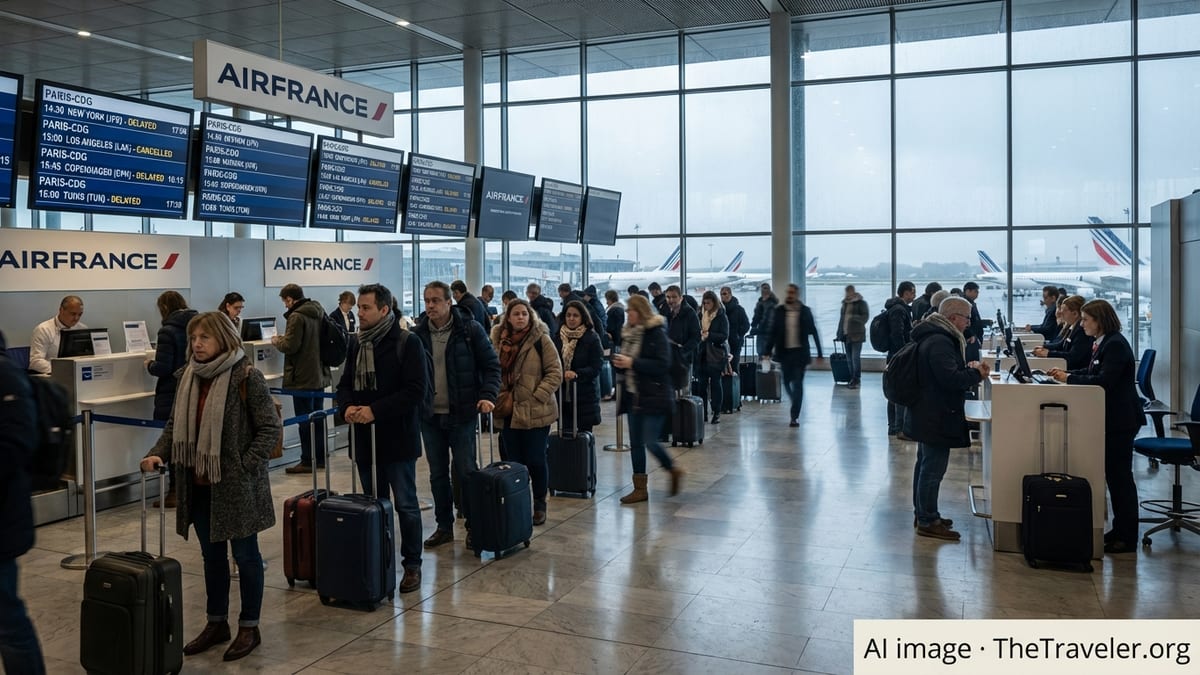
Fuel supply risks raise questions over peak summer schedules
Recent public comments from Ryanair chief executive Michael O’Leary highlight growing concern over jet fuel supply into Europe from June, coinciding with the start of the busiest travel months. Coverage in business and aviation media indicates the carrier is flagging a scenario in which between 10 and 25 percent of its fuel deliveries could be at risk if conflict in the Middle East and disruption around the Strait of Hormuz persist into late spring and early summer.
Analysts note that while fuel supply issues would affect all airlines operating in Europe, Ryanair is unusually exposed because of its large short haul network and the concentration of its annual profits in the June to September period. Publicly available reports suggest the airline is not currently cancelling flights in anticipation of shortages, but is signaling that targeted cuts could be considered on weaker or more marginal routes if supply tightens sharply.
For passengers, this raises the prospect of late timetable changes, particularly on secondary routes and at regional airports. Industry commentary suggests core, high demand city pairs are more likely to be protected if capacity reductions become unavoidable, meaning that thinner routes into and out of Paris, especially at secondary airports, may face a greater risk of adjustment.
Paris routes face added strain from French airspace constraints
Ryanair’s warning over potential summer disruption comes against a backdrop of recurring operational challenges in French airspace. Previous seasons have been marked by strike action among French air traffic controllers and transport workers, which in turn has forced short notice cancellations and delays on flights serving Paris and on overflights routed through French skies.
Published coverage of recent labor disputes in France shows that disruption has not been limited to domestic traffic. When strikes have taken place, airlines operating from Paris Charles de Gaulle, Orly, Beauvais and other French airports have been instructed to cut schedules, with some services being grounded entirely and others rerouted or delayed. In past episodes, Ryanair has responded by cancelling hundreds of flights and warning that tens of thousands of passengers were being affected across the wider European network.
Travel industry observers point out that Paris routes are particularly sensitive to this type of disruption because the French capital acts as both an origin and destination for leisure travelers and a critical waypoint for flights connecting northern and southern Europe. Any renewed strike activity or staffing shortage in French air traffic control this summer would likely have a disproportionate impact on services that rely on predictable access to Paris airports and surrounding airspace.
Network planning shifts could reshape Ryanair’s French presence
Ryanair has already adjusted parts of its French network in response to structural changes and cost pressures. In the past year, media reports have detailed the carrier’s withdrawal from several regional French airports, as well as seasonal reshaping of some routes that previously operated year round. These changes have reduced direct low cost connectivity for some smaller French cities while concentrating capacity on higher volume corridors.
Ahead of this summer, the airline is building capacity in key markets such as Spain, Italy and the United Kingdom, while keeping a close watch on costs and fuel availability. Industry analysis suggests that, if fuel supply becomes constrained, Ryanair is likely to defend its strongest, most profitable routes and revisit marginal ones. For France, that could mean that some Paris routes operated from smaller bases or with lower load factors face timetable cuts or frequency reductions before core city pairings are affected.
Network planners across the industry are also factoring in environmental taxes, minimum service rules and local regulations that influence the economics of short haul flying in France. For example, previous policy moves restricting certain domestic flights where rail alternatives exist have already narrowed the scope of some air services. These broader shifts add another layer of complexity to decisions about which Paris routes are retained if the airline needs to trim capacity because of fuel or airspace constraints.
What summer travelers on Paris routes should expect
Travel advisers and consumer groups reviewing the latest developments suggest that passengers booked on Ryanair’s Paris routes this summer should prepare for a more fluid operating environment than in a typical year. The combination of potential fuel supply challenges, the risk of strike related airspace disruption and ongoing staffing issues in European air traffic control points to a season in which schedules may be more subject to change at short notice.
Forward bookings for leisure travel remain robust across Europe, and publicly available data shows that low cost carriers continue to drive much of the capacity growth into major tourism markets. That dynamic may limit the extent to which airlines can simply pull back on flying, even if costs rise or operational risks increase. As a result, some analysts foresee a summer marked less by large scale cancellations and more by tactical cuts, retimed flights and substitution between routes as conditions evolve.
For travelers heading to or through Paris, this could translate into a need for greater flexibility around departure times, openness to alternative airports and heightened attention to schedule updates in the weeks and days before travel. Industry commentary indicates that passengers who rely on tighter connections, late night departures or less frequent routes could be more vulnerable to disruption if operational pressures intensify during peak weeks.
Broader implications for Europe’s low cost market
The potential for summer disruption on Ryanair’s Paris routes also feeds into wider questions about resilience in Europe’s low cost aviation model. The sector has previously absorbed shocks ranging from pandemics to airspace closures, often recovering quickly by moving aircraft and capacity to markets showing the strongest demand. However, simultaneous headwinds across fuel supply, labor relations and infrastructure are testing that flexibility.
Market watchers note that any sustained disruption impacting a major carrier’s Paris operations can ripple across competitor networks, as airlines adjust pricing, redeploy aircraft and seek to capitalize on gaps in capacity. At the same time, pressure on airport slots and terminal resources in major cities limits how quickly alternative services can be added when others are cut.
As the peak 2026 summer season approaches, the warning from Ryanair underscores how dependent European air travel remains on stable fuel flows and reliable air traffic control in a handful of critical states, including France. For passengers and the wider tourism industry, the focus will now be on whether geopolitical tensions ease and operational planning across airlines and regulators can keep any disruption to Paris routes within manageable bounds.