

More news on this day
Poland’s historic city of Kraków is set for a major aviation shake-up after Ryanair confirmed a $1.5 billion expansion of its base at John Paul II International Airport, adding aircraft and new routes that will significantly increase capacity and cement the city’s status as a key Central European hub from summer 2026.
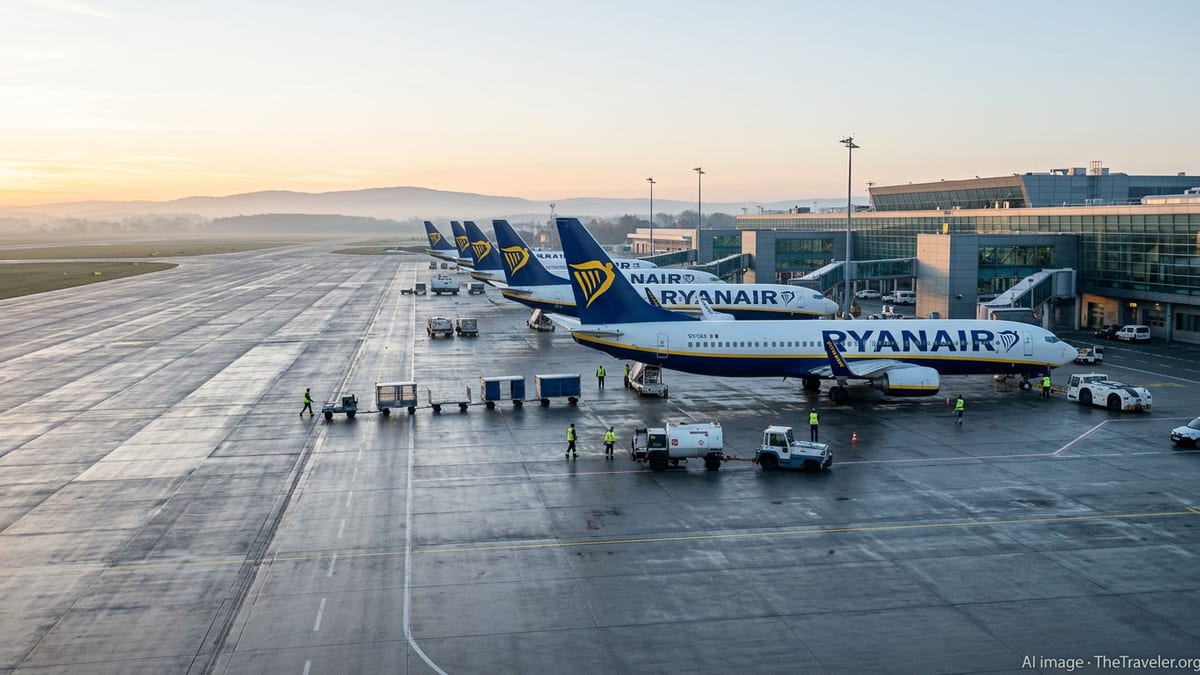
Record Investment Lifts Kraków to Ryanair’s Largest Central European Base
Ryanair, Europe’s largest low-cost carrier, announced it will base 15 aircraft in Kraków for the summer 2026 season, a move the airline values at around $1.5 billion in aircraft and associated infrastructure. The expansion, confirmed this week, positions Kraków as Ryanair’s biggest base in Central Europe and one of its most strategically important operations in the region.
The enlarged fleet will support a summer schedule that now totals 86 routes, connecting Kraków to a broad network of leisure and business destinations across Europe and the Middle East. Ryanair expects the additional capacity to deliver a 13 percent increase in traffic at the airport next summer, building on already-strong demand that saw more than seven million Ryanair passengers pass through Kraków last year.
Airport officials say the investment strengthens Kraków’s role in Poland’s aviation landscape, complementing growth at other regional airports while reinforcing the city’s international profile. The scale of Ryanair’s commitment also underscores the carrier’s confidence in long-term passenger demand from southern Poland and neighboring markets.
Four New Routes Broaden Kraków’s Reach for Summer 2026
At the heart of the announcement is a set of new routes that broaden Kraków’s reach and diversify its network. For summer 2026, Ryanair will launch services to Amman in Jordan, Bucharest in Romania, Sofia in Bulgaria and Budapest in Hungary, adding fresh city-break and sun destinations to the schedule.
Several of these destinations had previously been available from Kraków only during the winter season, or via limited frequencies. Moving them into the core summer program is expected to attract both outbound Polish travelers looking for new city and cultural experiences, and inbound visitors from Central and Eastern Europe seeking direct access to Kraków and the wider Małopolska region.
Travel industry observers note that the route mix reinforces Ryanair’s focus on city pairs with strong tourism and visiting-friends-and-relatives demand. Budapest and Bucharest offer competitive weekend-break alternatives to Western European capitals, while Amman opens a direct link between southern Poland and one of the Middle East’s most popular gateways for trips to Petra and the Dead Sea.
Economic Boost for Kraków and the Małopolska Region
Local authorities and tourism bodies are framing the expansion as a significant economic opportunity for Kraków and the broader Małopolska region. More aircraft and routes typically translate into higher passenger volumes, additional airport and ground-handling jobs, and increased demand for hotels, restaurants and cultural attractions.
Ryanair already operates one of its largest crew training and simulation centers at Kraków Airport, a facility that opened recently with an investment valued at more than 100 million euros. The training hub supports hundreds of highly skilled roles in aviation and adds a steady flow of visiting flight and cabin crew to the local economy, reinforcing Kraków’s position as both an operational and training center for the airline.
Tourism officials expect the enhanced connectivity to support the city’s efforts to extend stays beyond the traditional weekend city-break model. With more direct flights from regional capitals and secondary cities, Kraków is aiming to capture a greater share of cultural tourism, conferences and short business trips, helping to smooth visitor numbers across the year.
Competitive Pressures and Capacity Growth Across Poland
The Kraków announcement comes as Ryanair pursues a broader expansion strategy in Poland, including increased capacity at Warsaw Modlin and Gdańsk for the second half of this decade. The airline has signaled that Poland remains one of its fastest-growing markets, supported by strong outbound leisure demand, a large diaspora and competitive airport costs at regional gateways.
For Kraków, the enlarged base places competitive pressure on rival airports in southern Poland and neighboring countries that are courting similar low-cost growth. While some airports in Central Europe have seen carriers reduce capacity or adjust routes in response to rising fees, Kraków’s ability to secure a long-term commitment from Ryanair suggests a relatively stable cost environment and cooperative approach between airport management and the airline.
Analysts point out that the added capacity will intensify competition on certain routes, potentially leading to lower average fares and more frequent services on busy leisure and migrant corridors. That could benefit passengers across the region, though it may also challenge smaller carriers and alternative hubs that rely on higher-yield traffic.
What the Expansion Means for Travelers Planning Summer 2026
For travelers, the most immediate impact of the $1.5 billion investment will be broader choice and more flexibility when planning trips to and from Kraków in summer 2026. The enlarged schedule provides additional early-morning and late-evening departures on popular routes, as well as fresh city pairs that were previously only accessible via connections.
With 15 aircraft based locally, Ryanair will be able to adjust frequencies on strong-performing routes more dynamically, responding to peaks in demand during school holidays and major events. Travel agents in Poland say they expect attractive fare promotions as the airline looks to fill the extra seats, particularly in the shoulder months of May and September, which are already popular times to visit Kraków’s historic Old Town and nearby attractions such as Wieliczka Salt Mine.
The airline’s move also underscores a broader trend: regional European airports increasingly competing for low-cost capacity with long-term incentives and infrastructure partnerships. For Kraków, securing Ryanair’s largest Central European base ahead of summer 2026 sends a clear signal that the city intends to remain on the front line of that competition, leveraging its tourism appeal and growing business profile to anchor future growth.