

Ryanair is preparing one of its most ambitious summer schedules yet for 2026, leaning on a growing fleet of Boeing 737 MAX “Gamechanger” jets to stretch low fares across some of Europe’s longest nonstop leisure routes, linking Ireland, Poland, Spain, Germany, Hungary and beyond with year-round sun and city break hotspots.
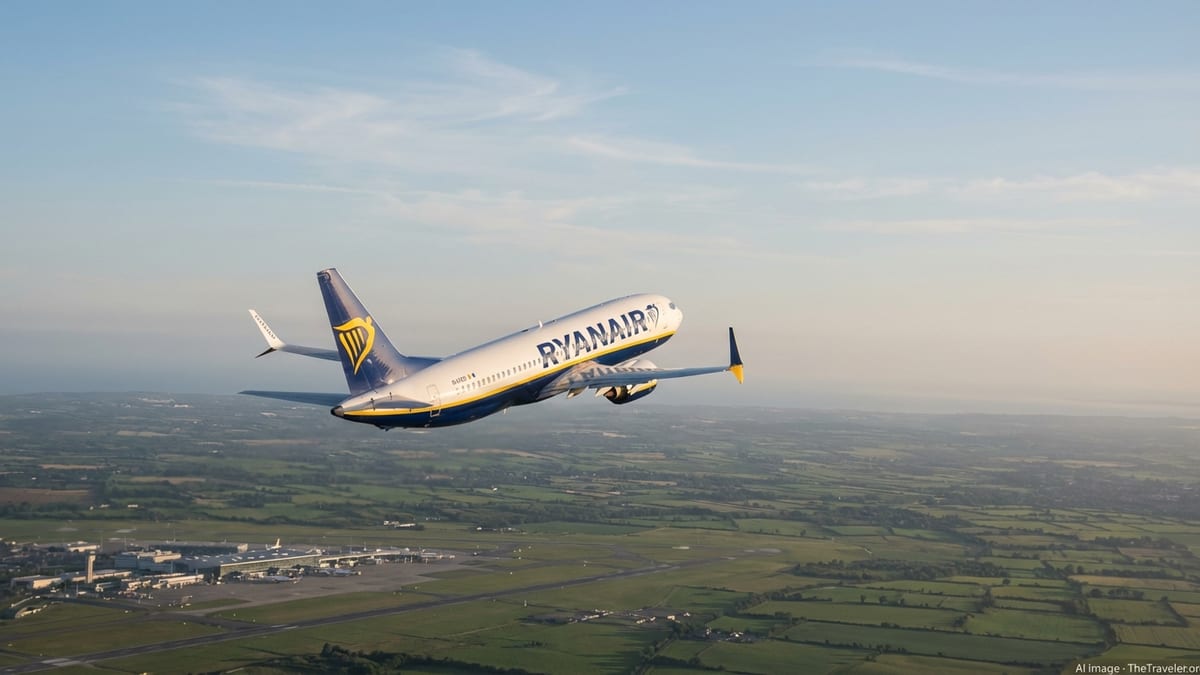
Ryanair Bets Big on Longer Sectors With the 737 MAX
The backbone of Ryanair’s latest growth push is the high-capacity Boeing 737 MAX 8-200, branded by the airline as the “Gamechanger.” Configured with up to 197 seats and offering improved fuel burn versus the older 737-800, the type is increasingly being deployed on longer, thinner leisure routes where every extra mile needs to be flown as efficiently as possible. Aviation data for recent seasons shows the MAX already operating some of Ryanair’s longest sectors, particularly from Central and Eastern Europe to the Canary Islands and other Southern sun destinations.
This trend is expected to accelerate into the 2026 season as the airline takes more MAX deliveries and retools its network. Routes such as Krakow to Tenerife South and Budapest to the Canary Islands have demonstrated that passengers are prepared to spend well over four and a half hours aboard a no-frills single-aisle jet in exchange for fares that often undercut traditional competitors by a wide margin. The MAX’s range and lower unit costs make these long intra-European hops financially attractive while keeping ticket prices within reach of budget-conscious travelers.
The same economics are now being applied across Ryanair’s core markets, from Ireland and Poland to Germany, Hungary and the wider Mediterranean. As the carrier juggles rising airport fees and aviation taxes in several countries, the MAX allows it to concentrate capacity on routes where demand is strong enough to support a nearly 200-seat aircraft flying some of the longest nonstops in its portfolio.
Ireland’s Role: Shannon and Dublin Push Further Into Europe
Ireland sits at the heart of Ryanair’s 2026 strategy, both commercially and symbolically. The airline has already signalled a record schedule at Shannon Airport for summer 2026, committing a fourth based aircraft and boosting total capacity to around 1.4 million seats across 30 routes. New links to major capitals such as Rome and Madrid, alongside Warsaw and Poznan in Poland, underline how Ireland is being plugged more tightly into a lattice of Central and Eastern European cities that themselves feed longer leisure services onward to the Mediterranean.
While not every Shannon route will be among Ryanair’s absolute longest sectors, industry observers expect the MAX to feature heavily on the busiest and most distance-intensive holiday services, including flights to Spain’s coastal and island resorts. Capacity growth on routes such as Alicante, Lanzarote, Malta and Reus has been flagged in official schedules, and these are precisely the kind of high-demand sun destinations where the Gamechanger’s economics are most compelling on four- to five-hour sectors.
Dublin remains the airline’s powerhouse Irish base and a key departure point for longer-haul European leisure flying. Recent network seasons have already seen the 737 MAX deployed from the Irish capital to far-flung holiday spots such as Paphos in Cyprus and the southern Algarve. As Ryanair reshapes its network under cost pressure elsewhere, routes of similar length out of Dublin are prime candidates for MAX deployment in 2026, giving Irish travelers a wider choice of affordable, long-range nonstops without needing to connect through continental hubs.
Poland, Hungary and Central Europe Feed the Longest Sun Routes
Central and Eastern Europe have emerged as some of the most important origin markets for Ryanair’s longest 737 MAX routes. Recent seasons already place Polish cities such as Krakow at the top of the airline’s distance tables, with services to Tenerife South, Gran Canaria and other Canary Islands pushing the MAX close to its operational limits in European skies. These routes routinely exceed four and a half hours of flying and stretch to well over 2,000 miles, yet still operate under the ultra-low-cost model that has defined Ryanair’s growth story.
Hungary, anchored by Budapest, plays a similar role. Flights from Budapest to Tenerife South, Gran Canaria and Fuerteventura have become standard-bearers for what affordable long-range narrowbody operations can look like within Europe. For many Hungarian travelers, these services are the most direct and budget-friendly way to reach year-round sunshine without resorting to a traditional charter package. The MAX’s additional seats allow Ryanair to spread costs over a larger passenger base, while its fuel efficiency helps offset the impact of rising airport charges in key leisure markets.
Looking toward 2026, network planners are expected to continue pairing Central European origins with distant leisure destinations in Spain, Portugal, Italy and North Africa, while also exploring new city-pair opportunities as aircraft availability improves. Routes that once might have been considered too long or marginal for older 737s can now be tested with the MAX, giving passengers in Poland, Hungary, Slovakia and neighboring countries more nonstop options to beaches and islands that were previously the domain of charter carriers.
Spain and Germany: Cuts, Consolidation and Longer Core Links
Ryanair’s evolving network in Spain and Germany highlights the tension between cost pressures and the desire to keep long leisure connections intact. Across Spain, the airline has confirmed a series of base closures and route withdrawals heading into 2026, including the suspension of operations at Tenerife North and reductions at regional airports such as Vigo, Asturias and several smaller mainland cities. These changes are linked to what the carrier characterises as uncompetitive increases in airport fees and planned hikes in charges from 2026.
Yet at the same time, Ryanair is safeguarding and even expanding capacity on core sun routes that connect major European cities to the Canary and Balearic Islands. The withdrawal from secondary airports frees up aircraft and crews that can be redeployed to longer, higher-yield sectors operated from larger bases. Germany is a case in point: while some routes from Berlin and secondary cities face cuts, services from major catchment areas to the Spanish islands and Southern coasts remain central to the airline’s leisure proposition, and are strong candidates for the high-capacity MAX.
The overall effect is a consolidation around fewer but more strategically important long-range leisure routes. Instead of dispersing capacity across dozens of smaller Spanish airports, Ryanair is concentrating on proven holiday corridors where a full 737 MAX can be reliably filled during peak season. For travelers from Germany, Scandinavia and Benelux, this means continued access to affordable nonstops even as certain regional links disappear from the schedule.
Network Reshuffle: Cuts in Some Markets, Growth in Others
The 2026 network will also reflect Ryanair’s readiness to walk away from routes and even entire regions where the economics no longer stack up. In Portugal’s Azores, for example, the airline has warned it may exit completely from March 2026 in response to a mix of rising fees, new taxation and what it views as unsupportive regulatory frameworks. Similar rhetoric has surrounded some of its Spanish and German retrenchments, as executives argue that higher costs inevitably translate into fewer routes and reduced regional connectivity.
At the same time, Ryanair is actively expanding elsewhere, particularly in countries that lower aviation taxes or keep airport charges competitive. Italy, Morocco, Croatia and parts of the Western Balkans have been named as winners from capacity shifted away from Spain’s regional network. Many of the new or reinforced routes in these markets are relatively long sectors from Northern and Central Europe to coastal resorts and island gateways, ideal territory for the 737 MAX.
This pattern underscores how the Gamechanger fleet is giving Ryanair more flexibility to redeploy aircraft quickly from loss-making markets to more welcoming jurisdictions. For travelers, the practical implication is that while some traditional low-cost links disappear, new long-range nonstops will appear on the map, often connecting lesser-known regional airports in one country to popular vacation spots in another, without the need for a major hub.
The Passenger Experience on Long Ryanair MAX Flights
Spending five hours or more in a single-class cabin with no complimentary meals or entertainment is not everyone’s idea of comfort, but many travelers are willing to trade frills for price. Ryanair’s 737 MAX 8-200s are fitted with slimline seats and a slightly redesigned cabin that allows for more headroom and larger overhead bins. The quieter engines and improved environmental performance compared with older 737s are tangible benefits on longer sectors, even if the underlying low-cost product remains largely unchanged.
For passengers flying from Ireland, Poland, Germany, Hungary and other markets to distant sun destinations, the value proposition is clear. By booking early and travelling light, it is often possible to secure fares that make a long weekend in the Canary Islands or a week on the Algarve cheaper than many domestic trips. The increasing number of long-distance MAX deployments means more of these journeys can be made nonstop, cutting out connections that add time, cost and complication to a holiday.
Travel industry analysts note that Ryanair’s growing network of long intra-European routes is also reshaping expectations around what constitutes a short-haul flight. Journeys that approach six hours in each direction would once have been the preserve of widebody or charter operations; now they are firmly embedded in the no-frills short-haul model, opening up remote islands and coastal regions to a broader demographic of travelers.
Redefining Affordable Access to Classic and Emerging Vacation Spots
As Ryanair fine-tunes its 2026 schedule, the airline’s longest nonstop routes form a visible spine that runs from Ireland and the United Kingdom through Central Europe to the beaches and islands of Southern Europe and North Africa. Traditional favorites such as the Costa del Sol, the Algarve and the Canary Islands are joined by emerging hotspots in Croatia, Albania and North Africa, often reached via flights that push the MAX’s range to the upper end of typical European operations.
For tourism boards and local economies in these destinations, the stakes are high. A single high-capacity route from Dublin, Krakow or Berlin can deliver tens of thousands of additional visitors over the course of a season, filling hotels, restaurants and excursion boats with budget-minded holidaymakers who might otherwise have chosen closer-to-home breaks. The capacity that Ryanair is shifting away from smaller Spanish and Portuguese airports is, in many cases, being recycled into such long-range routes, amplifying their impact.
In this sense, the 737 MAX serves as both an economic tool and a geographic bridge. By allowing Ryanair to operate some of its longest nonstop routes at lower cost, it is helping to redraw the mental map of what is reachable on a budget from Ireland, Poland, Spain, Germany, Hungary and other core markets. As the 2026 summer season approaches, travelers across Europe can expect a network that is leaner in some corners but richer in long-distance options, bringing far-flung beaches and city breaks within affordable reach of more passengers than ever before.