

More news on this day
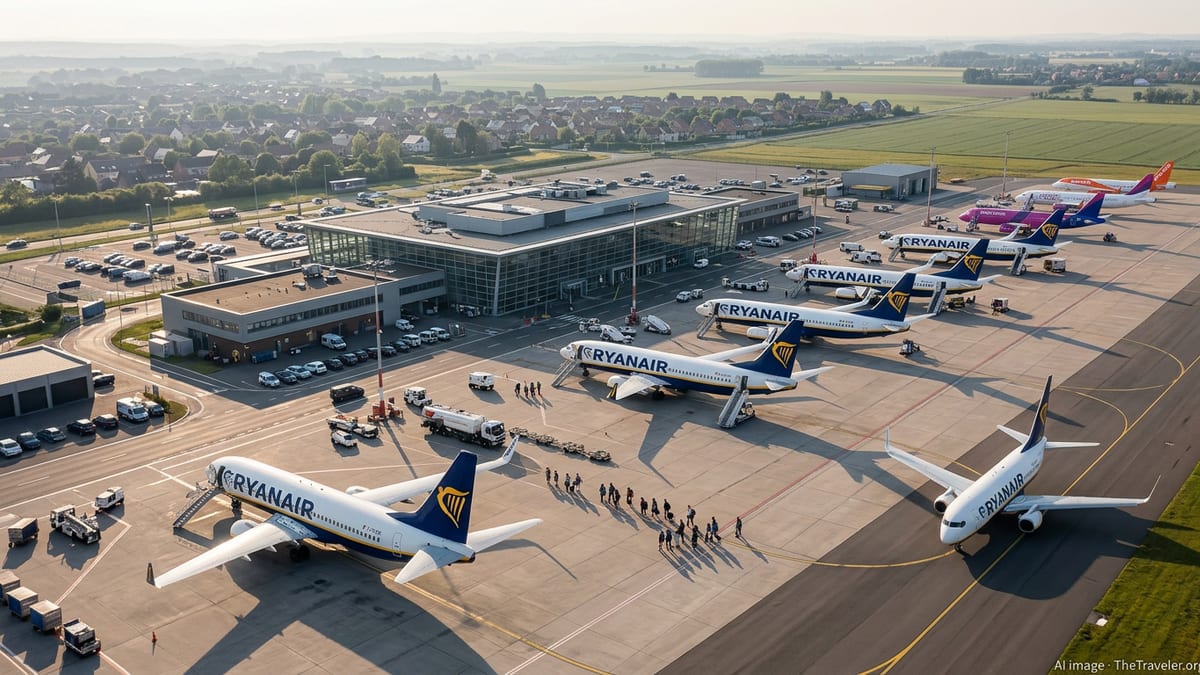
Ryanair is using 2026 to consolidate a low-cost takeover of Europe’s skies, unleashing record summer schedules, new bases and aircraft investments while legacy rivals face higher costs and regulatory headwinds.
Record Summer Schedules Signal a New Phase of Dominance
Across Europe, Ryanair is rolling out record-breaking summer 2026 programs that underline how far low-cost carriers have come from their scrappy origins. In markets from Italy to Croatia and Central Europe, the Irish airline is locking in capacity and market share at a time when many traditional flag carriers remain constrained by costs, climate regulation and sluggish demand on some long-haul routes.
In Italy, Ryanair has announced a record summer 2026 schedule from Turin, basing a third aircraft at the airport and operating more than 380 weekly flights across 32 routes. The move lifts annual capacity to around 3.3 million passengers, a 21 percent increase that further reinforces the carrier’s position as a key gateway operator for northern Italy. The expanded program includes new links to Sofia and Tirana as well as frequency boosts on more than 10 domestic and European routes.
In Croatia, Ryanair has unveiled its largest-ever summer offering, with nine based aircraft and 118 routes across seven airports. The 2026 program provides 4.3 million seats, about 5 percent more than last year, and strengthens the airline’s role in feeding the country’s booming tourism industry. New connections from Dubrovnik to Budapest and Gdansk illustrate how the network is increasingly binding together smaller city pairs that once relied on seasonal charters or cumbersome connections.
These localized capacity surges are part of a broader 2026 strategy in which Ryanair continues to add aircraft, routes and frequencies at a pace unmatched by most European competitors, pushing low fares deeper into secondary cities and regional airports.
Strategic Base Expansion from Budapest to Tirana
Ryanair’s growing base network is central to its 2026 push. The airline now operates from nearly 100 bases, and recent announcements show a clear focus on countries where governments have lowered aviation taxes or kept airport charges competitive, enabling rapid low-cost expansion.
In Budapest, Ryanair will base an 11th aircraft for the 2026 summer season, supporting a record 6.5 million annual seats and 67 routes from the Hungarian capital. The expansion follows Hungary’s decision to abolish its aviation tax from January 2025, a move Ryanair credits with enabling 15 percent growth at Budapest in just over a year. The enlarged program adds new routes to leisure and city-break destinations including Dubrovnik, Krakow, Lamezia, Marrakech and Newcastle, while underpinning thousands of tourism-related jobs.
To the south, Ryanair is preparing a new three-aircraft base in Tirana from April 2026, representing an investment of roughly 300 million dollars. The Albanian capital will be linked to more than 30 destinations, many of them new, positioning Tirana as a fast-rising low-cost hub on the Adriatic fringe. Industry analysts note that the base allows Ryanair to tap pent-up demand from diaspora traffic and emerging tourism markets, while strengthening its presence in the Balkans against regional rivals.
Similar logic lies behind new or expanded bases in places like Trapani in Sicily, Gdansk in Poland and Liverpool in the United Kingdom, where Ryanair is stationing additional aircraft for summer 2026. By spreading capacity across a lattice of cost-effective airports, the carrier can quickly reallocate planes between markets, chasing demand spikes and negotiating leverage over fees.
Taxes, Fees and the Battle Over Europe’s Airport Economics
Ryanair’s rise in 2026 is tightly bound to the economics of Europe’s airports and the taxes that surround them. Where governments cut charges or scrap aviation levies, the carrier tends to respond with more aircraft and routes. Where fees are raised, it has shown itself willing to pull back capacity and publicly challenge providers.
Hungary and Croatia are among the markets rewarded with growth after moves to maintain or enhance cost competitiveness, while Italy’s regional airports have benefited when local or regional authorities resist additional burdens. In Turin, Ryanair’s record schedule is backed by cooperation with airport operator SAGAT, which the airline credits with providing efficient operations and competitive conditions.
By contrast, Spain has become the focal point of Ryanair’s pushback in 2026. The airline is cutting around 1.2 million seats, or about 10 percent of its summer capacity, across regional Spanish airports and shutting its presence at Asturias amid a dispute with operator Aena over what it describes as uncompetitive fee increases. While Ryanair is simultaneously adding seats at larger airports such as Madrid, Barcelona and Palma de Mallorca, the cuts at smaller fields underscore how quickly low-cost networks can shift when airport charges rise.
Similar tensions are visible in the United Kingdom, where Ryanair is expanding in Liverpool for 2026 with a sixth based aircraft and new routes to Marrakech, Tirana and Warsaw, even as it criticizes higher air passenger duty. The carrier’s repeated calls for governments to lower or freeze charges reflect a broader contest over who ultimately pays for investments in airport infrastructure and climate policies: airlines, passengers or taxpayers.
Legacy Carriers Squeezed by Climate Costs and Long-Haul Exposure
The context for Ryanair’s 2026 surge is not just its own strategy but the pressures confronting Europe’s traditional full-service airlines. While many of these carriers have restored profitability since the pandemic, they face rising fuel expenses, stricter environmental regulations and intensifying competition on long-haul corridors from Gulf and Turkish rivals.
Executives at major groups such as Air France-KLM have warned that European climate rules, including mandates to blend costly sustainable aviation fuel into kerosene, risk making a large share of long-haul flying uneconomic over the next decade. Those concerns have already prompted route cuts to parts of Asia and a broader reassessment of network strategies, pushing some incumbents to focus more on premium traffic and trunk routes where they can still command higher yields.
Low-cost carriers, by contrast, largely avoid the longest intercontinental sectors where climate policy costs are highest and fleet utilization is more complex. Their point-to-point, short and medium-haul focus means they are more exposed to labor, airport and fuel costs per seat, but less to the volatility and regulatory burdens that come with operating global connecting hubs. As a result, they are often better positioned to keep fares low on intra-European routes even as external costs rise.
In 2026, this divergence is visible in capacity data. While many legacy groups are planning only modest growth within Europe as they juggle fleet renewals and sustainability investments, Ryanair and other low-cost carriers are adding seats in double-digit percentage terms in some markets, rapidly capturing share in leisure and visiting-friends-and-relatives segments that once filled the back cabins of legacy airlines.
What Ryanair’s 2026 Empire Means for Europe’s Travelers
For passengers, the consolidation of low-cost power in 2026 brings a mix of benefits and risks. On the positive side, Ryanair’s record schedules from cities like Turin, Zagreb, Budapest and Bratislava offer more non-stop choices than ever, especially between secondary cities that previously required a connection through a major hub such as Frankfurt, Paris or London. Promotional fares tied to the launches of new summer programs, often starting below 30 euros one way, keep downward pressure on prices across the market.
Tourism boards and regional governments are eager to harness this connectivity. Croatia and Hungary, for example, highlight the role of low-cost links in smoothing seasonality and spreading visitor flows beyond traditional hotspots. Ryanair in turn emphasizes the jobs created by based aircraft, from ground handling and engineering to hospitality and retail in surrounding communities.
The risks arise where markets become heavily reliant on one dominant low-cost provider. As the Spanish capacity cuts show, routes can be withdrawn quickly if airport charges rise or regulatory disputes erupt, leaving regions scrambling to replace lost traffic. Consumer groups also warn that while competition between low-cost carriers remains robust on many popular routes, consolidation or retrenchment among smaller rivals could gradually reduce choice in some corners of the continent.
For now, however, the momentum in 2026 clearly favors Ryanair and its peers. With a growing fleet of next-generation narrowbody aircraft, a deep pipeline of airport deals and a willingness to shift capacity at short notice, Europe’s largest low-cost carrier is shaping the map of intra-European travel more decisively than ever before.