

More news on this day
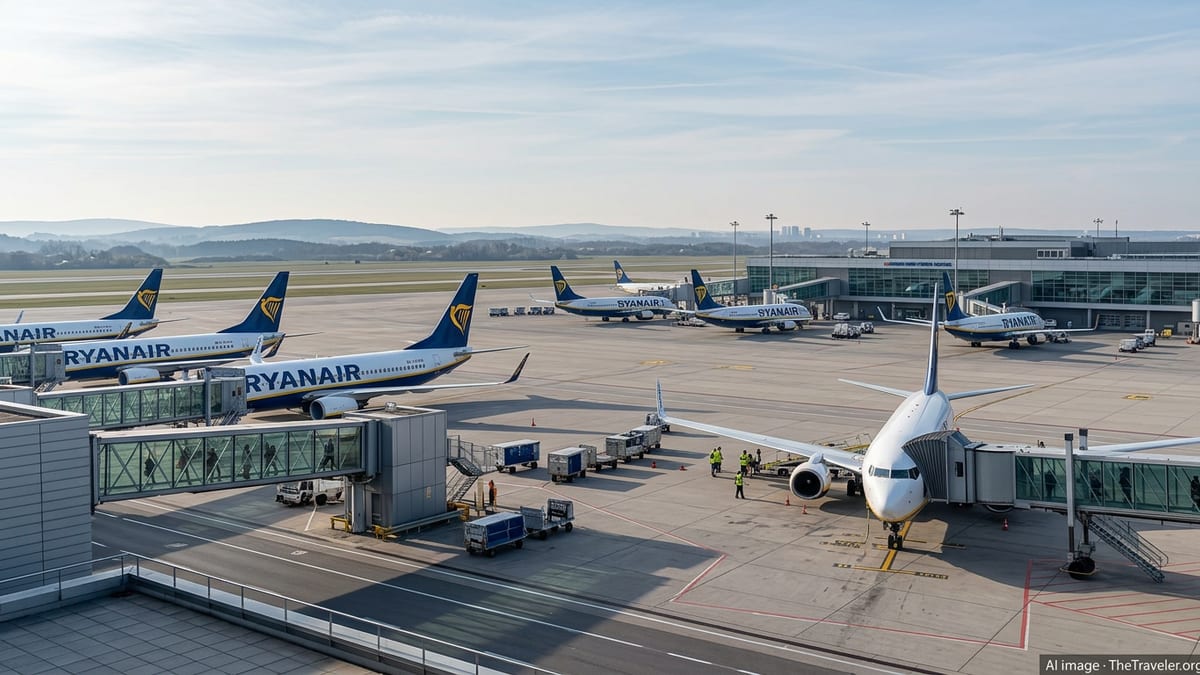
Ryanair is reshaping Europe’s skies in 2026, as aggressive route expansion from Poland, Morocco, Albania and the United Kingdom unlocks fresh city pairs, fuels regional tourism and intensifies competition among low-cost carriers.
Poland Becomes a Powerhouse in Ryanair’s 2026 Growth Strategy
Poland has emerged as one of Ryanair’s most dynamic growth markets, with the carrier rolling out record schedules and new links that firmly anchor the country in Europe’s low-cost network. For summer 2026, Ryanair has unveiled its biggest ever program from Katowice, offering 26 routes including new services to Malaga, Lamezia Terme, Aarhus and Tirana, supported by the basing of a ninth aircraft at the Silesian airport. This builds on an already strong winter 2025 and winter 2025/2026 schedule and reflects rising demand from both Polish travelers and inbound visitors.
Poznań is also set for a significant uplift. Ryanair’s summer 2026 schedule from the western Polish city features 39 routes, with three freshly announced destinations Podgorica, Shannon and Tirana and five based aircraft. The expansion further entrenches Poznań–Ławica as a key departure point for both leisure and business traffic in central Europe, while boosting connectivity to the Balkans and Ireland.
Across the country, Ryanair’s long term commitments are visible in Warsaw Modlin’s ambitious growth plan, which envisages up to 25 new routes starting from 2026 and a multi year increase in passenger volumes. Together with recent investment in Kraków and Gdańsk, the additions at Katowice and Poznań form part of a broader strategy that positions Poland as a cornerstone of the airline’s Central and Eastern European footprint.
For travelers, the Polish growth means more direct options to southern sun spots and emerging cities, shorter journey times and sustained pressure on fares. For regional airports and tourism boards, it signals rising visitor numbers and fresh opportunities to market lesser known destinations to a wider European audience.
Morocco’s Low Tax Strategy Pays Off With New Routes and Base Growth
Morocco has quickly become one of the principal winners of Ryanair’s shift towards markets that keep aviation taxes low and airport charges competitive. The airline has identified the North African kingdom as a key growth engine through the end of the decade, aligning its network planning with government efforts to boost year round tourism and attract European city breakers seeking winter sun.
The spotlight is on the country’s expanding bases and new services from across Europe, including the United Kingdom and Poland. Marrakesh in particular is set to benefit from enhanced links to secondary UK cities, tapping into strong outbound leisure demand while opening up easier access for Moroccan travelers heading to Europe. New winter 2025/2026 services feeding into Morocco from airports such as Málaga, where Ryanair has strengthened its seasonal program, are expected to accelerate flows in both directions through early 2026.
Rabat is also positioned for a breakout year. Ryanair has highlighted the Moroccan capital among its top destinations for 2026, supported by a new two aircraft base that will increase route diversity and frequencies. The move deepens the airline’s presence beyond classic holiday spots and underlines Morocco’s role as an all year hub for value focused European travelers.
As capacity rises, Morocco’s tourism sector anticipates further gains in visitor numbers from Central and Eastern Europe, including Poland, where rising disposable incomes and appetite for affordable long weekend escapes align neatly with Ryanair’s growing schedule to North Africa.
Albania’s Tirana Emerges as Europe’s Fastest Growing Low Cost Hub
Albania is undergoing a rapid transformation from niche destination to mainstream city break and beach gateway, and Ryanair’s 2026 plans put Tirana at the heart of that shift. The airline will base a fourth aircraft in the Albanian capital for summer 2026 and operate 43 routes, including 20 new destinations ranging from Alghero and Baden Baden to Eindhoven, Genoa, Memmingen, Parma and Wroclaw.
This expansion follows a zero aviation tax policy and an incentive driven approach from Albanian authorities and the airport operator, which has encouraged carriers to ramp up services. Ryanair has signaled its intent to grow further to up to six aircraft and more than 60 routes by 2030, illustrating how Tirana is evolving into one of Europe’s most important low cost nodes.
New links from Poland underscore the deepening connection between Central Europe and the western Balkans. With Tirana joining Malaga, Lamezia Terme and Aarhus among Katowice’s new summer 2026 destinations, Polish travelers will gain easy access to Albania’s Adriatic coast and mountain hinterland. These additions complement new routes from Poznań and other Polish cities, weaving Albania more tightly into Europe’s short haul travel web.
For Albania, the payoff is broader than airport traffic. Hotels, guesthouses and tour operators are preparing for a further surge in arrivals from both established and emerging source markets, encouraged by the presence of a price sensitive airline that can sustain high frequencies throughout the summer season and shoulder periods.
UK Airports Ride a Wave of New City and Sun Links
The United Kingdom remains another crucial pillar in Ryanair’s 2026 strategy, with regional airports standing out as particular beneficiaries. The airline has recently unveiled new routes that connect the UK directly to “year round sunshine and lively cities,” including additional services to Marrakesh in Morocco and Tirana in Albania, as well as expanded frequencies to popular European sun destinations.
Liverpool John Lennon Airport, one of Ryanair’s longest serving UK partners, is among the airports reporting rising traffic. With extra capacity planned on routes such as Alicante, Barcelona, Faro, Ibiza and Kraków, the carrier expects to carry more than 2.4 million passengers a year through the Merseyside gateway in 2026. Similar trends are being noted at other regional hubs that have secured new or restored services to Central and Eastern Europe and North Africa.
The new mix of city and leisure routes reinforces the UK’s role as a feeder market into the growing networks of Morocco and Albania, while tightening ties with Poland’s expanding regional airports. For British travelers, the changes mean greater choice from closer to home airports, often sidestepping the congestion and higher costs associated with larger hubs.
At the same time, inbound tourism bodies in the UK are positioning the increased connectivity as a chance to attract more visitors from emerging markets such as Albania and Morocco, where familiarity with British destinations is rising alongside airline capacity.
Ryanair’s 2026 Network Signals a New Phase for European Aviation
The convergence of Ryanair’s expansion in Poland, Morocco, Albania and the UK highlights a broader shift in European aviation towards secondary cities, lower costs and year round tourism development. Instead of focusing primarily on traditional hubs, the airline is deepening its presence at regional airports that offer growth incentives and room for expansion, from Katowice and Poznań to Tirana and emerging Moroccan bases.
Financially, the strategy dovetails with Ryanair’s strong performance into its 2026 financial year and its continued investment in fleet modernization. An increasing number of “Gamechanger” aircraft, which offer more seats with lower fuel burn and noise, are being deployed on key Polish and Mediterranean routes, allowing the carrier to add capacity while maintaining its cost advantage.
For competitors, the aggressive rollout of new routes in 2026 raises the stakes. Other low cost and hybrid airlines face mounting pressure to defend their positions in markets like Poland and the western Balkans, while legacy carriers must decide whether to contest thinner point to point routes or focus on feeding their hubs. Airport operators, meanwhile, are recalibrating investment and incentive strategies in a bid to secure or retain Ryanair capacity.
For passengers, the immediate impact is clear: more nonstop options linking mid sized cities across Europe and North Africa, often at lower prices, and a widening map of weekend break and holiday possibilities stretching from Baltic Poland to the souks of Morocco and the boulevards of Tirana.