

More news on this day
Ryanair’s push to scrap paper boarding passes and move fully to digital check in is reshaping how millions of Europeans fly, but a little understood £55 charge lurking in the small print means that travellers who misunderstand the new rules could see the cost of a cheap ticket jump sharply at the airport.
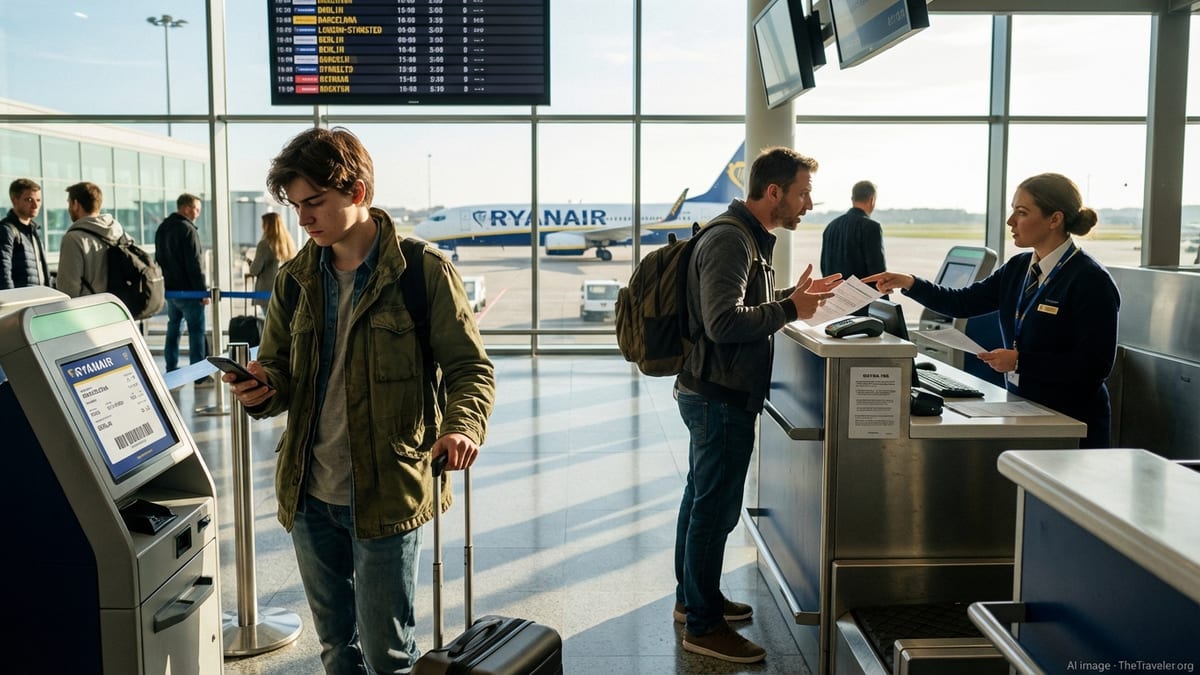
What Has Changed in Ryanair’s Boarding Pass Policy
Ryanair has been nudging passengers toward its app and digital boarding passes for years, but the airline has now gone much further. As of November 2025 it has stopped allowing customers to download traditional printable boarding passes for most routes, insisting instead that travellers complete check in online and use a digital pass stored in the MyRyanair app. Paper passes printed at home, once a standard part of low cost flying, are being phased out on nearly all services.
The new approach is part of a broader digital strategy and a cost cutting exercise. Ryanair says that concentrating everything in its app reduces queues at airport desks, speeds up boarding and cuts hundreds of tonnes of paper waste each year. The airline also argues that it allows staff to handle disruption more efficiently, for example by pushing gate changes and rebooking offers straight to passengers’ phones in real time.
However, the change also alters the financial stakes for anyone who gets check in wrong. Where once travellers could often fall back on a printed email or a reissued pass at the airport, Ryanair’s rules now tightly link boarding to digital check in and to a series of fees that apply if that process is not completed correctly.
The most controversial of these is the £55 airport check in and boarding pass reissue charge, a fee that has long been buried in the airline’s table of optional extras but is now much easier to trigger if passengers arrive at the terminal without a valid digital pass.
How the £55 Fee Works in Practice
The £55 charge is officially described as an airport check in or boarding pass reissue fee. In simple terms, if you show up for a Ryanair flight without having properly checked in online and without a usable boarding pass, staff can send you back to the check in desk, where you may be charged £55 per person for manual processing.
This fee has historically hit passengers who forgot to check in at home or who turned up with the wrong documents. Under the new digital regime, it becomes a particular risk for travellers who assume that a confirmation email or a partially completed app check in is enough. If the system does not show you as fully checked in, or if you cannot produce the digital pass in the app when you reach security or the gate, Ryanair treats you as an airport check in case, and the £55 charge can apply.
The amount is per passenger, not per booking, so a family of four running into trouble could see an extra £220 added to the cost of travel. In many cases that will be more than the original fare, particularly on sale tickets or short hops within Europe, which is why consumer advocates warn that Ryanair’s “optional” charge can feel like a penalty once travellers are already inside the terminal.
Ryanair insists that the rule is clearly explained during the booking and check in stages and says the charge is avoidable for anyone who reads the instructions carefully. Yet frequent reports from travellers surprised by the fee suggest that the gap between policy and passenger understanding remains wide.
Digital Only, With Important Exceptions
The airline’s message is blunt: for almost all routes, Ryanair now wants passengers to travel with a digital boarding pass on their phone and nothing else. After check in is completed online, the pass appears automatically in the MyRyanair app and can be shown at security and at the gate. The app stores the code offline, meaning that a live internet connection is not required inside the airport once the pass has been downloaded.
Behind the scenes, the shift allows Ryanair to standardise procedures, encourage uptake of extras such as seat selection and priority boarding within the app, and cut the cost of staffing traditional check in desks. The company says that a large majority of its customers already check in this way, making digital only boarding a logical next step.
There are, however, important exceptions. Some airports, notably in Morocco and a small number of other countries, still require a paper boarding pass at security checkpoints because their systems are not yet able to scan app based QR codes. On these routes Ryanair must still issue a printed pass at the airport desk even though customers have checked in online.
In those cases, the £55 rule hinges on whether online check in has been completed. If you have checked in digitally before arrival, staff can normally provide the required paper pass without extra cost. If you have not, the airline treats it as an airport check in and the standard £55 charge may be added.
Who Is Most at Risk of Paying the Charge
The new arrangements will feel almost seamless for tech confident flyers who are used to pulling up boarding passes in airline apps. Regular business travellers and frequent holidaymakers who already keep the MyRyanair app installed and up to date are unlikely to see much difference, beyond the absence of a PDF boarding pass in their email inbox.
The risk is significantly higher for occasional flyers, older travellers and people who are less comfortable with smartphone based processes. Consumer organisations point out that those groups may be the least likely to notice that printable passes have disappeared, and the most likely to assume that any email from the airline will be enough to get them through the airport.
Families and groups can also be vulnerable. When one person handles the booking and check in for several people, they need to ensure that all boarding passes are downloaded to a device that will be present and charged on the day of travel. Stories of groups separated at security or the gate because one person with the app is delayed or in a different queue underline how easy it is for digital only systems to create new points of failure.
Finally, anyone flying to or from an airport that still insists on paper boarding passes faces an additional layer of complexity. These travellers must complete digital check in to avoid the £55 fee, but also remember to obtain the printed documents required at local security. Confusion over that distinction is already prompting questions from passengers who feel caught between Ryanair’s digital rules and airport regulations that have not yet caught up.
What Happens if Your Phone Dies or the App Fails
One of the most common concerns raised about Ryanair’s digital only approach is what happens when technology misbehaves. Dead batteries, corrupted apps or lost phones are hardly rare on long travel days, and critics argue that making a smartphone the single key to boarding is an unnecessary risk.
Ryanair’s published guidance attempts to address those fears. The airline says that if a passenger has successfully completed online check in but then loses access to their device, staff at the airport can issue a replacement boarding pass. When the problem is clearly a technical failure rather than a missed check in deadline, frontline teams are instructed to help travellers board without applying the £55 reissue fee.
The challenge for passengers is proving that they fall into that category. In practice, the experience can vary between airports and even between flights. Some travellers report that staff quickly printed a new pass after a phone failure, while others say they were told to visit a sales desk and pay the standard charge. Because the fee sits at the intersection of check in policy and ground handling contracts, discretion at local level plays a larger role than many travellers realise.
To minimise the risk, experts advise taking a series of simple precautions: charge devices fully before leaving home; download boarding passes to more than one device if possible; and carry a portable battery pack on longer journeys. While none of those steps changes the wording of Ryanair’s rules, they can make it less likely that a momentary technical setback turns into an expensive problem at the airport.
How to Avoid Paying £55 on Your Next Ryanair Flight
There are practical steps travellers can take to steer clear of the £55 airport fee. The first is to understand Ryanair’s check in window and to use it. Free online check in typically opens well before departure and closes two hours before the scheduled flight time. Completing the process early ensures that any issues with the app, payment details or travel documents have time to be resolved, rather than emerging at the terminal when options are limited.
Once check in is complete, passengers should confirm that their boarding pass appears correctly in the MyRyanair app for each person on the booking. It is not enough to have a booking confirmation; the app must show the actual pass with a scannable code. Taking screenshots as a backup is also recommended, as those images can often be scanned at security and boarding even if the app itself struggles to load.
On routes where local rules still require paper, travellers should factor in a brief stop at the check in desk to collect the necessary printout, making sure they have checked in digitally beforehand. This combination of online check in and airport printing may feel contradictory, but for the moment it is the only way to reconcile Ryanair’s digital policy with older infrastructure at certain airports.
Finally, passengers who realise at the last minute that they have not checked in, or who encounter a genuine glitch that prevents them from doing so, should contact Ryanair as soon as possible rather than waiting until they reach the airport. While the airline is often firm about enforcing its fees, earlier contact can sometimes result in more flexible solutions than those offered at a busy check in desk minutes before a flight closes.
Why Ryanair’s Rule Matters Beyond One Airline
Ryanair’s new boarding pass policy is shaping up as a test case for how far airlines can push digital only travel. As Europe’s largest low cost carrier, its rules affect tens of millions of passengers a year and set expectations that competitors may feel pressure to follow, whether to remain cost competitive or to align with changing industry technology.
For travellers, the £55 fee attached to mistakes in the new system is a sharp reminder that digital convenience often comes with strings attached. The promise of faster, smarter, greener flying sits alongside the reality that a single missed step in an app can have expensive consequences, particularly for those least comfortable with the technology on which modern air travel increasingly depends.
The debate around Ryanair’s approach touches on broader questions about digital inclusion and consumer protection. Regulators and passenger rights groups are watching closely to see whether similar fees and app only rules spread more widely, and whether clearer safeguards will be needed to protect infrequent or vulnerable travellers from disproportionate charges.
For now, anyone booking a low cost trip with Ryanair should treat the airline’s boarding pass policy as essential reading. Understanding how the £55 charge works, and taking a few extra minutes to prepare before leaving for the airport, can mean the difference between a genuinely cheap flight and a fare that suddenly looks much less of a bargain.