

More news on this day
Ryanair’s move to mandatory digital boarding passes promises a quicker, greener airport experience, but for unprepared travellers the change could trigger a painful new charge of up to £55 per person at the airport.
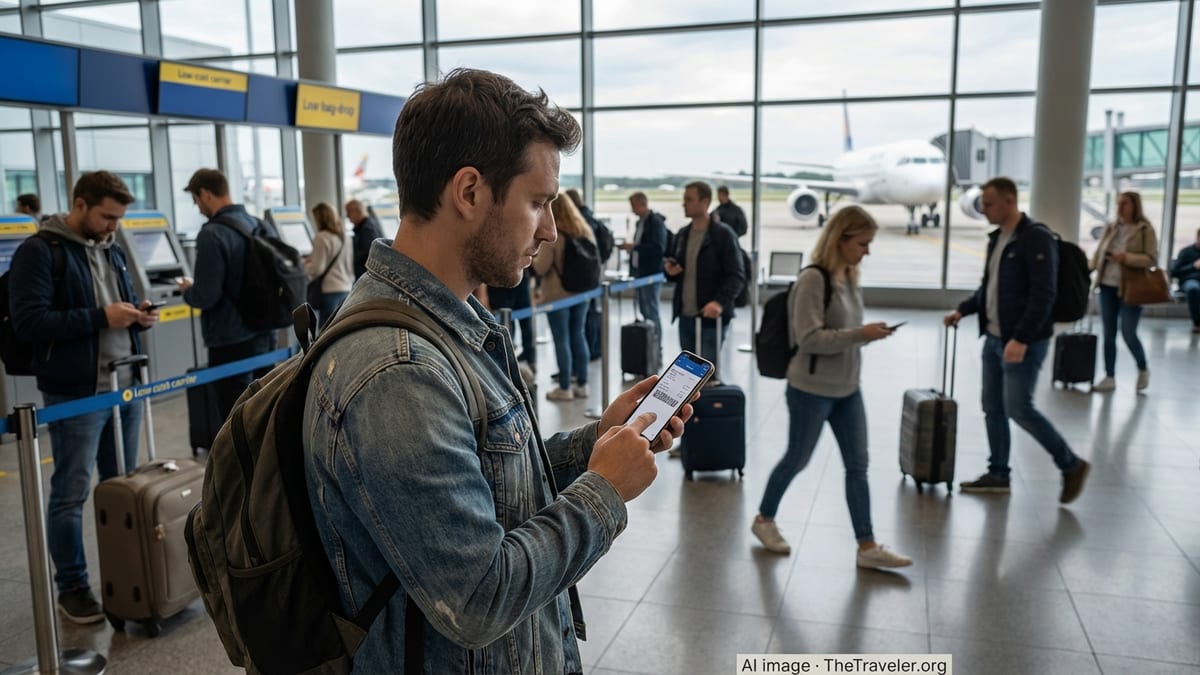
What Has Ryanair Changed About Boarding Passes?
Ryanair is phasing out home-printed and PDF boarding passes in favour of a fully digital system delivered through its smartphone app. From November 12, 2025, most passengers will be expected to present a boarding pass stored in the Ryanair app at airport security and at the boarding gate. The airline’s own guidance makes clear that printed boarding passes will no longer be accepted on the vast majority of routes, with only a handful of airports and countries that still require paper treated as exceptions.
The change formalises habits that many regular low cost flyers have already adopted. Ryanair says around nine in ten of its passengers currently use a mobile boarding pass. The company argues that going fully digital will cut queues, speed up boarding, reduce costs and eliminate hundreds of tonnes of paper each year. Digital passes also allow the airline to push live gate information, delay updates and rebooking options direct to passengers’ phones on the day of travel.
Behind the slick technology and sustainability pitch, however, is a strict expectation that every passenger checks in online in advance. Those who do not complete online check in before arriving at the airport still face Ryanair’s long standing airport check in fee, which can reach £55 per person depending on the departure airport. It is this charge that is likely to catch out infrequent travellers who are unaware of the new rules.
Where the £55 Charge Comes In
The £55 figure is not a new fee, but the existing airport check in charge that becomes more prominent under the new policy. Ryanair’s table of fees lists an airport check in charge of between £30 and £55 per passenger, per flight, depending on route and local currency. This applies when a customer turns up at the airport without having checked in online in advance, and needs staff at the check in desk to complete the process and issue a boarding pass.
Until now, some passengers have relied on printing their own boarding pass at home or using a PDF on their phone, sometimes without downloading the Ryanair app at all. Under the new system that option disappears. If a traveller has not checked in online at all by the cut off time, they can still be checked in at the airport, but it will come at that steep airport check in fee. For a family of four on a budget getaway, that could add more than £200 to the cost of a trip before they have even reached security.
There is an important distinction for those who have checked in online but run into problems with their phone or boarding pass. Ryanair’s updated conditions state that from November 2025, passengers who have already checked in but arrive without a usable boarding pass can have one reissued at the airport for free. That means a lost phone, a flat battery or a broken screen should no longer lead to an extra charge, provided online check in was completed in time. The costly penalty is reserved for those who skip online check in altogether.
Digital-Only Boarding: Who Is Affected and Where
From November 12 the digital boarding pass requirement will apply across almost all of Ryanair’s European network. Travellers flying between major airports in the United Kingdom, Ireland and the European Union can assume that they will be expected to use the app based boarding pass system. Ryanair has chosen a quieter shoulder period in the travel calendar to roll out the change, aiming to avoid peak summer disruption as passengers get used to the new regime.
There are, however, some notable exceptions. In countries where airport rules still insist on paper documentation, digital passes cannot be used alone. Morocco is one of the clearest examples, with airports there continuing to require printed boarding passes at security and departure gates. Ryanair says that in these cases passengers must still complete online check in as normal, then present their digital boarding pass at a Ryanair desk at the airport, where staff will print a physical boarding card free of charge.
The airline also acknowledges that not every traveller has or wants a smartphone. For customers without app compatible devices, or who face accessibility challenges, Ryanair says staff will issue a boarding pass at the airport check in desk without an additional fee, as long as online check in was carried out beforehand. That makes access to a computer or someone else’s device for online check in essential even for non smartphone users.
How Ryanair’s Rules Compare With Other Airlines
Ryanair is among the first major European airlines to move to a near total ban on home printed boarding passes. Rivals including easyJet, Jet2, British Airways, Tui and Virgin Atlantic all continue to allow passengers to choose between mobile and printed boarding passes on most routes. Several of these carriers will also print a boarding pass at the airport without charge, even where online check in is encouraged or required.
Low cost competitor Wizz Air, like Ryanair, levies a fee on passengers who fail to check in online and turn up at the airport expecting staff to complete the process. Its charges, typically ranging from the equivalent of around £11 to £35, are still lower than Ryanair’s highest £55 airport check in fee. Consumer groups argue that the spread of these charges runs counter to the spirit of European court rulings that hand luggage and basic travel formalities should be included in the advertised ticket price.
The step towards app only boarding passes also sits alongside Ryanair’s broader tightening of rules around baggage and airport punctuality. Gate penalties for oversized hand luggage remain substantial, and from 2025 staff incentives for spotting non compliant cabin bags have been increased. Separately, Ryanair has introduced penalties of up to €100 for passengers arriving too late at the airport to check in or board their flight. Together, these measures show an airline pushing operational discipline hard, with the risk that some customers will learn about the rules only when they are hit with a bill.
Practical Steps to Avoid Paying £55 at the Airport
For travellers, the key to avoiding Ryanair’s airport check in fee lies in preparation. The airline opens online check in from a set period before departure, typically up to 24 hours or more depending on whether seats have been pre selected. Passengers must complete the process and obtain their digital boarding pass no later than two hours before the scheduled departure time. Leaving it until arrival at the airport in the hope of resolving it at a desk will now almost certainly mean being charged.
Downloading the Ryanair app well before the travel date is increasingly essential. Once installed, passengers should log in, confirm their booking details, and, when the window opens, complete check in so that the digital boarding pass appears within the app. It is sensible to take screenshots of the boarding pass or add it to a digital wallet as a backup in case of connectivity problems. While Ryanair insists that the pass must be presented in app form, having a stored copy can help if mobile data is patchy at the airport.
Travellers should also make a habit of charging devices fully before leaving for the airport. Carrying a small power bank can provide extra reassurance on longer journeys or when transiting through multiple airports. Although Ryanair has committed not to charge a reissue fee where online check in has been completed, a dead phone still introduces stress and the risk of delay when time is tight.
What to Do If You Do Not Have a Smartphone
Passengers without a compatible smartphone are not exempt from the new rules, but they are treated differently from those who simply do not check in. Ryanair guidance indicates that non smartphone users should still arrange to complete online check in ahead of travel, using a computer or someone else’s device. Once checked in, they can attend the Ryanair counter at the airport, where staff are expected to print a boarding pass without charging the usual check in fee.
This arrangement provides a safety net, but it relies on passengers understanding that online check in is a separate step from receiving a boarding pass. Those arranging travel for older relatives, children or less tech confident companions should ensure that bookings are linked to an email account that someone can access to complete the check in on their behalf. It is prudent to carry booking confirmations and identification in an easily accessible form in case staff need to verify details at the desk.
In a small number of cases, airport systems or local border rules may still require paper documentation for all passengers, regardless of smartphone ownership. On these routes Ryanair will typically direct all travellers to collect printed boarding passes at the airport. The crucial distinction remains that where online check in has been done in advance, this printing service should not attract additional charges.
Tips to Save on Your Next Ryanair Flight Under the New System
Avoiding the £55 airport check in fee is only one part of keeping costs down when flying with Ryanair under the updated rules. The move to digital passes consolidates the airline’s broader push towards app centric travel management, and passengers who embrace this can often secure better control over their spending. Using the app and website regularly before departure allows travellers to monitor dynamic pricing on extras such as seat selection, checked luggage and priority boarding, making it easier to decide which options are genuinely necessary.
Careful packing remains one of the most effective ways to prevent surprise charges at the gate. Ryanair’s free under seat bag allowance is tightly defined, and staff bonuses for catching oversized bags have been increased to encourage strict enforcement. Measuring bags at home, using soft sided luggage that can fit within sizers, and considering paid priority boarding with a larger cabin bag where needed can be cheaper than paying penalty fees when boarding. The app will usually flag current size and weight rules for each booking, giving passengers a chance to adjust before leaving home.
Finally, travellers should keep an eye on further changes ahead. European regulators are moving towards standardising hand luggage rules, and Ryanair has already signalled that it will adjust its free cabin bag allowance to align with emerging legislation. For frequent flyers, that could eventually mean a more generous free cabin bag in exchange for stricter enforcement and digital only processes. Until then, the best defence against unexpected costs is understanding the small print, using the app proactively and treating online check in as a non negotiable part of every trip.