

More news on this day
Ryanair has unveiled an expanded Summer 2026 schedule for Bari and Brindisi that boosts flights, routes and capacity across Puglia, intensifying debate over Italy’s municipal tax on airline tickets that the carrier says is holding back regional growth.
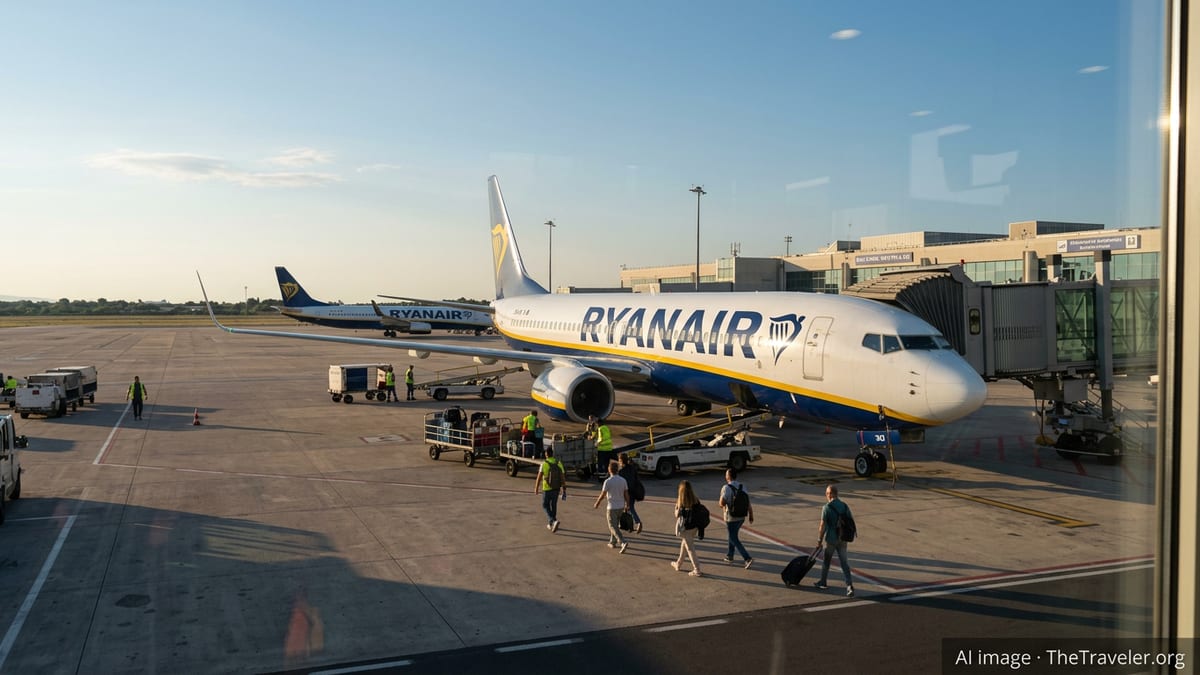
Stronger Summer 2026 Schedule for Bari and Brindisi
Ryanair’s new Summer 2026 program for Puglia confirms the low cost carrier’s strategic bet on the southern Italian region, with Bari and Brindisi positioned as gateways for both domestic and international tourism. The airline’s latest plan follows successive years of growth and includes a broad mix of city breaks, VFR travel and sun destinations timed for peak summer demand.
The schedule features 82 routes in total across Bari and Brindisi, mirroring and consolidating the scale of the airline’s 2025 operation in the region but with refinements designed to improve connectivity and aircraft utilization. Bari sees the bulk of the activity, including new and returning city links in central and northern Europe, while Brindisi strengthens its role serving the Salento and the wider Ionian coastline.
Ryanair is planning increased frequencies on several core markets that feed tourists into Puglia during the busiest weeks of July and August, alongside shoulder season services aimed at extending the summer for local hotels and tourism businesses. The summer schedule runs from late March to the end of October 2026, covering Easter travel, peak holiday months and early autumn city trips.
The airline’s decision to maintain a five aircraft based fleet in Puglia, with three jets in Bari and two in Brindisi, underlines its view of the region as a long term growth market. That capacity allows dense coverage of domestic Italian routes and a network of European links that would be challenging for smaller carriers or less frequent operators to sustain.
New Routes and Enhanced Connectivity Across Europe
Among the headline changes for Summer 2026 are new international routes from Bari, including fresh links to Bucharest and Bristol alongside an additional Italian route to Trapani that ties Puglia more closely to western Sicily. These additions build on a pattern seen in previous seasons, where Ryanair has incrementally added city pairs that connect Puglia with both established and emerging source markets.
From Brindisi, the schedule leans into leisure and visiting friends and relatives traffic, with continued services to northern European cities such as Eindhoven and key hubs in Germany and central Europe. The combination of coastal appeal, good value accommodation and direct low cost flights has made Salento a popular alternative to Italy’s more saturated summer hotspots.
For regional planners and airport authorities, the network breadth matters as much as raw seat numbers. Direct connections reduce reliance on congested hubs in Rome and Milan, shorten total journey times and make it easier for smaller tour operators and independent travelers to package Puglia into wider Italy itineraries. The 2026 schedule also reinforces secondary intra Italian links that support business and public sector mobility year round.
Industry observers note that the continued emphasis on Puglia is also part of a broader rebalancing within Ryanair’s Italian network, as the carrier looks for airports offering competitive costs, efficient operations and supportive regional policies. Bari and Brindisi have benefited from that reorientation, positioning themselves as platforms for sustainable growth rather than just seasonal overflow capacity.
Tourism, Jobs and Regional Development in Puglia
The expanded Summer 2026 program is expected to deliver millions of passengers through Bari and Brindisi, sustaining hotel occupancy, restaurant trade and employment across the wider region. Tourism bodies in Puglia have long argued that low cost air access has been a key driver of the area’s international popularity, especially among travelers seeking authentic towns, beaches and food away from Italy’s most crowded resorts.
Ryanair’s presence forms a significant pillar of that ecosystem. Each based aircraft underpins dozens of direct jobs in ground handling, maintenance and airport services, and many more indirect roles in hospitality and transport. The airline has indicated that a more favorable tax environment could justify additional aircraft and routes, magnifying that economic impact through higher visitor spending and longer average stays.
The Summer 2026 schedule also supports regional ambitions to spread demand more evenly throughout the year. By programming flights into the shoulders of the season and maintaining links to major European cities outside peak months, carriers help local businesses reduce seasonality, a persistent challenge in coastal regions that depend heavily on July and August revenue.
Local officials in Puglia point to increased connectivity as a tool for retaining younger residents and attracting talent from elsewhere in Italy and the European Union. Frequent, affordable flights facilitate mobility for students, entrepreneurs and remote workers who might otherwise gravitate toward larger metropolitan areas with higher living costs but more transport options.
Municipal Tax Under Fire as Expansion Continues
Alongside the Summer 2026 launch, Ryanair has renewed its criticism of Italy’s municipal surcharge on airline tickets, often referred to as the municipal tax. The carrier argues that the levy raises travel costs unnecessarily, undermines the competitiveness of regional airports and constrains the scope of future growth in destinations such as Puglia.
Company executives have framed the issue as a choice between maintaining a tax that yields limited direct benefit to local tourism, or removing it to unlock larger private investment in aircraft, routes and marketing. They point to other Italian regions, including parts of Sicily where similar surcharges have been reduced or abolished, as examples of how lower charges can stimulate new routes and higher passenger volumes.
Ryanair has coupled its criticism with explicit offers of expanded capacity if the tax were scrapped nationwide, citing the potential for dozens of additional aircraft, new routes and millions more passengers each year. For Bari and Brindisi, that could translate into more off peak services, new point to point connections and enhanced resilience during economic downturns.
The airline’s campaign has put pressure on both the national government in Rome and regional authorities, who must balance fiscal needs with the desire to foster tourism and employment. As Italy considers broader reforms to aviation charges, Puglia’s 2026 schedule serves as a tangible case study of how policy decisions can either amplify or limit the benefits of low cost air travel in developing regions.
Industry and Political Reactions Across Italy
The renewed clash over the municipal tax has drawn in tourism associations, unions and local politicians well beyond Puglia. Hospitality groups have largely sided with airlines, arguing that lower ticket prices would make Italian destinations more competitive against rival Mediterranean markets that have aggressively courted low cost carriers in recent years.
Some regional leaders, particularly from areas with smaller airports, have echoed calls for reform, highlighting how even modest adjustments to taxation can tilt route development decisions. They view Ryanair’s Summer 2026 plans for Bari and Brindisi as evidence that carriers are willing to commit significant capacity when they see a stable and supportive policy environment.
At the same time, labor representatives and community groups have sought assurances that any expansion is balanced with fair working conditions, adequate airport staffing and investment in sustainable transport links on the ground. The sharp rise in visitor numbers across parts of southern Europe has revived debates about infrastructure, housing pressure and environmental impacts in coastal regions.
For travelers planning trips in 2026, the immediate takeaway is clear: Bari and Brindisi will be better connected than ever, with a dense network of summer flights that open up more options for exploring Puglia and beyond. Whether the current political pressure over the municipal tax leads to deeper structural changes in Italian aviation policy could determine just how far that expansion can go in the years after 2026.