

More news on this day
Sabah is sharpening its focus on the Chinese market with a new direct air link between Chongqing and Kota Kinabalu, adding another gateway from mainland China into Malaysian Borneo as regional travel demand strengthens.
Get the latest news straight to your inbox!
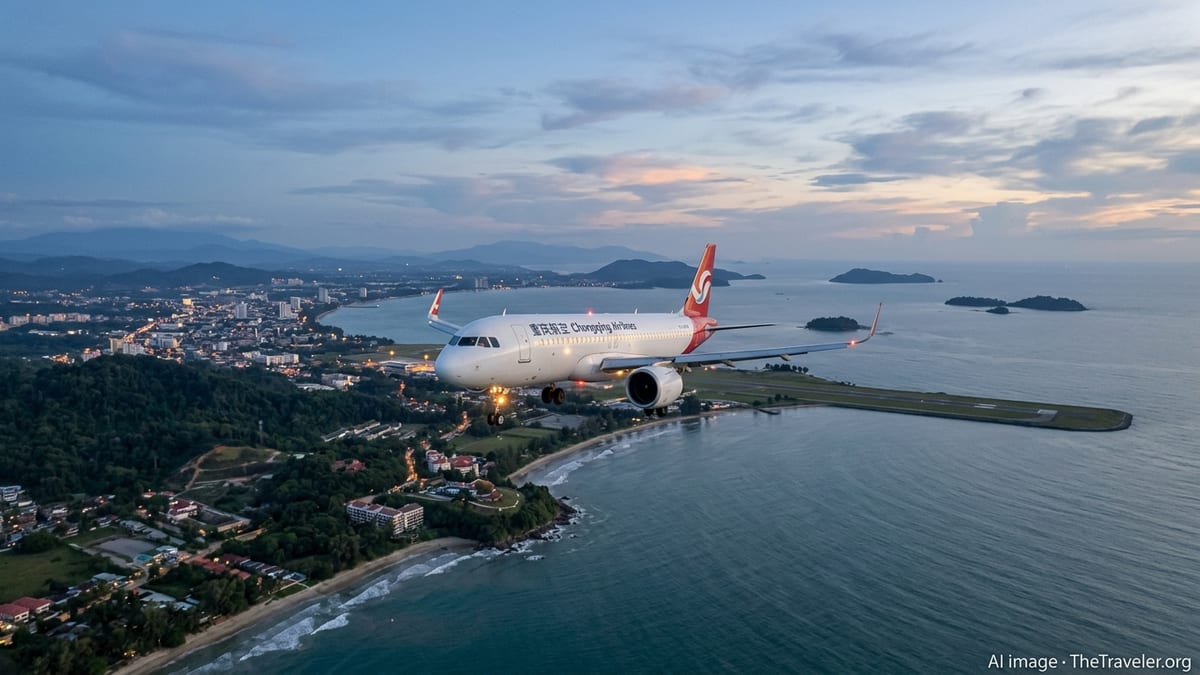
New Route Connects Chongqing to Kota Kinabalu
The latest addition to Sabah’s China network is a non stop service between Chongqing Jiangbei International Airport and Kota Kinabalu International Airport. Flight schedule data shows the route is operated by Chongqing Airlines with a block time of around four hours and fifteen minutes, giving western China residents a relatively short hop to Sabah’s capital.
Publicly available timetable information indicates that the service is scheduled three times per week and is using Airbus A320neo aircraft configured with both economy and business class. The routing strengthens Chongqing’s role as an outbound hub and positions Kota Kinabalu as a convenient leisure entry point for travellers from China’s fast growing southwest region.
Flight listings from aviation schedule trackers describe the Chongqing to Kota Kinabalu pairing as a newly introduced non stop option, adding to existing one stop itineraries that connect the two cities via other Asian hubs. The direct service significantly reduces journey times compared with itineraries that require transfers in Guangzhou, Hong Kong or other intermediate airports.
The route launch aligns with a broader rebound in China outbound travel to Southeast Asia, where beach destinations and nature focused holidays are regaining momentum. Sabah has promoted its islands, rainforests and wildlife as key draws for Chinese visitors seeking warm weather breaks and shorter haul trips.
Strategic Step in Sabah’s China Market Push
Sabah’s tourism strategy in recent years has placed strong emphasis on increasing direct air access from multiple Chinese cities. Industry reports highlight a gradual rebuilding of routes into Kota Kinabalu from key markets such as Shanghai and other major urban centers, complemented by seasonal and charter services from secondary cities.
The Chongqing connection is viewed by regional tourism analysts as an important strategic step, opening a large inland catchment area that is not reliant on coastal mega hubs. Chongqing and the surrounding provinces have sizeable populations with rising disposable incomes, and improved connectivity to Sabah is expected to tap into growing interest in nature based and island holidays beyond China’s traditional beach destinations.
Aviation and tourism monitoring shows that Sabah has been actively courting new Chinese services through marketing partnerships, familiarisation trips and collaborative campaigns with airlines and travel agents. The addition of Chongqing strengthens the state’s positioning as one of Malaysia’s most directly connected gateways to China, particularly for leisure focused itineraries tied to Kota Kinabalu and the broader west coast of Sabah.
Travel trade commentary has also pointed to the potential of routing multi destination Borneo trips through Kota Kinabalu. With the new link, Chongqing based travellers can more easily combine Sabah’s islands and wildlife with onward journeys to other parts of Borneo, deepening the appeal of the route for both first time and repeat visitors.
Implications for Tourism, Trade and Local Economy
The direct Chongqing flight is expected to support not only holiday arrivals but also broader flows in trade, investment and education between Sabah and western China. Improved air connectivity typically brings increased business travel, easier movement for student exchanges and opportunities for niche sectors such as meetings and incentive travel.
Local tourism operators in Sabah have been watching the resumption and expansion of China routes closely, noting that Chinese visitors historically account for a significant share of international arrivals to the state. A dedicated service from Chongqing increases the likelihood of more frequent group tours, charter packages to island resorts and bespoke nature itineraries featuring Mount Kinabalu and Sabah’s interior.
Travel marketplace data suggests that direct routes often translate into more competitive fares and shorter overall travel times, factors that can influence destination choice in a price sensitive and convenience driven market. By reducing transit complexity, the Chongqing Kota Kinabalu link may make Sabah more attractive compared with competing island destinations in the region for travellers based in inland Chinese cities.
Industry observers also note the potential for the new service to spur investment in supporting infrastructure, including hotel developments, transport services and tourism experiences tailored to Chinese preferences. This could include Mandarin language guiding, payment systems aligned with Chinese platforms and culinary offerings that balance local cuisine with familiar options for group travellers.
Building a Wider Network of China Sabah Routes
The Chongqing service is part of a broader pattern of expanding air links between China and Sabah. Route announcements and schedule filings in recent months point to additional planned or resumed services connecting Kota Kinabalu with other Chinese cities, including both scheduled and charter operations designed around peak holiday seasons.
Aviation analysts have highlighted that Sabah’s route strategy appears to be shifting beyond reliance on a small number of major coastal gateways. By diversifying into inland hubs such as Chongqing, the state is building a more resilient network that can draw visitors from multiple regions in China, reducing exposure to demand fluctuations in any single city.
Published commentary on regional tourism trends indicates that Chinese travellers are increasingly interested in lesser known destinations and more varied itineraries. The ability to reach Sabah directly from Chongqing fits into this pattern, offering a combination of beaches, diving, nature and local culture that differs from more established Southeast Asian resort hubs.
Observers suggest that as more China Sabah routes come online, coordinated marketing will be important to position Kota Kinabalu clearly in the Chinese travel marketplace. Consistent branding around Sabah’s strengths such as marine parks, ecotourism and family friendly attractions is seen as critical to turning new air capacity into sustainable visitor growth.
Opportunities and Challenges Ahead
While the launch of direct flights from Chongqing to Kota Kinabalu is a positive development, industry assessments underline that successful route development depends on maintaining load factors and ensuring year round demand. Airlines typically monitor performance closely in the early months of a new route and can adjust frequencies or aircraft types in response to booking trends.
Travel agents and tour operators in both markets are expected to play a pivotal role in shaping demand, by packaging Sabah with other regional highlights and promoting itineraries that are tailored to Chinese preferences, including shorter holidays built around public holiday periods. Effective collaboration across the tourism value chain will be important to keep the Chongqing route viable over the longer term.
There are also broader considerations linked to capacity at key attractions and the need to manage environmental impact as visitor numbers grow. Sabah’s core selling points include marine biodiversity, pristine islands and protected forest areas, and local stakeholders have increasingly discussed balancing expansion in air access with conservation oriented tourism management.
For now, the Chongqing Kota Kinabalu service stands out as a clear signal of Sabah’s commitment to deepening its relationship with China. As travellers in western China consider new international destinations, the presence of a direct flight to Malaysian Borneo gives Sabah an opportunity to capture attention and build a stronger profile in one of Asia’s most dynamic outbound markets.