

More news on this day
Passengers at Sacramento International Airport are confronting a nightmare wave of cancellations and delays as a strained US air travel system buckles under the combined pressure of severe weather, staffing shortfalls and a surge in spring travel demand.
Get the latest news straight to your inbox!
How Sacramento Became Caught in a National Meltdown
While Sacramento International Airport (SMF) has not been at the direct center of the most extreme weather events this year, the airport has become highly vulnerable to disruption originating elsewhere in the network. Published coverage in recent months describes how flight reductions ordered at major hubs, technology outages at large carriers and a series of powerful winter storms have combined to create cascading delays and cancellations across the United States.
As flights are cut or rescheduled at crowded hubs in the Midwest, South and on the East Coast, Sacramento often feels the ripple effects hours later. Aircraft and crew that should be rotating through SMF are instead stuck at airports such as Chicago, Atlanta or Denver during storms, or grounded by operational slowdowns tied to staffing and air traffic management constraints. When those rotations fail, Sacramento departures and arrivals are canceled or heavily delayed, even when local skies are clear.
Travel industry reports highlight that US airlines are operating with little slack in their schedules, and flights often depart close to full. In this environment, a disruption at one hub can rapidly spill across the map, stranding passengers in secondary markets like Sacramento that rely on smooth flows of inbound aircraft. That network fragility is now translating into packed terminals, long lines and tense scenes at SMF as travelers scramble for scarce alternative flights.
Weather, Government Gridlock and Operational Strain Collide
The latest turmoil hitting Sacramento is unfolding against a backdrop of repeated national shocks to the aviation system in 2026. Winter storms and blizzards in January and February led to thousands of cancellations in a single day at major airports, with analytics firms and national media describing some of those days as the worst for US flight operations since the early pandemic period. Those events left aircraft and crews out of position for days, compressing capacity even as demand remained strong.
More recently, severe thunderstorms, snow and low ceilings in early March triggered nationwide ground stops at key hubs, with travel outlets documenting hundreds of cancellations and several thousand delays in a single day. Airlines serving Sacramento depend on those hubs for both domestic and international connections. When weather shuts down or slows those chokepoints, Sacramento-bound flights are among the first to be trimmed from schedules in order to protect higher-yield routes or preserve crew duty limits.
On top of volatile weather, the ongoing federal government shutdown and chronic air traffic controller shortages have added another layer of uncertainty. Previous public statements from airport and aviation officials, cited in regional and national coverage, describe how the Federal Aviation Administration’s efforts to manage risk during a shutdown can include capping traffic at busy facilities. Even when SMF is not directly subject to formal limits, reductions at coastal and hub airports can force airlines to thin out Sacramento service, leading to last-minute cancellations and extended delays.
Impact on Passengers: Missed Connections and Mounting Costs
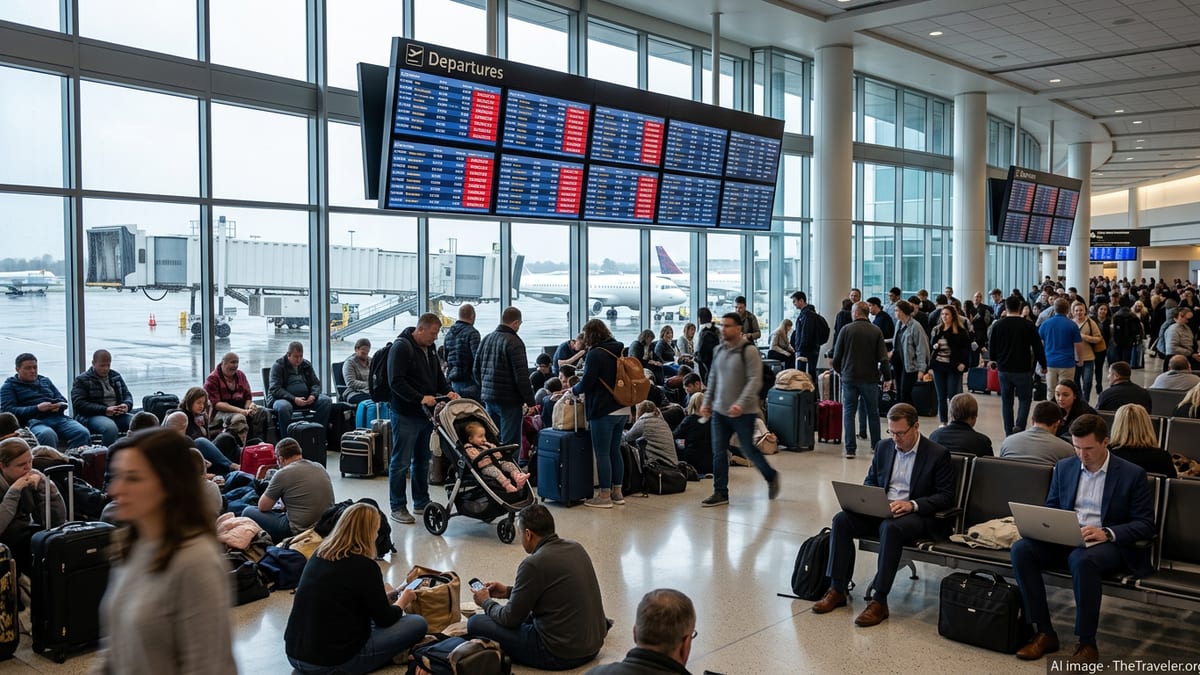
For travelers moving through Sacramento, these dynamics translate into very real consequences. Published accounts from recent disruptive days across the US describe departure boards dominated by red cancellation labels, crowded gate areas, and long queues for rebooking desks as passengers vie for limited seats on remaining flights. Similar patterns are now emerging at SMF when national disruptions peak, particularly in morning and evening banks when connecting traffic is heaviest.
Because many flights operate near capacity, same-day rebooking is often difficult, especially for families or groups trying to stay together. Some passengers are pushed to next-day or even multi-day itineraries. That can mean unexpected hotel stays, extra meal costs, lost vacation time and missed events ranging from business meetings to weddings. Travel insurance and credit card protections can cushion some of the financial blow, but many travelers still face out-of-pocket expenses when severe disruptions strike.
The knock-on effects extend beyond the terminal as well. Rideshare demand spikes when several flights are canceled at once, leading to longer waits and higher prices. Rental car counters can quickly sell out vehicles as stranded travelers turn to the road. Regionally, tourism businesses and conferences that rely on predictable air access from Sacramento’s catchment area may see late arrivals, shortened stays or outright cancellations.
What Travelers Through Sacramento Can Do Right Now
With the current storm complex and national operational strain likely to cause intermittent chaos for days, travel experts and consumer advocates are emphasizing preparation and flexibility for anyone flying through SMF. Publicly available guidance from government transportation resources and airline customer service pages consistently recommends checking flight status frequently, ideally starting 24 hours before departure, and signing up for airline text or app notifications.
When large-scale disruptions are forecast, airlines sometimes publish travel waivers that allow passengers to move their trip to different dates or times without change fees or fare differences. These waivers are typically tied to specific regions and travel dates, and they can be particularly valuable for Sacramento passengers whose flights connect through storm-affected hubs. Monitoring airline alerts and news reports for new waivers can help travelers proactively rebook before seats disappear.
Experts also note that travelers have important rights when flights are canceled or significantly changed for reasons within the airline’s control. Federal guidance outlines when passengers are eligible for refunds versus credits, and consumer advocates advise requesting a monetary refund if a carrier cancels a flight and the traveler no longer wishes to fly. For disruptions clearly tied to severe weather or air traffic control constraints, airlines generally have more limited obligations, but may still provide meal vouchers or hotel discounts as a goodwill measure.
At the airport level, arriving earlier than usual can give Sacramento passengers more options on bad days. Longer security lines and crowded check-in counters have been widely reported across the country during the recent period of instability. By building in extra time, travelers increase their chances of being rebooked onto earlier flights or making tight connections when schedules are in flux.
Looking Ahead: A Stress Test for Sacramento’s Growing Role
The current wave of cancellations is arriving at a time when Sacramento International Airport is handling near-record passenger volumes, according to recent airport system traffic reports. SMF has been expanding its route map and attracting additional carriers as the Sacramento region grows, positioning itself as a convenient alternative to larger Northern California gateways. That growth, however, also means more dependence on a tightly stretched national aviation network.
Analysts following the industry note that the same factors pushing demand higher, such as population growth, strong leisure travel appetite and a rebound in business trips, are contributing to the very congestion that makes the system fragile. With airlines and airports running close to capacity, there is limited room to absorb shocks from extreme weather, technology glitches or government funding disputes.
For Sacramento travelers, the immediate outlook suggests more choppy days ahead, particularly while winter and early spring weather systems continue to roll across key hubs and political negotiations over federal spending remain unresolved. The situation at SMF is likely to fluctuate from relatively smooth operations on calm days to sudden flare-ups of cancellations and delays when the broader network comes under strain.
In the longer term, industry observers point to infrastructure upgrades, improved air traffic technology and more resilient airline scheduling as potential ways to ease the pressure. Until those changes materialize at scale, Sacramento International Airport will remain highly exposed to the same forces that have turned this season into one of the most challenging periods for US air travel in recent years.