

More news on this day
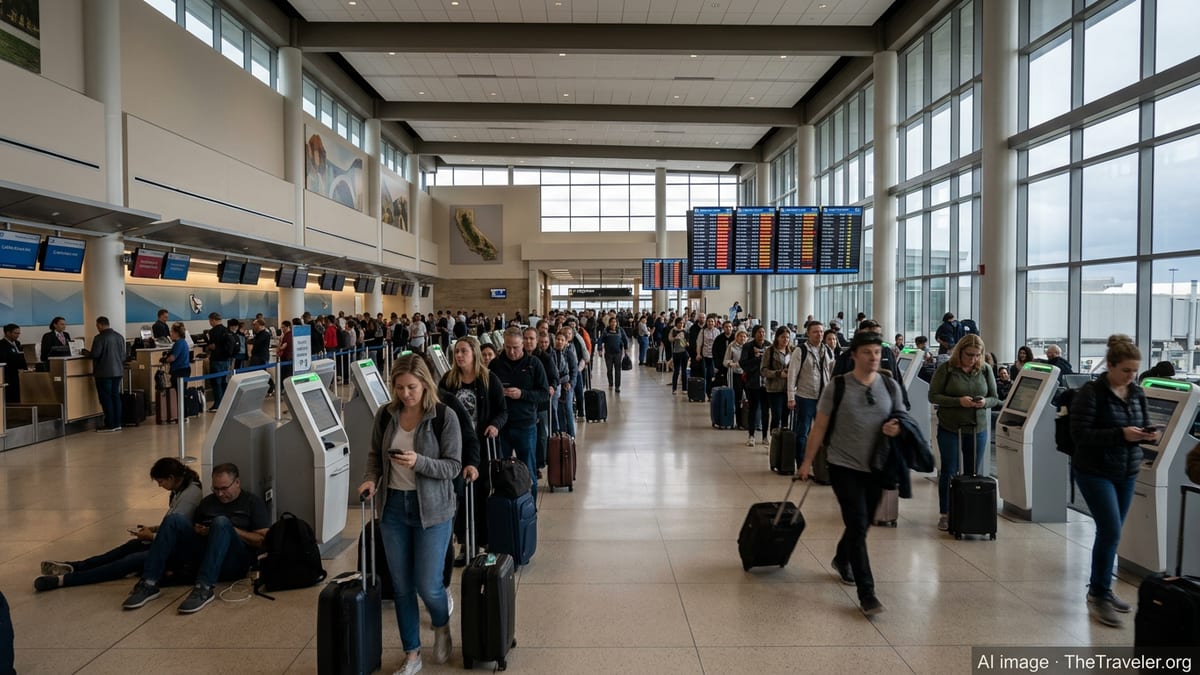
Passengers at Sacramento International Airport are facing a fresh wave of canceled and heavily delayed flights, as a volatile mix of severe weather across multiple regions and lingering operational strains triggers another round of nationwide travel chaos.
Get the latest news straight to your inbox!
How Sacramento Became the Latest Flashpoint
In recent days, Sacramento International Airport has seen a sharp uptick in flight cancellations and lengthy delays, as carriers adjust schedules in response to rapidly changing weather systems sweeping across the country. While Northern California itself has not borne the worst of the current storms, Sacramento’s role as a connector in airline networks means disruptions elsewhere are cascading into the region.
Published aviation data and airline status boards show dozens of Sacramento departures and arrivals scrubbed or pushed back, particularly on routes linking the West Coast with storm-hit hubs in the Midwest and East. Passengers report abruptly canceled flights with minimal warning, followed by long lines at check-in counters and customer service desks as they scramble to secure new itineraries.
Operationally, airlines appear to be using Sacramento as part of a broader reshuffle of aircraft and crews, pulling planes off certain routes to cover high-demand corridors or to avoid sending jets into regions where weather-related ground stops and runway closures are likely. This strategy helps limit safety risks but leaves many travelers in Sacramento facing last-minute disruptions and a shortage of alternative options.
Airport operations remain generally stable, with runways open and core facilities functioning, but the knock-on effect of external weather events and network-wide schedule changes is driving the perception among passengers that Sacramento itself is at the epicenter of a “nightmare” travel day.
Severe Weather Across the US Fuels Systemwide Chaos
The immediate backdrop to Sacramento’s problems is a broader pattern of storm-driven turmoil that has dogged US aviation for much of early 2026. A series of winter storms and severe weather outbreaks has pounded major air travel corridors, from blizzards in the Northeast to powerful systems spawning high winds, snow, and thunderstorms across the Plains and Midwest. Publicly available storm tracking and meteorological reports describe an almost continuous chain of disruptive weather episodes since January.
As these systems move east and north, they repeatedly hit key hubs such as Chicago, New York, Boston, and Atlanta. Each wave brings thousands of cancellations and delays nationwide, as airlines preemptively pare back schedules to avoid stranding aircraft and crews. Even when conditions improve locally, the effects ripple for days, because planes and staff end up far from where they are needed next.
Recent coverage of a major winter storm affecting the Northeast highlighted that cancellations at airports like John F. Kennedy, LaGuardia, and Newark quickly propagated across the network. Flights to and from the West Coast, including California cities, were among those frequently trimmed or retimed. Sacramento, with its mix of domestic links and connections through larger hubs, is exposed whenever those hubs are hit by snow, ice, or severe thunderstorms.
Meteorologists warn that the atmospheric setup driving these storms, including sharp temperature contrasts and strong jet stream energy, is likely to sustain periodic severe weather outbreaks into late March. That outlook suggests that even brief improvements in on-time performance could be vulnerable to rapid reversals.
Why Sacramento Flights Are So Vulnerable to Disruption
On paper, Sacramento International Airport is smaller than coastal giants like Los Angeles International or San Francisco International, but it plays a critical role as a regional gateway for Northern California. Many travelers rely on Sacramento for connections to larger hubs in Denver, Dallas, Phoenix, Seattle, Los Angeles, and San Francisco. Any instability at these connecting airports can quickly knock out multiple Sacramento itineraries in a single day.
Industry analyses of recent disruption patterns emphasize that airlines now operate highly optimized, tightly scheduled networks. This boosts efficiency when conditions are normal but leaves little spare capacity when weather or technical problems arise. If a morning flight from a storm-struck hub is canceled, the aircraft and crew scheduled to continue on to Sacramento may never arrive, forcing additional cancellations down the line.
Regional and feeder carriers, which operate many of the shorter Sacramento routes on behalf of major airlines, are particularly sensitive to high winds, low visibility, and icing conditions. Publicly available airline performance data from this year show that these operators often account for a disproportionate share of cancellations during storm events, increasing the likelihood that Sacramento travelers will be affected even when long-haul operations appear more resilient.
Staffing remains another point of vulnerability. The broader US aviation industry is still working through pilot and ground-crew shortages, and several recent analyses of nationwide disruptions note that even modest staffing gaps can delay aircraft turnarounds or force schedule reductions. When that happens, smaller but strategically important airports like Sacramento are often where airlines trim frequencies first.
What Travelers Through Sacramento Need to Know Right Now
For passengers booked to travel through Sacramento over the coming days, the most important step is to monitor flight status early and often. Airline and airport dashboards have been updating frequently as carriers adjust to fresh weather forecasts and evolving conditions at out-of-state hubs. Travelers are increasingly finding that flights that appeared on time the previous evening are reclassified as delayed or canceled by early morning.
Major US airlines have been periodically issuing weather-related travel waivers this winter, allowing affected customers to rebook without standard change fees when certain regions fall under storm warnings or when severe thunderstorms, snow, or high winds are forecast. Many of the recent nationwide waivers have included key hubs that connect to Sacramento, meaning travelers might qualify for flexible options even if Sacramento itself is not under an advisory.
Airport observers recommend that passengers build extra time into their journeys, particularly when making tight connections through weather-prone hubs. Checking in online as soon as systems permit, traveling with carry-on luggage when possible, and having a backup plan for overnight accommodation in case of missed connections can all reduce the stress of last-minute changes.
Families and travelers with fixed commitments, such as cruises, major events, or international departures from other cities, face heightened risks in the current environment. For these passengers, some travel planners suggest considering earlier departure dates, alternative routings that bypass the most storm-sensitive hubs, or even shifting to midweek travel when networks are under slightly less pressure than peak weekends.
How Long Could the Disruptions Last?
The duration of Sacramento’s cancellation troubles will depend largely on how quickly airlines can realign aircraft and crew after each burst of severe weather, and on how frequently new storm systems emerge. Experiences from recent winter events across the country indicate that large cancellation waves can take several days to unwind fully, even after skies clear.
Aviation analysts following the current season note that several storms since January have triggered some of the largest cancellation totals seen since the pandemic, with totals running into the thousands on single days. That scale creates a backlog of displaced passengers, rebooked itineraries, and out-of-position aircraft that can linger across the network long after headlines move on.
For Sacramento in particular, the path back to stability depends on the resilience of its hub partners. If airports in the Midwest and Northeast manage to maintain operations with only moderate weather disruptions, Sacramento schedules may stabilize more quickly. However, if further blizzards, high-wind events, or severe thunderstorms strike those regions in rapid succession, Sacramento travelers should be prepared for additional rounds of cancellations well into late March.
For now, the message for anyone flying to or from Sacramento International Airport is clear: treat schedules as fluid, stay closely informed through official airline channels, and assume that nationwide weather volatility can reach your trip, even on a seemingly calm day in Northern California.