

More news on this day
Sacramento International Airport is grappling with a wave of cancellations and delays that has turned a busy March travel period into a logistical nightmare, with disruptions at the California hub now feeding into a broader pattern of chaos across the United States air network.
Get the latest news straight to your inbox!
What Is Happening at Sacramento International Airport
Flight-tracking data and local reports indicate that Sacramento International Airport has seen an unusually high share of cancellations and rolling delays over the March 13 to 16 window, coinciding with a powerful storm system impacting large swaths of the country. The disruption comes at a time when Sacramento has been aggressively expanding routes and overnight services, leaving the airport busier and more tightly scheduled than in previous years.
Publicly available information shows that the cancellations are cutting across multiple airlines and route types. Short-haul services to major Western hubs have been particularly affected, creating immediate knock-on problems for travelers relying on onward connections through cities such as Denver, Phoenix and Las Vegas. Passengers who once treated Sacramento as a lower-stress alternative to Bay Area airports are now encountering the same long lines, gate changes and last-minute cancellations that have become familiar at larger hubs.
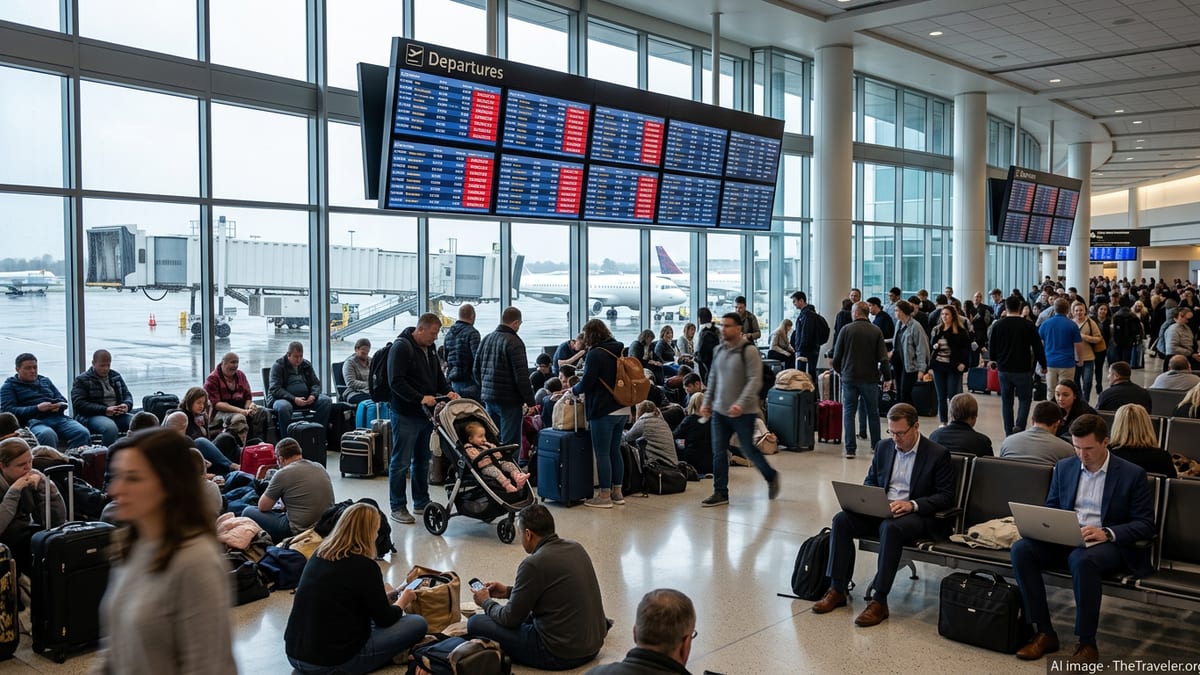
Local travel forums and social media posts describe scenes of crowded concourses, passengers queuing at customer service desks and limited same-day rebooking options. With many flights operating at or near capacity to meet strong demand, even a small number of cancellations has quickly translated into a shortage of available seats for stranded travelers trying to leave or reach Sacramento.
The airport itself remains open, and core facilities including security checkpoints and ground transportation are operating, but the irregular flight schedule has changed the usual rhythm of operations. Travelers are reporting abrupt shifts in departure times, aircraft swaps and, in some cases, flights preemptively removed from schedules hours before departure as carriers attempt to reset their operations.
How a Single Airport Crisis Turns Into Nationwide Disruption
The turbulence in Sacramento is closely tied to a broader weather and operational shock affecting much of the United States this week. A sprawling storm complex is producing blizzard conditions in the Upper Midwest, severe thunderstorms in the South and travel advisories in multiple regions, according to meteorological coverage. These conditions have triggered extensive ground stops, reroutes and schedule reductions at major hubs that feed traffic to and from Sacramento.
When flights from key hubs are cancelled or heavily delayed, Sacramento’s role as a spoke in the national network becomes a critical vulnerability. Aircraft and crews scheduled to arrive in Sacramento from weather-hit cities are now arriving late, out of position or not at all. Once a plane and its crew fail to reach Sacramento on time, the next flight on that aircraft’s roster can be significantly delayed or cancelled, even if local weather in Northern California remains relatively manageable.
Industry analyses of past disruption events show how quickly this kind of cascade can develop. A single missed rotation can strand crews beyond their legal working limits, forcing airlines to cancel subsequent legs even after the initial storm or system outage has eased. With slim staffing margin across the industry, catching up can take days rather than hours, especially when disruptions coincide with busy travel periods such as spring break.
The result is that passengers flying between two seemingly unaffected cities can still be caught in the fallout. A traveler trying to connect from Sacramento to a sun destination in the Southeast, for example, may find the flight grounded because the aircraft was scheduled to pass through a Midwest hub currently affected by snow or thunderstorms. This network effect is now being felt at airports from the West Coast to the East Coast, as carriers work to rebalance fleets and crew schedules.
Why Sacramento Is Feeling the Strain So Intensely
In recent years, Sacramento International Airport has emerged as one of California’s fastest-growing airports, adding new destinations and red-eye services that draw travelers away from San Francisco and Oakland. That growth has delivered more choice and often lower fares, but it has also made the airport more dependent on a tightly woven national schedule. When that schedule frays, there is less slack than in previous years to absorb the shock.
Public documents and local coverage highlight how airlines serving Sacramento have been striving to maximize aircraft utilization, particularly on popular transcontinental and overnight routes. High utilization makes economic sense during normal operations, but it also leaves fewer spare aircraft and crews available when storms, technology outages or air traffic control constraints strike. The current disruption illustrates how an airport that usually prides itself on shorter lines and smoother operations can quickly resemble a congested hub when the system is stressed.
Broader industry pressures are amplifying the pain. Airlines across the United States continue to navigate a combination of tight pilot supply, ground staff turnover and recurring air traffic control staffing issues in certain regions. When a major winter or spring storm intersects with these structural challenges, secondary airports like Sacramento can experience cancellations even when local conditions look favorable from a traveler’s perspective.
Longer term, the situation is likely to prompt renewed debate about infrastructure investment and staffing at fast-growing mid-sized airports. Sacramento’s rising passenger volumes, combined with more complex route maps and heavier reliance on late-night operations, suggest that future disruptive events could be even more consequential unless resilience and contingency planning keep pace with growth.
What Stranded Travelers at SMF Can Do Right Now
For passengers currently stuck in Sacramento or facing imminent departures, time is the most valuable resource. Publicly available airline guidance consistently recommends checking flight status repeatedly on airline apps and airport boards, as schedules can change multiple times in a single day during severe disruption. Same-day schedule adjustments or aircraft swaps may create new options with little warning.
Travel experts and consumer advocates frequently suggest that travelers contact airlines through multiple channels at once during major meltdowns. While customer service lines and counters at Sacramento may be crowded, some travelers may find faster assistance via airline mobile apps, text chat or social media messaging. Those with elite status or co-branded credit cards sometimes gain access to dedicated support lines, which can shorten wait times for rebooking.
Flexibility can significantly improve the odds of getting out sooner. Accepting connections through alternative hubs, departing earlier or later than planned, or even using nearby airports such as San Francisco, Oakland or San Jose as departure or arrival points can open up additional seats. However, travelers should factor in the added time and cost of ground transportation when deciding whether a drive to another airport is worthwhile.
For those whose trips are no longer viable, airline policies and federal consumer rules may offer options for refunds or credits if a flight is cancelled or heavily delayed. Travelers are encouraged to review the specific conditions of their tickets, as well as the customer service commitments that many major carriers publish. In some cases, hotels or travel insurance policies may cover additional expenses such as overnight stays or meals when disruption is widespread and prolonged.
Looking Ahead: How Long Will the Chaos Last
Forecasts for the national weather pattern suggest that the current storm system should gradually lose intensity after March 16, reducing the immediate pressure on the hardest-hit hubs. However, history shows that the operational hangover from such events can persist for several days, especially when thousands of flights have been cancelled or rerouted. Aircraft and crews must be repositioned, maintenance backlogs cleared and stranded passengers accommodated.
Past disruptions demonstrate that secondary airports like Sacramento often experience an uneven recovery. Some routes may resume quickly with near-normal schedules, while others continue to see sporadic cancellations as airlines prioritize core hubs and high-demand city pairs. Travelers booked over the next several days should be prepared for continuing volatility, even if official schedules initially appear stable.
Industry commentators note that the broader United States air travel system has become more vulnerable to large-scale shocks as carriers optimize for efficiency and strong demand. Events such as major winter storms, technology outages and air traffic control constraints in key regions can ripple through the network far more dramatically than they might have a decade ago. Sacramento’s current ordeal is a vivid example of how quickly that vulnerability can manifest at a growing regional hub.
For travelers, the lesson from this latest round of chaos is clear. Building extra time into itineraries, avoiding tight connections, securing travel insurance that covers disruption and keeping digital tools close at hand are increasingly essential strategies. As Sacramento International Airport and its airline partners work to restore normal operations, passengers who plan for unpredictability will be best positioned to navigate whatever comes next in the evolving U.S. air travel landscape.