

More news on this day
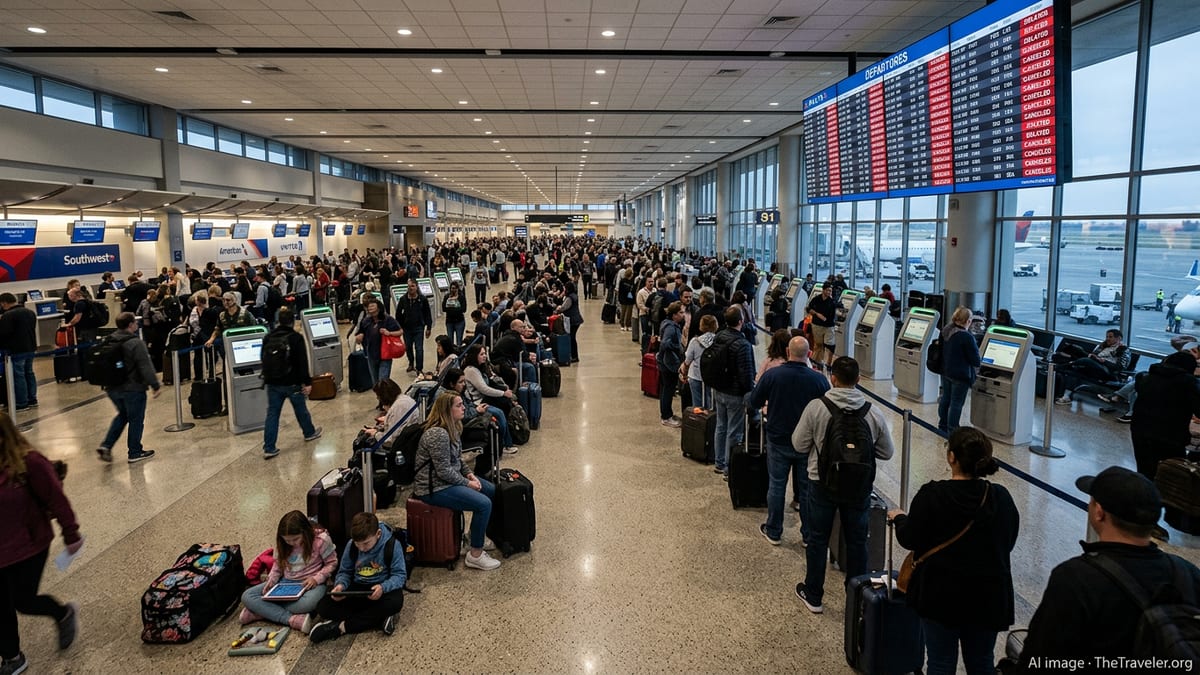
Hundreds of travelers at Sacramento International Airport faced abrupt flight cancellations and hourslong waits this weekend, as spring break traffic collided with severe weather and a fragile airline network, triggering fresh disruption across the country on major carriers including Delta Air Lines, Southwest Airlines, American Airlines and United Airlines.
Get the latest news straight to your inbox!
Storm Systems Collide With Peak Holiday Demand
The latest disruption comes as a series of powerful storm systems and tornado outbreaks sweep across large sections of the United States in mid March, compounding operational strains already visible since January’s major winter storms. Publicly available weather and aviation data for March 13 to 16 indicate a sprawling storm complex affecting the Central United States and parts of the Midwest, with heavy snow, ice and severe thunderstorms creating difficult conditions for airlines that were already operating at or near capacity for spring break.
National flight tracking services over the past week have recorded several days in which hundreds of flights were canceled and thousands delayed nationwide, particularly on March 7, when thunderstorms, snow and low ceilings prompted ground stops at key hubs such as Chicago and Atlanta. On those days, large domestic operators, including Southwest and United, were among the hardest hit. The latest cancellations in Sacramento are unfolding against that backdrop of repeated systemwide weather shocks.
With many school districts beginning spring recess in mid March and families heading for popular destinations such as Southern California, Florida, Hawaii and Mexico, Sacramento International Airport had already been preparing for elevated passenger volumes similar to those being reported at other large airports. The sharp mismatch between strong leisure demand and periodic capacity reductions has magnified the effects of each local weather or equipment issue, making it easier for delays in one region to cascade into widespread schedule disruptions.
Industry analysts note that after several years of robust post pandemic recovery in air travel, airlines have been flying with tighter buffers on both aircraft and staffing. Under these conditions, a single storm complex, ground stop or runway closure can quickly spill over into cancellations that affect travelers far from the original trouble spot, as aircraft and crews fail to arrive where they are needed for subsequent departures.
How Sacramento Disruptions Spread Through Major Airline Networks
Although Sacramento is not among the nation’s largest hubs, it functions as an important spoke airport for Delta Air Lines, Southwest Airlines, American Airlines and United Airlines, with frequent connections to their primary hubs in cities such as Los Angeles, San Francisco, Phoenix, Las Vegas, Denver, Dallas Fort Worth, Salt Lake City and Atlanta. When flights are canceled or heavily delayed at Sacramento, those missing aircraft and crews can have immediate knock on effects on later departures from multiple hubs.
Publicly available schedules show that each of the four major carriers operates a mix of short haul and medium haul routes from Sacramento that are closely timed to banked departures at their hubs, allowing passengers to connect onward to destinations across the country. When a Sacramento departure is scrubbed because of local weather, air traffic control programs or crew availability, airlines often face a choice between protecting connections for travelers already in the system or preserving future flights scheduled with the same aircraft and crew later in the day.
In practice, this means that a wave of cancellations in Sacramento during a high demand period like spring break can quickly translate into missed connections and rebookings for travelers as far away as Orlando, New York, Seattle or Honolulu. Passengers on Delta, Southwest, American and United who never pass through Northern California may still feel the impact as their inbound aircraft are delayed waiting for crews or as carriers consolidate lightly loaded flights to free up resources for the most heavily booked routes.
Because all four airlines rely on tightly coordinated networks, Sacramento disruptions can also interfere with aircraft maintenance rotations and overnight positioning flights. If an aircraft scheduled for routine maintenance is stranded by a cancellation, carriers may be forced to substitute different equipment at short notice or cancel subsequent segments entirely, extending the ripple effects of a relatively small number of initial cancellations into the following day.
Ground Stops, Staffing Constraints and a Fragile System
The Sacramento cancellations are occurring amid a wider pattern of strain in the national air traffic system. In the days leading up to the current problems, other major airports have been affected by temporary ground stops, including a high profile halt to flights at several Washington area airports on March 13 because of an equipment issue and a strong chemical odor at an air traffic control facility. While that event was geographically distant from Northern California, it highlights the broader vulnerability of the system during periods of extreme demand.
Ground stops, which temporarily halt arrivals and often limit departures to manage safety risks or congestion, can quickly produce long lines of waiting aircraft and force airlines to reshuffle their fleets. When such measures coincide with staffing constraints at airports or within the Federal Aviation Administration, the recovery window after a disruption lengthens, leaving less slack in the system to absorb later weather or technical issues.
Reports from major hubs indicate that staffing challenges have not been limited to air traffic control. Airline employees, including pilots, flight attendants, ground handlers and customer service agents, are operating under heavy schedules in March as carriers attempt to maximize flying during one of the busiest leisure travel periods of the year. Even minor crew scheduling conflicts can trigger cancellations, particularly late in the day when fewer backup options are available.
At Sacramento, these national dynamics are intersecting with local factors such as runway traffic management, limited gate space and ongoing adjustments to schedules that were already reshaped by federal directives to ease congestion at crowded metropolitan airports. The result is a system in which minor disturbances can tip quickly into broader operational chaos, especially when large carriers are all affected simultaneously.
Impact on Travelers and What Passengers Are Seeing on the Ground
For travelers, the immediate experience of the Sacramento cancellations has been long lines at check in counters, crowded gate areas and rapidly shifting departure boards. Spring break passengers, many of them families traveling with children, are particularly vulnerable to overnight disruptions and missed connections because their trips are often tightly timed around school calendars and pre paid accommodations.
Across the networks of Delta, Southwest, American and United, passengers are reporting rebookings that push departures by a day or more, especially to already busy sun and snow destinations. Some travelers departing from other cities have arrived at connecting hubs only to find their onward flights to Sacramento canceled, forcing unexpected overnight stays or long drives to reach their final destinations.
Standard airline responses in such situations include automatically rebooking customers on the next available flight on the same carrier, waiving change fees when disruptions are linked to weather or air traffic control constraints, and, in some cases, expanding the ability to switch to nearby airports when space is available. During peak spring break periods, however, limited spare seats mean that “next available flight” may not depart until well after travelers had planned to arrive.
Travel industry observers note that the psychological impact of repeated disruptions since the winter of 2025 to 2026 is also shaping passenger behavior. Many travelers who endured cancellations earlier in the season have opted for earlier departures, longer layovers or even alternative modes of travel for shorter trips, decisions that may slightly reduce risk for some passengers but also add complexity to an already stressed transportation network.
What Comes Next for Spring Break Flyers
With the spring break period still underway and additional storm systems forecast for parts of the Midwest and Northeast, there is potential for further disruption in the coming days. Airlines typically respond to such conditions by issuing weather related travel waivers that allow passengers booked to or from affected regions to change their plans without additional fees, but these measures do not increase the number of available seats.
For Sacramento in particular, the key variables will be how quickly weather patterns stabilize across the West and Mountain West, and whether major hubs connected to the city can clear their backlogs of delayed and diverted flights. If those hubs are able to resume near normal operations, Sacramento’s spoke flights on Delta, Southwest, American and United could return to their regular patterns relatively quickly, easing the local bottleneck.
Until then, aviation experts recommend that passengers build in extra time for airport procedures, monitor their flights closely on airline apps or third party trackers, and remain flexible about routing, including the possibility of connecting through less congested cities when options are offered. While such steps cannot eliminate the risk of cancellation, they can improve the odds of staying ahead of rapid schedule changes that have become a defining feature of this spring travel season.
For the broader industry, the Sacramento episode will likely be another data point in an ongoing debate about how much resilience is built into airline and air traffic operations at a time of strong leisure demand and increasingly volatile weather. As travelers push through the remainder of spring break, both carriers and regulators will face renewed scrutiny over how they prepare for and manage the next inevitable round of disruption.