

More news on this day
As the 74th Safari Rally Kenya races across Naivasha’s rugged escarpments and acacia-dotted plains from March 12 to 15, 2026, the World Rally Championship round is again doubling as one of East Africa’s most dramatic showcases of wildlife, landscapes and conservation-focused tourism.
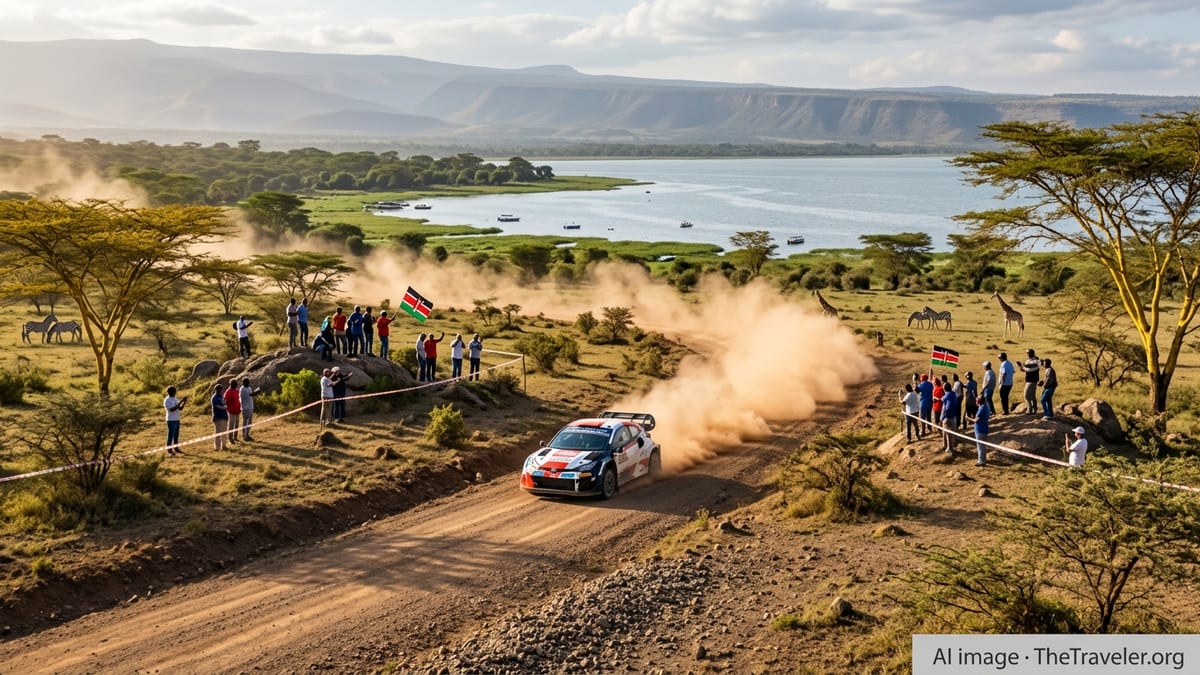
Rally Routes Thread Through Iconic Rift Valley Landscapes
Safari Rally Kenya 2026 is based around Naivasha in Nakuru County, with twenty special stages and roughly 350 kilometres of competitive distance through the Great Rift Valley. Publicly available information shows that the event serves as the third round of the 2026 World Rally Championship, continuing the rally’s modern era as a gravel endurance test defined by volcanic ridges, wide skies and sudden downpours.
The route weaves between Lake Naivasha, private conservancies and working ranches, with signature stages such as Oserengoni and Hell’s Gate retaining their reputation for punishing surfaces and spectacular scenery. Reports on the 2026 route outline a shakedown at Naivasha Wildlife Sanctuary, only a few kilometres from the main service park, giving fans an early glimpse of cars kicking up dust against a backdrop of open savannah and scattered wildlife.
Rally guides for this year’s edition highlight how quickly conditions can change in the Rift Valley. Torrential showers can turn fesh-fesh dust into deep ruts within minutes, carving temporary streams across tracks and revealing rock shelves that test both machinery and drivers. Those same storms create dramatic light over the escarpment and lakes, a visual hallmark that has long helped distinguish the Kenyan round from other championship events.
Spectator information distributed ahead of the rally stresses that designated viewing zones have been selected not just for safety and access, but also for their scenery. From hilltop vantage points overlooking Lake Naivasha to valleys lined with yellow-barked fever trees, many viewing areas are positioned where visitors can see both high-speed rally action and the Rift Valley’s characteristic geology and plant life.
Wildlife Viewing Opportunities Along the Safari Stages
One of the features that keeps Safari Rally Kenya on the global radar is the proximity of competition stages to wildlife-rich areas. Coverage of recent editions shows that plains game such as zebras, gazelles and giraffes are frequently visible in the distance along sections of the Naivasha route, while baboons and warthogs are sometimes spotted closer to the road. Although rally safety protocols keep animals clear of live stages, the broader landscape remains an active habitat before and after the cars pass.
Hell’s Gate National Park, which again hosts the rally’s final Power Stage on March 15, is known outside motorsport circles for its dramatic cliffs, geothermal features and resident populations of buffalo, antelope and many bird species. On non-rally days, visitors typically explore the park on foot, by bicycle or in vehicles, but during the event large areas are closed or controlled for safety. Public information advises rally-goers to treat the park first and foremost as a protected area, respecting restrictions that limit access to sensitive zones and nesting cliffs.
Private conservancies such as Oserengoni, which features in the Sunday itinerary, blend wildlife protection with carefully managed tourism and ranching. Recent route breakdowns describe stages that skirt lakes, forest patches and open plains where wildlife movements are monitored in cooperation with rangers and conservation staff. Visitors who base themselves in Naivasha’s lodges and camps often add pre- or post-rally game drives in neighbouring conservancies, extending their trip beyond the motorsport spectacle.
While the rally route itself is tightly controlled, many fans build itineraries that combine stage-hopping with excursions to other Kenyan parks within driving distance. Travel industry updates suggest growing interest in pairing Naivasha with destinations such as Lake Nakuru, known for rhinos and rich birdlife, or the Maasai Mara for multi-day safaris before or after the rally window, using the event as an anchor for broader wildlife-focused travel.
Green Measures and Conservation Messaging in 2026
In recent years, organisers and Kenyan agencies have increasingly framed Safari Rally Kenya as a platform for sustainable tourism and conservation awareness, and the 2026 edition continues this trend. News reports on the 2025 rally highlighted expanded green initiatives around Naivasha, including waste management, tree-planting drives and closer cooperation with environmental bodies. Publicly available information for 2026 indicates that these measures are being refined rather than rolled back.
The Wildlife Research and Training Institute in Naivasha again hosts the main service park, physically tying the championship paddock to a hub of wildlife science and conservation. Coverage of preparations for this year’s rally notes that education and outreach activities are planned in and around the service park, using the high footfall of fans to promote messages on habitat protection, responsible tourism and the importance of wildlife corridors in the wider Rift Valley ecosystem.
Organisers are also emphasising controlled access to ecologically sensitive sites. Spectator guides describe clearly marked viewing zones, recommended approach roads and reminders against off-track driving, littering or harassing wildlife. Vendors are being concentrated in specified fan zones to reduce pressure on open landscapes, while initiatives from previous years aimed at reducing single-use plastics and encouraging proper waste disposal appear to be continuing across the 2026 event footprint.
Travel analysts note that by aligning the rally with conservation priorities, Kenya seeks to strengthen its position as a long-term motorsport host and a repeat tourism destination. As discussions continue about the event’s future on the World Rally Championship calendar beyond 2026, the ability to demonstrate environmental responsibility alongside economic impact is emerging as a central theme in public commentary.
Practical Advice for Fans Heading to Naivasha
With thousands of domestic and international visitors converging on Naivasha for the March 12 to 15 event, Kenyan transport agencies are warning of heavy traffic along key approaches to the rally hub. Recent advisories from the Kenya National Highways Authority outline likely congestion on the Nairobi–Naivasha and Nairobi–Mai Mahiu–Narok corridors, as well as on local access roads to major viewing areas and the service park.
Publicly available guidance recommends that rally fans travel early, factor in delays and familiarise themselves with official diversion routes that loop through towns such as Engineer, Olkalou and Lanet. Motorists are being urged to respect temporary closures on sections designated as competitive stages or restricted rally corridors, and to observe speed limits on diversion routes that pass through smaller communities and wildlife zones.
Accommodation in Naivasha and surrounding areas can be tight over rally week, with local media previously reporting occupancy surges during the 2025 edition. For 2026, many lakeside resorts, tented camps and budget guesthouses have again aligned their offerings with rally dates, tailoring early breakfasts, packed lunches and transfer services around stage start times. Late planners may find options in nearby towns such as Gilgil or Nakuru, trading proximity for availability.
Health and safety advice from travel and event materials emphasises sun protection, hydration and dust management, particularly at exposed hillside viewing points. Fans are encouraged to carry reusable water bottles, light layers for changeable weather and basic eye and respiratory protection in case of swirling dust or sudden rain. Official channels also stress the need to obey marshals, stay behind barriers and avoid standing on the outside of corners or in riverbeds and culverts that can quickly flood during storms.
Turning a Rally Weekend into a Broader Kenyan Journey
For many international visitors, Safari Rally Kenya 2026 functions as the centrepiece of a longer journey through East Africa. Travel industry commentary points to a growing number of packages that combine several days in Naivasha with onward trips to marquee wildlife destinations, allowing travellers to pivot from rally stages to traditional game drives without lengthy domestic flights.
Lake Naivasha itself offers post-stage activities such as boat trips among hippos and birdlife, guided walks on Crescent Island and cycling excursions on the fringes of Hell’s Gate National Park outside the main rally timetable. Nearby geothermal spas, escarpment viewpoints and flower farms provide additional options for rest days or for non-motorsport companions in mixed travel groups.
Beyond the Rift Valley, routes commonly suggested in recent travel discussions include overnight stays in Nairobi to visit museums and urban wildlife attractions, then onward travel to parks such as Amboseli or the Maasai Mara. Some visitors are choosing to travel in the late dry season specifically to experience both the rally and prime wildlife viewing conditions, with the March rally dates acting as a seasonal bridge into itineraries later in the year.
As the 2026 edition cements Kenya’s position as the World Rally Championship’s African showcase, the event is reinforcing a dual identity: part motorsport classic, part live brochure for the country’s wildlife, landscapes and evolving approach to sustainable tourism. For travellers willing to plan around road closures and crowds, the reward is a rare combination of world-class rallying framed by some of the continent’s most memorable natural scenery.