

More news on this day
European coastal favorites including Spain, Italy, Portugal, Croatia and Malta, alongside Norway’s fjord coastline, are seeing a sharp upswing in demand as international travelers seek alternatives to holidays routed through the conflict-affected Middle East and Eastern Mediterranean air corridors.
Get the latest news straight to your inbox!
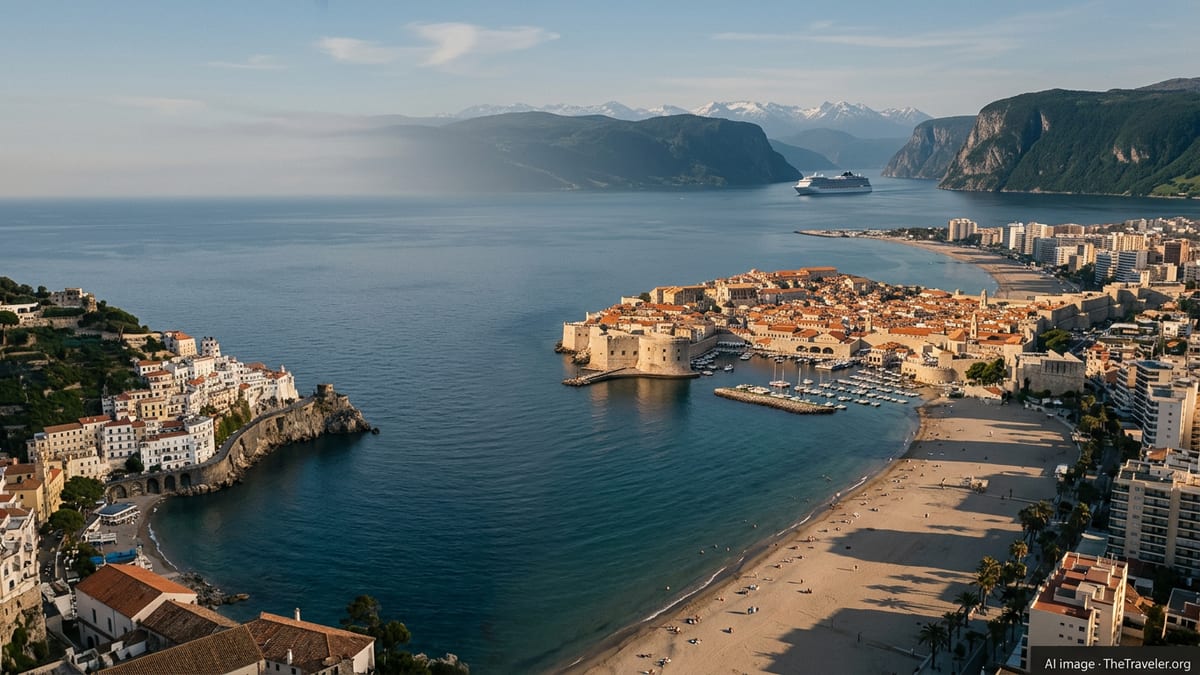
Shifting Demand as Travelers Reroute Around Regional Tensions
Booking and industry data for 2025 and early 2026 indicate a clear rebalancing of tourism flows across Europe, with western and central Mediterranean destinations capturing a growing share of sun-seeking demand. Reports from travel trade publications and tour operators show that Spain and Italy continue to rank among the top global choices for the coming summer, while Portugal, Croatia and Malta register solid year-on-year gains in arrivals and tourism receipts.
Publicly available analyses of airline ticket sales and package holiday bookings describe a pattern in which travelers increasingly avoid itineraries that rely on complex connections through Middle Eastern and eastern Mediterranean hubs. The war in Gaza and wider regional tensions have prompted precautionary flight diversions, higher insurance premiums on certain routes and a perception of heightened disruption risk, particularly for journeys touching Israeli, Lebanese or some Gulf-adjacent airspace.
Although many carriers maintain services to major Middle Eastern airports, a combination of schedule changes, longer routings and media coverage of conflict has driven risk-averse leisure travelers to seek simpler point-to-point options. Industry commentary suggests that customers with flexible preferences are gravitating toward destinations reachable via direct services from Europe and North America, particularly those perceived as politically stable and distant from active conflict zones.
This environment has helped redirect part of the seasonal flow that might previously have funneled through hubs serving Egypt, the United Arab Emirates and other regional gateways. Rather than combining city breaks in Dubai, Abu Dhabi or Cairo with beach stays in the eastern Mediterranean, many travelers are opting for all-European itineraries that link Spain, Italy or Portugal with northern highlights such as the Norwegian fjords.
Spain, Italy and Portugal Benefit From Strong Airlift and Brand Power
Spain and Italy are among the biggest beneficiaries of the reshaped tourism map, according to recent European tourism outlooks and airline booking reports. Analyses by European travel bodies note that Spain recorded solid growth in international tourist nights and revenue in the first half of 2025, supported by strong transatlantic and intra-European air connectivity. Italy, meanwhile, has posted double-digit increases in early summer bookings in some source markets, including a notable rise in demand from North America.
Portugal has also seen positive momentum, with industry reports highlighting a combination of rising arrivals and higher per-visitor spending. Its Atlantic position, far from the main Middle Eastern conflict theaters, is seen as a reassuring factor for some travelers, while Lisbon, Porto and the Algarve continue to gain visibility in global travel media rankings. The country’s mix of city tourism, wine regions and coastal resorts offers itineraries that do not rely on third-country stopovers.
Travel data compiled by major aggregators show that direct connections from European and North American cities into hubs such as Barcelona, Madrid, Rome, Milan, Lisbon and Porto remain robust. This network allows airlines to adjust capacity on high-demand leisure routes without exposing passengers to the more volatile sections of Middle Eastern airspace. Tour operators are responding by increasing their contracted bed capacity and charter flights into Spanish and Italian islands, as well as to Portuguese coastal regions.
At the same time, price-sensitive travelers who might once have looked to Turkey or parts of North Africa for budget packages are finding competitive offers in secondary Spanish and Italian destinations and in parts of rural Portugal. Industry commentary indicates that, for many customers, the perceived safety and reliability of western Europe now outweigh modest price differentials that once favored eastern Mediterranean or Gulf resorts.
Croatia and Malta Emerge as Alternative Sun-and-Sea Gateways
Smaller Mediterranean countries are also capitalizing on the shift. Recent European tourism monitoring shows Croatia recording one of the region’s strongest increases in arrivals, with double-digit growth in some periods and an expanding reputation for coastal and island tourism. The country’s position on the Adriatic, far from Middle Eastern conflict zones yet offering the same summer climate and clear waters, is attracting visitors who might previously have chosen Greek islands or resorts along Turkey’s Aegean coast.
Malta has reported meaningful gains in tourism revenue alongside higher international arrivals. Regional tourism reports point to the island’s improved air connectivity, with more point-to-point flights from major European cities, and to its marketing as a compact, culturally rich alternative to larger Mediterranean destinations. As with Portugal, Malta’s distance from Middle Eastern battlefields and its EU membership are frequently cited in consumer-facing coverage as reassurance factors for cautious travelers.
These trends are visible in booking platforms that show rising interest in Adriatic and central Mediterranean locations outside the traditional mass-market corridors. Travel industry analyses describe a growing segment of tourists specifically filtering for destinations that avoid potential airspace detours or exposure to regional unrest. In this context, Croatia’s coastal cities and islands, along with Malta’s harbor towns and resort areas, are well positioned to capture demand looking for familiarity and safety combined with warm-weather beaches.
Some reports also suggest that repeat visitors who previously alternated between Greece, Turkey and Egypt are now rotating Croatia and Malta into their holiday patterns. While price and availability remain core drivers, the cumulative effect of several years of geopolitical and operational disruptions in the wider region has made diversification within Europe an appealing strategy for many households.
Norway’s Fjords Attract Travelers Seeking Cool, Stable Alternatives
Beyond the Mediterranean, northern Europe is benefiting from travelers who prefer to avoid any perceived proximity to Middle Eastern tensions altogether. The European Travel Commission’s recent quarterly outlook highlights significant growth in tourist nights in Norway, with increases reported at around one-third year on year for some periods. This surge reflects heightened global interest in fjord cruises, coastal road trips and nature-focused itineraries.
Travel trade coverage notes that Norway’s image as a politically stable, safe and environmentally pristine destination has strengthened its appeal in an era of overlapping crises. Cruise lines and tour operators are expanding summer programs along the Norwegian coast, in part to balance portfolios that have previously leaned heavily on eastern Mediterranean routes. For some operators, capacity has been reallocated from itineraries calling at ports in the Levant or near the Suez corridor toward northern and western European sailings.
Air connectivity also underpins Norway’s tourism boom. Direct seasonal flights from major European and North American cities into Oslo, Bergen and other gateways let travelers bypass intermediate hubs in the Middle East. Industry commentary emphasizes that, while fjord holidays are not a like-for-like substitute for beach resorts, they appeal strongly to families and older travelers seeking fresh air, lower temperatures and a perception of distance from geopolitical flashpoints.
The result is a more diversified European summer tourism landscape in which sun-and-sea holidays in Spain, Italy, Portugal, Croatia and Malta coexist with cooler, nature-centric escapes in Norway. Together, these destinations are absorbing part of the demand that might once have focused more heavily on Egypt’s Red Sea resorts or Gulf city breaks.
Mixed Picture for Greece, Turkey, Egypt and UAE Amid Flight and Perception Challenges
The impact of the Middle East conflict and related flight adjustments on traditional eastern Mediterranean and Gulf destinations is uneven. While comprehensive international arrival statistics show that countries such as Greece, Turkey, Egypt and the United Arab Emirates continue to attract large numbers of visitors, several industry reports indicate changing patterns beneath the headline figures.
Coverage focused on Turkey’s tourism sector notes a decline in Western European bookings for parts of the 2025 season, accompanied by pressure on projected revenues. Commentators attribute this partly to currency shifts and competition from other Mediterranean destinations, but also to traveler caution related to regional instability and to the country’s proximity to conflict-affected zones. At the same time, strong demand from Russia and other markets has helped sustain overall visitor volumes, highlighting a growing divide between source regions.
Egypt presents another complex case. International tourism barometer data and payment network analyses depict the country as one of the better-performing destinations worldwide in terms of arrivals and visitor spending, buoyed by Middle Eastern travelers and domestic demand. However, for some Western tourists, concerns about overflying or connecting through areas seen as closer to the conflict, combined with heightened media focus on regional security, have encouraged a shift toward perceived safer options within the European Union.
In the Gulf, the UAE remains a major transit and destination hub, yet global coverage of airspace adjustments and route changes linked to regional tensions has underscored the vulnerability of itineraries that rely on complex long-haul connections. Even when actual disruption is limited, the perception of potential delays, diversions or sudden schedule changes is influencing a segment of leisure travelers, who express a preference, in surveys and booking behavior, for more direct routings into western and northern Europe.
For Greece, industry commentary paints a somewhat different picture. The country remains central to European summer tourism and features strongly in advance bookings for 2026, especially from markets such as Germany and the United States. Nonetheless, some European booking data show that Greece has recently slipped behind Italy and other competitors in specific segments, with anecdotal evidence of travelers testing alternatives in Spain, Portugal or Croatia when faced with high prices or worries about regional volatility.
Looking ahead to the 2026 and 2027 seasons, analysts expect this redistribution of demand to continue as long as conflict and airspace uncertainties persist in the wider Middle East. Destinations that combine strong direct airlift, political stability and recognizable tourism brands in western and northern Europe appear best placed to capture travelers seeking both sunshine and a sense of security.