

More news on this day
Mexico is closing out another record tourism year, yet many travelers who once returned annually to the country’s beaches and cities are now rethinking if, how, and where they revisit amid evolving safety concerns.
Get the latest news straight to your inbox!
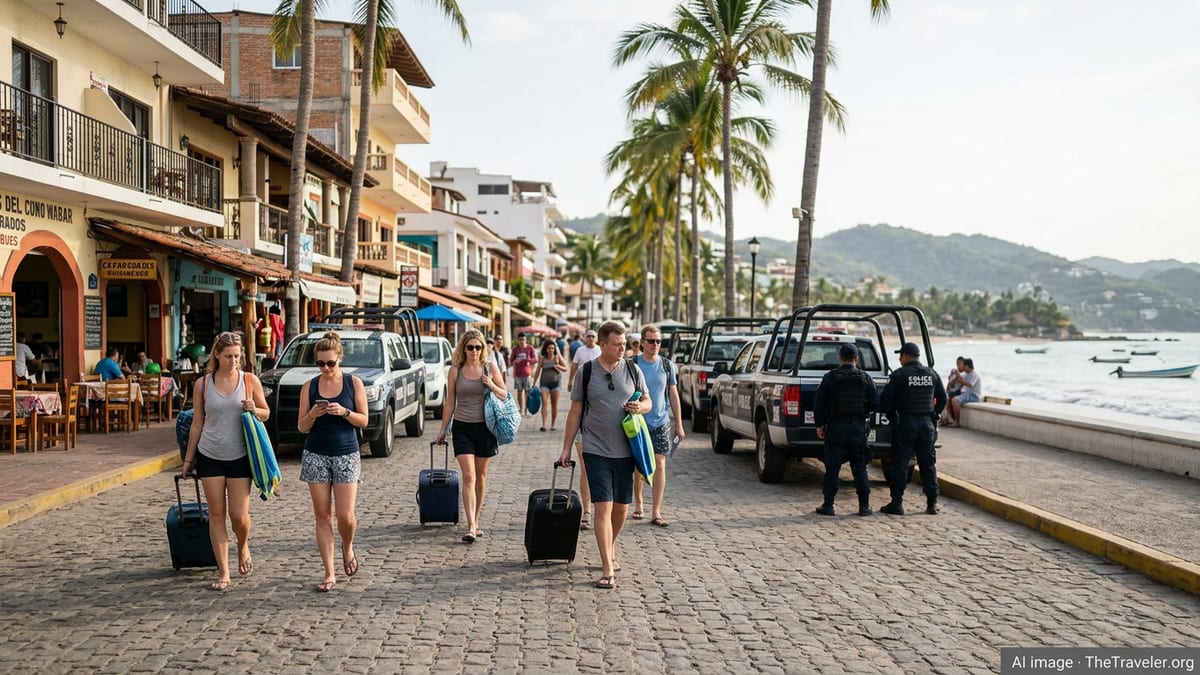
Record Visitor Numbers Mask Shifting Sentiment
Recent data from Mexican and international tourism bodies indicates that Mexico welcomed close to 48 million international visitors in 2025, with tourism revenue rising more than 6 percent compared with 2024. Reports based on figures from the National Institute of Statistics and Geography and the federal tourism secretariat describe a market that has not only recovered from the pandemic but surpassed pre-2020 benchmarks in arrivals and spending.
Behind those headline numbers, however, travel industry coverage points to a more complex picture. Analysts describe a shift in the composition of visitors, with more first-time and package-tour travelers entering the market while some repeat visitors quietly step back. Surveys and booking data shared in trade publications suggest that safety perceptions, rather than cost or service quality, are increasingly central to decisions about returning to Mexican destinations.
Tourism in Mexico still represents a significant share of national economic activity, with estimates placing the sector at around 8 to 9 percent of gross domestic product and tens of billions of dollars in annual revenue. As visitor counts reach new highs, the question facing the industry is less whether people will come, and more whether those who used to return year after year will continue to do so under changing security conditions.
Travel Advisories and High-Profile Incidents Influence Choices
Publicly available advisories from foreign ministries, particularly the United States, have become a key reference point for travelers weighing a repeat trip. The current U.S. advisory for Mexico, updated in August 2025, applies different caution levels by state and highlights restrictions for government personnel in several regions. The detailed, state-by-state guidance has led many returning visitors to scrutinize their usual vacation spots more carefully, especially in areas where official messaging urges reconsidering travel.
Media coverage of cartel-related violence, mass shootings, and targeted incidents along highways and in some border areas further shapes perception. Reports on events such as the 2025 festival shooting in Irapuato, Guanajuato, and earlier kidnappings and attacks in states like Tamaulipas have raised traveler awareness of risks that may not directly touch major resort zones but contribute to an overall sense of unease.
Travel advisors and online booking platforms have noted that while many first-time travelers are primarily motivated by price and climate, repeat visitors tend to track safety trends over time. Commentaries in travel trade outlets describe a pattern in which long-time Mexico vacationers pause or reroute plans after each widely reported incident, sometimes skipping a familiar destination for a season or two until security headlines calm.
From Beach Mainstays to Perceived Safe Havens
The evolving risk map inside Mexico is changing not only whether people return, but where they feel comfortable doing so. Tourism reports highlight that established resort corridors such as Cancún, Playa del Carmen, and Los Cabos continue to post strong occupancy rates, supported by visible private security, controlled access to resort complexes, and tight coordination between local tourism stakeholders.
At the same time, publicly available economic and security assessments for states like Quintana Roo point out that violence and organized crime activity remain important vulnerabilities beneath the surface. Analysts note that while most incidents occur away from hotel zones, even isolated episodes in tourist districts can prompt loyal visitors to test alternative destinations, including perceived safe havens within Mexico such as parts of the Yucatán interior or select Pacific coast towns with lower crime profiles.
Repeat travelers increasingly describe, in surveys and travel media interviews cited by industry research, switching from independent itineraries to more controlled formats. That includes choosing gated all-inclusive resorts over rental homes, booking transfers through hotel-approved providers rather than hailing taxis on arrival, and limiting nighttime movement outside tourist areas. For some, these measures make a return trip possible; for others, they erode the sense of relaxed familiarity that once defined going back to the same Mexican beach every winter.
New Planning Habits and Risk Management on Return Trips
Global traveler sentiment reports from major travel research firms show that safety now consistently ranks alongside price and value as a top concern affecting trip planning. In Latin American and North American markets, respondents frequently cite crime and security as reasons to modify or postpone travel, and Mexico figures prominently in those considerations given its popularity and media visibility.
Among those who do choose to revisit Mexico, planning habits are changing. Travel forums, consumer media, and booking platforms reflect a growing emphasis on flexible cancellation policies, detailed local guidance, and real-time updates. Travelers are more likely to compare state-level advisories, check recent news for specific cities, and verify that hotels or tour operators have clear security protocols, before committing to a repeat stay.
Insurance data shared in industry publications points to increased uptake of policies that explicitly cover trip interruption or cancellation due to security events. Some repeat visitors also report shortening stays, avoiding long-distance driving, and favoring direct flights into tourist hubs to minimize transit through higher-risk areas. These strategies collectively reframe revisiting Mexico as an exercise in managed risk rather than automatic habit.
Industry Response and the Battle for Traveler Confidence
Mexico’s tourism sector is responding with a mix of marketing, investment, and quiet security upgrades aimed at keeping loyal visitors in the fold. Destination marketing campaigns now frequently highlight not just beaches and culture, but also infrastructure improvements, certified tour operators, and collaborations with private security and local communities designed to protect tourism corridors.
Trade publications report continued investment in airport capacity, road improvements to major resort areas, and surveillance systems in busy tourist districts. Hotels and large resort brands emphasize staff training, vetted transportation partners, and emergency procedures as selling points for cautious guests, particularly those returning with families or larger groups.
Yet even as these efforts help sustain record arrivals, the perception gap remains. For a segment of travelers who once treated Mexico as an automatic annual choice, the combination of security advisories, news coverage of cartel violence, and concerns about fraud targeting tourists, such as timeshare scams documented by U.S. financial agencies, has introduced new hesitation. Whether those visitors ultimately return, switch destinations within Mexico, or take their loyalty elsewhere will help determine how sustainable the current tourism boom proves to be over the long term.