

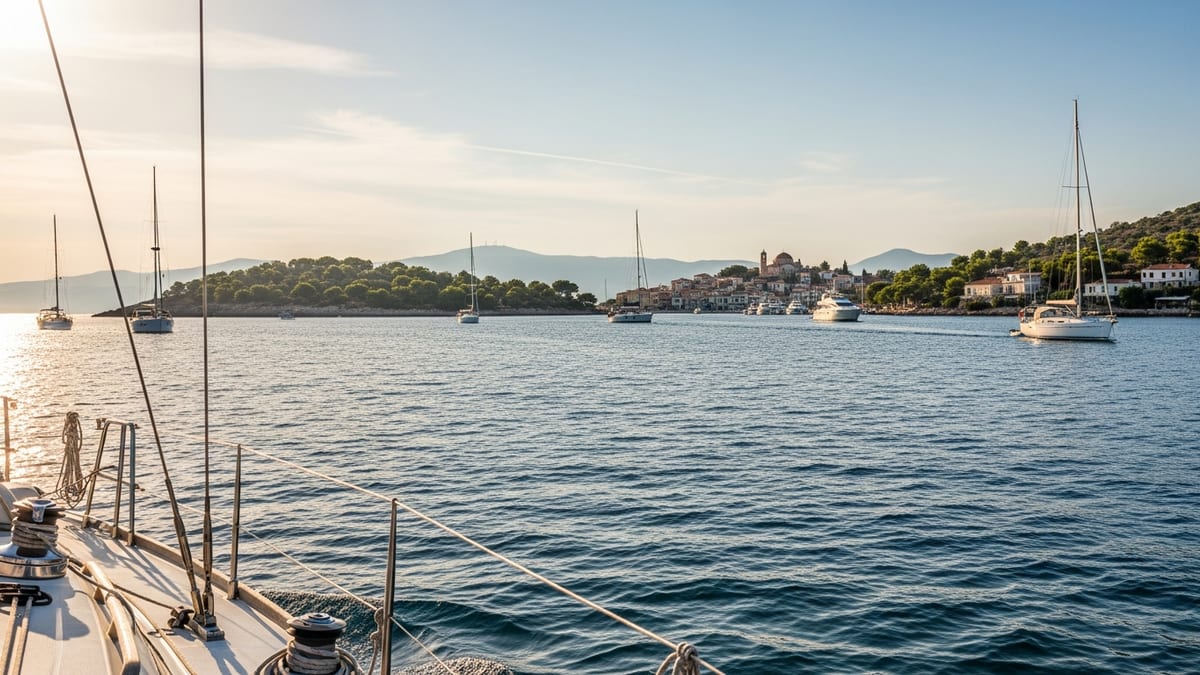
The Saronic Gulf is where Athens goes to the islands. Just a short hop from the capital, this pocket of sea scattered with low-slung, pine-scented islands has become one of Greece’s most reliable crowd-pleasers. For sailors, it promises sheltered passages and short hops between harbors.
For holidaymakers, it offers the ease of frequent ferries, year-round connections, good food and a relaxed, local feel that stands in contrast to the blockbuster Cyclades. This guide explores why the Saronic Gulf is so popular, what each island offers, and how to piece them together into an unforgettable route.
Understanding the Saronic Gulf
The Saronic Gulf lies between the Attica peninsula and the northeastern Peloponnese, within sight of the Athens coastline on a clear day. It forms part of the wider Aegean Sea but feels like its own self-contained world, protected from the extremes of weather that can sweep more exposed island chains. Aegina, Agistri, Poros, Hydra, Spetses, Salamina and the volcanic peninsula of Methana make up the classic Saronic circle, with countless coves, anchorages and tiny islets in between.
What sets the Saronic apart is proximity. Ferries and high-speed hydrofoils depart from the port of Piraeus with dozens of daily departures in season, and there are year-round links to key islands such as Aegina, Agistri and Poros. Crossings can be as short as 30 minutes on fast services or around one to two hours on conventional ferries, which makes weekend getaways and spontaneous island hopping entirely realistic for visitors based in Athens.
The region also appeals because it blends history and everyday Greek life. Ancient temples sit above busy fishing harbors; pistachio farmers share waterfront space with yacht crews; and on car-free Hydra and much of Spetses, the rhythm of transport is still set by your feet, water-taxis and horse-drawn carriages. This balance of accessibility and authenticity is a major reason the Saronic Gulf has become a favorite with both Greeks and international visitors.
Why the Saronic Gulf Is So Popular
For sailors and skippers, the Saronic Gulf is a byword for easy cruising. The islands are close together, passages are usually short, and the gulf is better sheltered from the strong summer winds that batter the central Aegean. Charter companies based in marinas around Athens routinely recommend Saronic itineraries for first-time crews, family trips and anyone sailing during July and August when conditions can be demanding in the Cyclades.
For non-sailors, the attraction is simplicity. Regular ferries, hydrofoils and small local boats create a network of links that makes island hopping straightforward even without advance planning. Many visitors base themselves in Athens and use the Saronic islands as long day trips, returning to the city in the evening. Others choose a main base such as Aegina or Poros and fan out from there to explore nearby islands and mainland ports on shorter excursions.
The Saronic Gulf has also built a reputation as a year-round destination. While the warmest months are from late May through September, ferries continue outside peak season, and the islands do not shut down to the same degree as some smaller Cycladic outposts. That makes the area attractive for spring and autumn walking holidays, off-season escapes focused on local culture, and shorter winter breaks that combine Athens with at least one island stay.
The Main Islands: Character and Highlights
Aegina is often the first island visitors encounter, thanks to its frequent ferry links and short distance from Piraeus. Beyond its busy main harbor lined with neoclassical buildings and café terraces, the island is known for its pistachio orchards, beaches and one of Greece’s best preserved ancient temples, the Temple of Aphaia. Inland villages and modest hills offer rewarding hiking with expansive views back toward the Attica coast and across the gulf to Agistri and Methana.
Agistri sits just beyond Aegina and has a different personality. Smaller and more forested, it is popular for swimming, snorkeling and relaxed seaside stays, with clear water and pebbly coves framed by pine trees. Many travelers visit Agistri on a combined Aegina day trip, but it also rewards an overnight stay when the day boats have left and the harbors settle into a quietly local atmosphere.
Poros lies closer to the Peloponnese mainland, separated from the town of Galatas by a narrow strait that fills each evening with small boats and fishing craft. The island is low and green, with excellent anchorages around the coastline. Its main town is a hillside of white houses stacked above a compact harbor, topped by a clocktower that has become Poros’ signature landmark. From here, fast ferries connect onward to Hydra and Spetses as well as back to Piraeus.
Hydra and Spetses have built almost mythic status. Hydra’s dramatic amphitheater harbor is surrounded by stone mansions once owned by sea captains, and the island is famously free of cars, creating an atmosphere that feels frozen in time. Spetses, further south, mixes grand seafront villas with pine woods and coves, and like Hydra it limits traffic in the historic core. Both islands attract a sophisticated crowd in high season while still retaining strong local communities and traditions.
Classic Saronic Sailing and Island-Hopping Routes
For those exploring the Saronic Gulf by boat, Athens’ marinas, particularly Alimos, Flisvos and nearby bases along the southern Attica coast, serve as standard starting points. A classic one-week itinerary might run from Athens to Aegina, continue via Agistri to Poros, then on to Hydra and Spetses, with stops at smaller anchorages like the islet of Moni near Aegina or the quiet coves of Dokos. Distances between legs are generally modest, often in the range of 10 to 30 nautical miles, which allows for leisurely starts, long swims and time ashore most evenings.
Two-week itineraries often extend beyond Spetses along the eastern Peloponnese coast toward ports such as Porto Heli, Ermioni, Leonidio or Nafplio, then loop back through Epidavros and Aegina. These longer routes add variety, with a mix of island harbors, secluded anchorages and historic mainland towns, including access to the celebrated ancient theater of Epidaurus and the medieval streets of Nafplio. The pattern of short to medium hops keeps sailing comfortable even with less experienced crews.
If you are traveling without a yacht, you can echo similar circuits using ferries and hydrofoils. One common theme is to begin with a short ferry to Aegina, then carry on to Agistri for a night or a day before returning to Aegina for an onward connection to Methana or back to Piraeus. Another is to ride a fast hydrofoil from Piraeus to Poros, then continue to Hydra and Spetses, returning via Poros or linking from Spetses to the Peloponnese mainland and then back to Athens overland.
Island hopping is flexible by design. Services are frequent in the main season from late spring to early autumn, which allows travelers to adapt their route to the weather and personal preference rather than being locked into a rigid schedule. That freedom, combined with the density of potential stops, is a significant part of the Saronic Gulf’s appeal.
How to Get There and Around
Most visitors begin their Saronic journey in Athens. From Athens International Airport, taxis, private transfers, buses and the suburban railway connect to Piraeus, generally in under an hour depending on traffic and route. From the port, conventional ferries, hydrofoils and high-speed catamarans serve the Saronic islands with a choice of travel times and price points, ranging from simple passenger ferries to faster vessels that cut crossing times considerably.
Ferry and hydrofoil schedules are densest in summer, when there may be up to dozens of daily departures from Piraeus to key islands like Aegina and Poros, and several daily connections to Hydra, Spetses and Agistri. Travel times vary: conventional ferries from Piraeus to Aegina typically take around one hour to one hour and fifteen minutes, with high-speed services cutting that to about 30 to 40 minutes. Journeys to Poros and Hydra can take between roughly one and three hours depending on vessel type and intermediate stops, while Spetses is usually reached by high-speed craft in around three hours.
Once you arrive on an island, local transport is usually straightforward though not lavish. On Aegina, buses run between the main town and villages such as Agia Marina and Perdika, while taxis and rental cars or scooters cover more flexible needs. Poros has a small but useful bus network along its main coastal road, supplemented by taxis and hire vehicles. On Hydra, cars are not allowed, so you are reliant on your feet, water-taxis and occasionally donkeys for luggage or special occasions. Spetses also restricts vehicles in its historic core, encouraging walking, cycling and the use of horse-drawn carriages and local taxis.
Between islands, there are direct ferries and hydrofoils on key routes, notably Poros to Hydra, Hydra to Spetses, and Aegina to Agistri. In addition, small water-taxis and excursion boats fill gaps in scheduled services, especially in peak season. It is wise to check timetables regularly and confirm return services when planning day trips, but the overall effect is a flexible network that makes independent travel viable even for first-time visitors.
Island-by-Island: What to Expect
Aegina’s main town is the hub of the island, with its long quay lined by fishing caiques, pastry shops and cafés. The Temple of Aphaia, set on a hilltop surrounded by pine forest, provides the island’s most famous cultural sight and can be combined with a circuit that also includes the monastery at Agios Nektarios and the beaches at Agia Marina. Along the southwest coast, the village of Perdika serves as a base for boat trips to the tiny islet of Moni, where clear water and forested slopes create a favorite swimming and snorkeling spot.
Agistri has a smaller set of settlements, notable among them Skala, with its sandy beach and family-friendly accommodations, and the village of Megalochori. Much of the island’s charm lies in walking or cycling through pine woods that border the sea, stopping at tiny coves with luminous water. The atmosphere is informal, and many visitors pair simple seaside rooms with long days spent in or near the water rather than building packed sightseeing itineraries.
Poros’ town climbs the hillside in tiers, culminating at the clocktower that offers a sweeping view over the harbor and across to the Peloponnese. Around the island, popular stops include Love Bay, framed by pine trees and turquoise water, and small coves further west that appeal to sailors and swimmers alike. The short water crossing to the mainland town of Galatas opens up options for exploring the Lemon Forest, a fragrant valley of citrus trees, and further inland villages in the Troizinia region.
Hydra’s harbor provides one of the most instantly recognizable scenes in Greece, with stone mansions, tiled roofs and a crescent of quayside cafés and bars. Without cars, the island feels unusually peaceful once you step away from the waterfront. Narrow alleys climb steeply among whitewashed houses to small squares and viewpoints, while coastal paths lead to beaches and small settlements such as Vlychos and Kamini. The artistic and bohemian reputation of Hydra is still visible in its galleries, cultural events and the mix of visitors it attracts.
Spetses combines maritime heritage with a resort-style seafront. The main port area of Dapia is lively, with shops, cafés and departure points for water-taxis. The old harbor area, a short walk away, features traditional boatyards and a romantic seafront lined with restaurants overlooking moored fishing boats and yachts. Around the island, pine-covered hills hide bays and beaches that can be reached by boat, bicycle or in some cases on foot, rewarding those who venture beyond the main town with quieter swimming spots and sea views back toward the Peloponnese.
When to Go and What Conditions to Expect
The most popular time to visit the Saronic Gulf is from late May through September, when sea temperatures are warm, ferry schedules are at their busiest and most services are running. July and August bring the highest visitor numbers, particularly to Hydra and Spetses, and advance bookings become important for both accommodation and ferries. Spring and autumn offer milder heat, manageable crowds and excellent conditions for walking, sailing and cultural touring.
Weather in the Saronic Gulf tends to be more settled than in the open Aegean, with the gulf offering some protection from the strong seasonal winds known as the Meltemi. This relative shelter is one of the reasons charter companies recommend the Saronic route for first-time crews, families with children and anyone seeking relaxed sailing rather than challenging passages. Nonetheless, it is still the sea, and conditions can change, so monitoring forecasts remains essential for those under sail.
Outside the main summer period, some smaller hotels, beach bars and seasonal restaurants reduce hours or close, particularly on the quieter islands. However, Aegina, Poros and the larger settlements on Hydra and Spetses maintain a year-round population and core services. This makes shoulder season visits viable for travelers who value atmosphere and local life over the full spectrum of summer nightlife.
Practical Tips for a Smooth Saronic Trip
Planning ahead improves a Saronic Gulf trip but total rigidity is unnecessary. Booking your first and last nights in advance, especially if they coincide with flights into or out of Athens, is wise. For peak months and weekends, reservations on popular Piraeus to island ferry routes can also save queues and disappointment. Between those fixed points, leaving some space to extend a stay on a favorite island or adjust to the weather often leads to a more relaxed experience.
Pack with mobility in mind. Many Saronic harbors have cobbled quays and sloping streets, and on car-free Hydra or in parts of Spetses, you may be moving your own luggage up from the dock. A manageable suitcase or backpack can make these transfers easier. Comfortable shoes are important, as much of the pleasure lies in wandering through towns, climbing up to viewpoints or following coastal paths to nearby beaches.
Respecting local rhythms will enhance your trip. Island life starts early, with fishing boats returning to harbor as cafés open, and evenings often begin later, with dinner commonly after 8 or 9 p.m. On islands where cars are limited or absent, give way to working animals and handcarts in the narrow streets and allow extra time for simple tasks like moving luggage or shopping. Many visitors find that embracing this slower pace becomes one of the highlights of their Saronic stay.
The Takeaway
The Saronic Gulf distills much of what travelers seek in the Greek islands into a compact and accessible region. It offers short ferry rides instead of long crossings, sheltered waters instead of unpredictable seas, and an easy blend of history, nature and contemporary Greek life. Whether you are chartering a yacht, relying on ferries or simply dipping out of Athens for a day or two, the Saronic islands provide a realistic, rewarding way to experience the Aegean without the logistical complexity that can accompany more distant archipelagos.
From the temple-crowned hills of Aegina to the pine-fringed coves of Agistri, the amphitheater harbor of Hydra and the seafront promenades of Spetses, each island has a distinct identity yet shares a common thread of hospitality and maritime culture. Combined with the year-round connectivity from Piraeus and the growing range of accommodation and dining options, these qualities explain why the Saronic Gulf remains one of Greece’s most enduringly popular destinations.
FAQ
Q1: How long does it take to reach the Saronic islands from Athens?
Travel times vary by island and vessel. Conventional ferries from Piraeus to Aegina typically take around one to one and a quarter hours, while high-speed services can reduce that to roughly 30 to 40 minutes. Journeys to Poros, Hydra and Spetses range from about one to three hours depending on the route and whether you travel by ferry or hydrofoil.
Q2: Which Saronic island is best for a first-time visit?
Aegina is often the best introduction because it is close, well connected and offers a mix of beaches, historic sites and everyday island life. Poros is another strong choice for first-timers seeking a picturesque harbor town and easy onward links to Hydra and the Peloponnese.
Q3: Do I need to book ferry tickets in advance?
During July, August and popular holiday periods, advance booking is recommended, especially for high-speed services and weekend departures. At quieter times of year it is often possible to buy tickets at the port shortly before departure, but checking schedules and securing tickets ahead of time can still reduce stress.
Q4: Is the Saronic Gulf suitable for beginner sailors?
Yes. The Saronic Gulf is widely regarded as one of Greece’s most beginner-friendly sailing areas, thanks to relatively short distances between islands and more sheltered conditions than in the open Aegean. Many charter companies recommend Saronic routes for first-time crews and family groups.
Q5: Can I visit multiple islands in one day?
Visiting two nearby islands in a single day is feasible on certain routes, for example combining Aegina and Agistri or Poros and Hydra using fast connections. However, to properly experience an island’s character, staying at least one night is usually more rewarding than trying to see too many places in quick succession.
Q6: Are the Saronic islands open year-round?
Core services on larger islands such as Aegina and Poros operate all year, including regular ferries, shops and restaurants. Hydra and Spetses also maintain a year-round community, though some tourist-focused venues may close in winter. Winter ferry schedules are reduced, so checking times in advance is important outside the main season.
Q7: Is it expensive to travel in the Saronic Gulf?
Costs vary with the choice of accommodation, transport and season, but overall the Saronic islands can be more affordable than some high-profile Cycladic destinations. Conventional ferry tickets are generally reasonably priced, and there is a range of lodging options, from simple rooms to upscale hotels, particularly on the larger islands.
Q8: What is the best time of year to swim?
Sea temperatures are usually comfortable for swimming from late May through October, with the warmest water in late summer and early autumn. Outside this window, hardy swimmers may still enjoy a dip, but most visitors prefer the warmer months when beaches and seaside facilities are fully active.
Q9: Do I need a car on the Saronic islands?
A car is not essential for most visitors. Aegina and Poros have local buses and taxis that cover main routes, and scooters or bicycles are popular alternatives. Hydra does not allow cars at all, and Spetses restricts them in key areas, so walking, cycling and water-taxis are the primary ways to get around.
Q10: Can I combine the Saronic Gulf with other parts of Greece?
Yes. The Saronic Gulf’s proximity to Athens makes it easy to pair a few days of island time with a city stay focused on classical sites and museums. Some routes also link Saronic islands to the Peloponnese mainland, allowing itineraries that combine island hopping with road trips to places like Nafplio, Epidaurus and ancient Mycenae.