

More news on this day
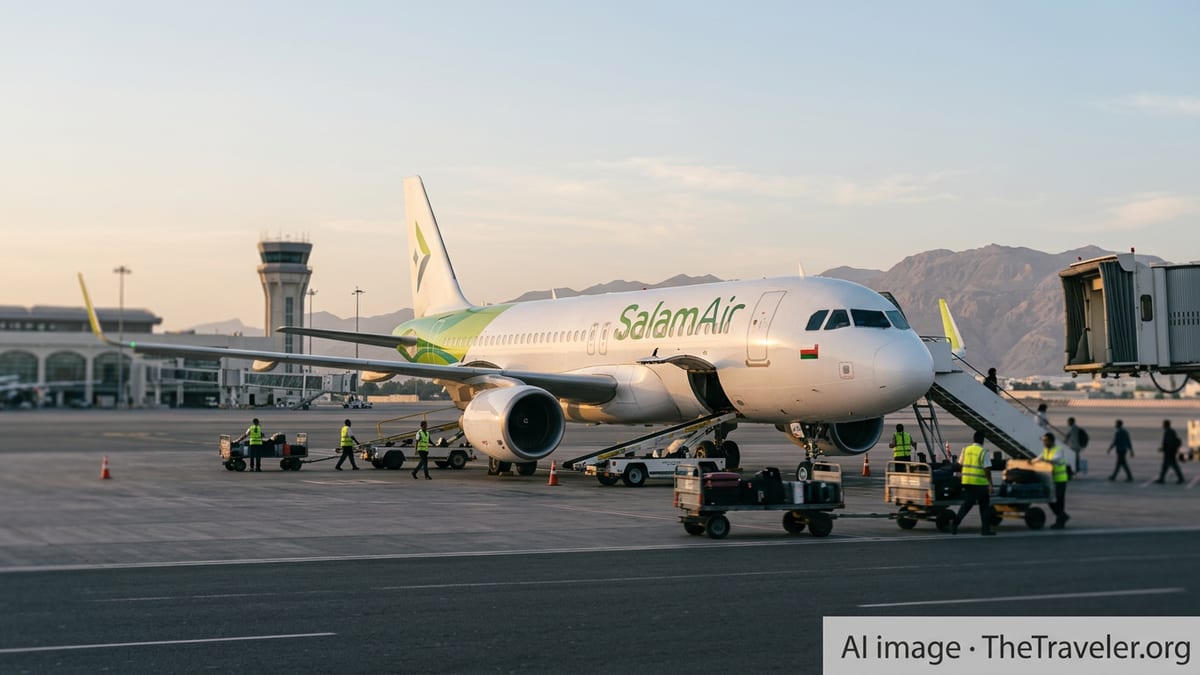
Oman-based low-cost carrier SalamAir is set to increase capacity on its Muscat–Cairo route between 16 and 27 March, adding extra flights to meet heightened demand and offer travelers more options between Oman and Egypt.
Get the latest news straight to your inbox!
Short-Term Capacity Boost on a Growing Route
According to information available from the airline’s booking channels and schedule data providers, SalamAir plans to operate additional services between Muscat and the Cairo area during the period from 16 to 27 March. The move temporarily increases the frequency of flights on a route that the carrier has been steadily building since launching direct services from Muscat to Cairo’s Sphinx International Airport in mid-2024.
The extra rotations are designed to overlay the existing schedule rather than replace regular services, effectively creating more seat availability in both directions. This late-March window coincides with a period of strong two-way traffic, as travelers in Oman and Egypt prepare for school holidays, family visits, religious observances and early spring leisure trips.
While precise flight counts can vary slightly across distribution platforms, the pattern for the second half of March shows SalamAir operating more departures than during the earlier part of the month, particularly on peak travel days. This translates into additional booking options across multiple dates between 16 and 27 March, broadening choice for passengers who may previously have found limited availability on certain days.
The enhanced schedule sits alongside nonstop Muscat–Cairo services from other regional carriers, adding a low-cost option to a corridor that is already regarded as one of the key air links between the Gulf and Egypt.
Enhanced Connectivity Between Muscat and Greater Cairo
SalamAir’s Muscat–Cairo flights serve Sphinx International Airport, on the western side of Egypt’s capital region, which offers an alternative to Cairo International Airport for passengers heading to or from the city and nearby tourist areas. Publicly available information on the route highlights that flight times average around four hours and forty minutes, with services typically operated by Airbus A320-family aircraft configured in a single-class layout.
The decision to add extra flights over an 11-day period reflects both point-to-point demand and growing use of Muscat as a connecting hub. SalamAir’s broader network from Muscat covers cities across the Gulf, the Indian subcontinent and parts of Asia, enabling travelers from these markets to connect onwards to Cairo through Oman on a single ticket.
For Egypt-bound passengers, the added Muscat departures open up more same-day and next-day connection possibilities from secondary cities that may have limited direct access to Cairo. Conversely, travelers originating in Egypt gain more flexibility for reaching destinations beyond Oman using SalamAir’s onward network, especially where travel patterns involve visiting friends and relatives or niche leisure routes that are less served by full-service carriers.
Industry data for early 2026 shows multiple airlines now sharing traffic on Muscat–Cairo services, underscoring how the route has matured into a competitive market. SalamAir’s temporary boost in capacity positions the airline to capture a greater share of late-March demand while reinforcing its presence alongside established regional and flag carriers.
Meeting Seasonal and VFR Travel Demand
The timing of the additional flights, concentrated between 16 and 27 March, aligns with a seasonal uptick in travel between Oman and Egypt. This period typically sees increased movement among expatriate communities, students and professionals traveling for short breaks, as well as early holidaymakers capitalizing on milder weather in Cairo and along Egypt’s tourist corridors.
Forward-looking fare data from online travel agencies and meta-search platforms indicates that seats on Muscat–Cairo services in March are in high demand across multiple airlines, particularly heading into the latter half of the month. By inserting extra flights into this timeframe, SalamAir is aiming to relieve some pressure on availability and offer more competitively priced options for late bookers.
The move is also likely to appeal to the sizable Egyptian community living and working in Oman, for whom flexible travel windows are often essential. Additional frequency can make it easier to coordinate family visits, attend time-sensitive events or secure itineraries that minimize time away from work while still enabling regional travel.
In practical terms, extra rotations also support cargo capacity on the route, as belly-hold freight carried on passenger aircraft contributes to trade flows between Oman and Egypt. While passenger demand is the primary driver, additional flights can marginally improve the movement of light freight and express shipments during a busy period.
Practical Considerations for Passengers
With flight schedules in parts of the region experiencing occasional adjustments in early 2026, travelers are being encouraged by travel platforms to closely monitor their itineraries in the days leading up to departure. Industry advisories highlight that some carriers have made short-notice timetable changes on select routes, and SalamAir’s extra Muscat–Cairo services are being introduced against that broader backdrop.
Passengers considering the newly added flights are advised, based on general travel guidance, to double-check departure and arrival airports in the Cairo region when booking, since SalamAir’s services operate to Sphinx International Airport rather than Cairo International. Ground transport times and options can differ depending on a traveler’s final destination within Greater Cairo, and factoring this into plans can help avoid last-minute surprises.
Given the relatively concentrated period of added capacity, fare trends suggest that prices may vary noticeably from one day to the next. Travelers with flexible schedules may find that shifting their departure by a day within the 16–27 March window can yield better availability or lower fares, while those with fixed dates are likely to benefit from booking as early as possible to secure seats on the extra flights.
Check-in recommendations from airlines operating out of Muscat emphasize arriving at the airport well ahead of departure during busy travel windows. With more passengers expected on the Muscat–Cairo corridor in late March, allowing additional time for check-in, security and potential regional travel procedures remains a prudent step for anyone planning to use the new SalamAir services.