

More news on this day
SalamAir is adding extra flights between Muscat and Cairo from March 16 to 27, significantly expanding seat capacity and providing more flexibility for travelers moving between Oman and Egypt.
Get the latest news straight to your inbox!
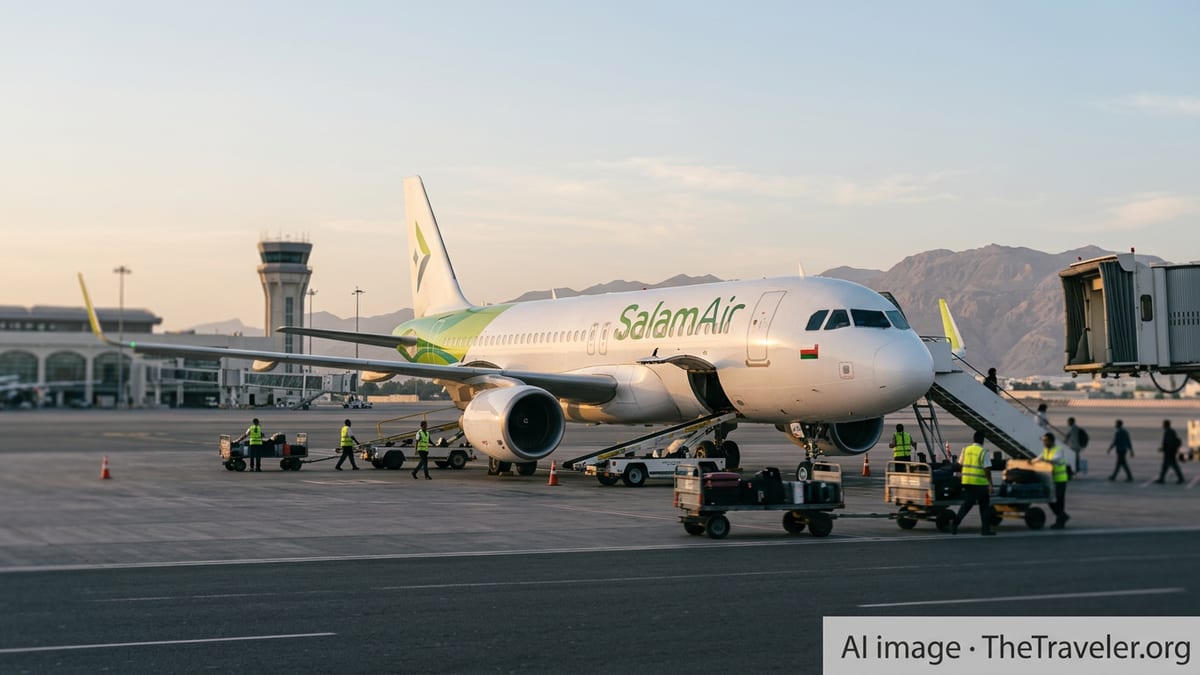
Expanded Schedule Targets Peak Late-March Demand
The additional SalamAir services on the Muscat–Cairo route are scheduled to operate across the busy period from March 16 to 27, aligning with heightened regional travel demand. The move builds on the carrier’s existing timetable to Cairo and is designed to ease pressure on popular departure dates when regular services often sell out quickly.
According to publicly available booking data and flight schedules, SalamAir already serves Cairo from Muscat as part of its core Middle East and North Africa network. The temporary uplift in frequencies over this 12-day window effectively boosts capacity on one of the airline’s key regional corridors, responding to strong point-to-point traffic as well as onward connections.
The timing coincides with a wider reshaping of schedules across the Gulf, where several carriers are adjusting operations to accommodate shifting travel flows, constrained airspace, and continued demand for links to major regional hubs such as Cairo. The extra rotations provide passengers with more options on travel dates and departure times, particularly for those who need to move at short notice.
While exact flight numbers and timings may vary by day, the added services are expected to supplement SalamAir’s regularly scheduled Muscat–Cairo flights rather than replace them, resulting in a net increase in available seats over the period.
Strengthening Oman–Egypt Connectivity
The Muscat–Cairo corridor is an important link connecting business travelers, expatriate communities, and leisure visitors in both countries. With SalamAir’s extra flights in the second half of March, passengers gain more choice on a route that is already served by multiple regional and national airlines.
Publicly available information on SalamAir’s network shows the carrier positioning itself as a value-focused option between Oman and Egypt, complementing full-service operators that also fly between Muscat and the Egyptian capital. The additional rotations underscore the importance of Cairo within SalamAir’s broader strategy of expanding direct links between Oman and major cities across the Middle East, North Africa, and South Asia.
The later-March period often sees increased movement by residents and visitors traveling for family visits, tourism, or onward long-haul journeys via Cairo’s extensive African and European connections. By temporarily lifting capacity, SalamAir is seeking to capture this demand while easing constraints for passengers who might otherwise face limited seat availability or higher fares on peak travel days.
Industry observers note that enhanced connectivity between Gulf capitals and Cairo also supports tourism flows in both directions, opening up easier access to Oman’s coastal and desert attractions for Egyptian travelers, while providing Omani residents with additional options to visit Egypt’s cultural and historical sites.
More Travel Options Amid Regional Flight Disruptions
The decision to operate extra Muscat–Cairo flights comes at a time when airlines in the region are frequently updating schedules, as reflected in recent advisories and flight operations notices. Travelers have faced a mix of added services on some routes and temporary suspensions or frequency reductions on others, depending on demand patterns and operational considerations.
Within this context, SalamAir’s capacity increase on the Muscat–Cairo route offers an additional layer of resilience for passengers seeking to secure itineraries during a period of shifting schedules. Extra flights give travelers greater ability to rebook or adjust plans if other connections are affected, and they spread demand across more departures, which can help reduce congestion on individual flights.
Published information from regional travel platforms also indicates that Cairo remains a high-priority destination for many Gulf-based carriers, including during periods of network disruption. SalamAir’s move to temporarily reinforce its Muscat–Cairo services from March 16 to 27 aligns with this broader trend of prioritizing essential regional links even as airlines fine-tune their wider networks.
For travelers, the additional frequencies mean a higher likelihood of finding suitable departure times, potentially shorter connection gaps for those linking to other flights, and more opportunities to secure last-minute seats if travel plans change close to departure.
Implications for Fares, Bookings, and Passenger Experience
While fare levels are influenced by multiple factors, increased capacity on a specific route often helps moderate price spikes during busy periods. With SalamAir adding extra Muscat–Cairo services in the second half of March, publicly visible fare trends suggest more balanced pricing on some dates compared with similar peak periods when capacity is tighter.
The extra rotations are also likely to spread passenger loads across a larger number of flights, which can support a smoother experience at both Muscat International Airport and Cairo’s terminals. More evenly distributed departures may ease pressure at check-in, security, and boarding gates, particularly at times of day when several regional flights typically depart in quick succession.
From a booking perspective, additional flights generally extend the range of options available through airline websites, mobile apps, and travel agencies. Passengers who had been unable to secure seats on preferred dates may now find more availability, especially for travel between March 16 and 27. This can be especially important for travelers aligning flights with fixed events such as business meetings, study schedules, or onward long-haul connections.
Travel advisors recommend that passengers monitor schedule updates closely and reconfirm bookings, as late changes remain possible in a dynamic operating environment. However, SalamAir’s decision to proactively add Muscat–Cairo flights over this defined window signals a commitment to sustaining reliable connectivity on one of its cornerstone regional routes.
Positioning SalamAir in the Competitive Muscat–Cairo Market
The Muscat–Cairo route is served by several carriers, and SalamAir’s additional frequencies between March 16 and 27 highlight the competitive dynamics at play. As a low-cost operator, SalamAir typically emphasizes simplified services, competitive fares, and direct point-to-point connectivity, positioning itself differently from full-service airlines that may offer broader cabin products and loyalty benefits.
In recent months, publicly accessible aviation reports have noted SalamAir’s wider network growth, including new routes and increased capacity on select regional sectors. The extra Muscat–Cairo flights fit this pattern of targeted expansion on high-demand corridors, reinforcing the airline’s presence in a market where schedule breadth and seat availability are key differentiators.
For passengers, a more competitive route environment can translate into greater choice across airlines, schedules, and price points. SalamAir’s temporary capacity boost is likely to be particularly attractive to cost-conscious travelers and those seeking specific timings that may not be offered by other operators on every day of the week.
By concentrating the additional flights within a clearly defined window from March 16 to 27, SalamAir can test demand responsiveness and gather data on booking patterns, which may inform future schedule planning on the Muscat–Cairo route and other regional city pairs.