

More news on this day
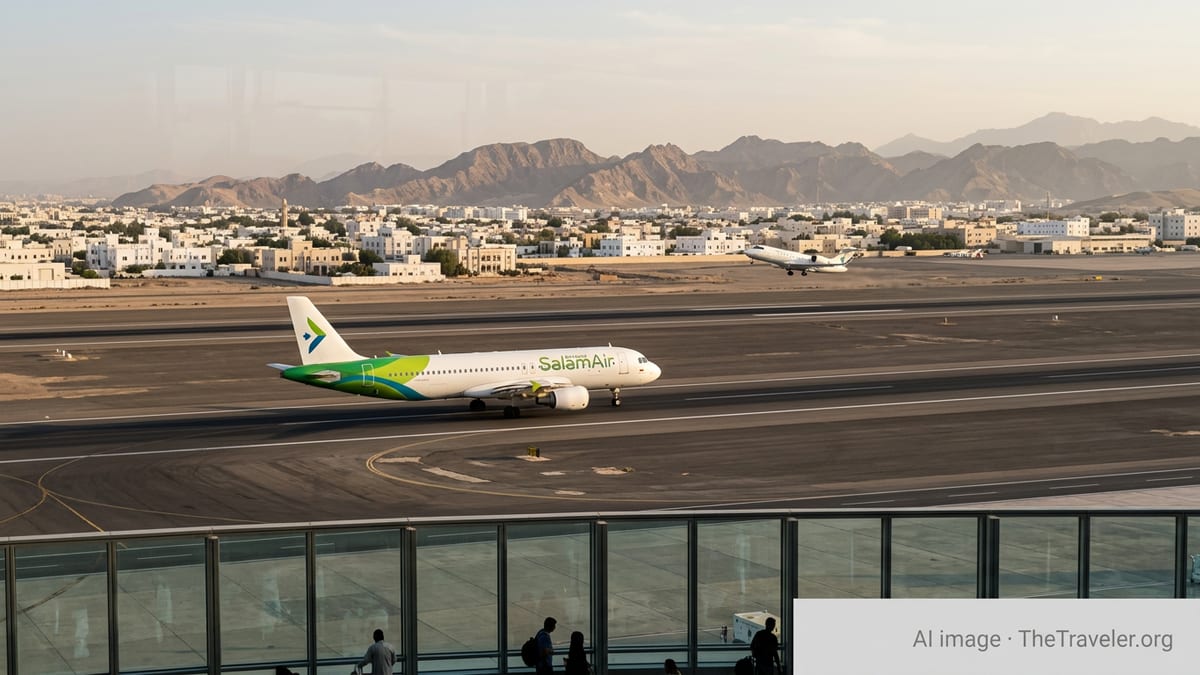
Oman-based low-cost airline SalamAir is expanding its regional footprint in March 2026, adding and strengthening services connecting Muscat with Fujairah in the UAE, Cairo in Egypt and Port Sudan in Sudan in a bid to capture pent-up demand for leisure and transit travel across the Middle East and Northeast Africa.
Get the latest news straight to your inbox!
New and Enhanced Connectivity Across the Region
Publicly available schedule information for March 2026 shows SalamAir positioning Muscat as a core hub for short and medium-haul links into the Gulf, North Africa and the Red Sea corridor, with Fujairah, Cairo and Port Sudan all featuring more prominently in the carrier’s network. The move comes as airlines across the region adjust to changing airspace patterns while seeking to maintain tourism flows and essential connectivity.
On the UAE side, recent operational updates indicate that SalamAir is operating an intensified Muscat–Fujairah pattern in early March, creating additional options for travelers heading to and from the northern emirate and beyond. The services complement the airline’s previously announced Fujairah operations and underline the airport’s growing role as an alternative gateway when other hubs face constraints.
In parallel, SalamAir’s published March 2026 destination list highlights scheduled Muscat–Cairo flights, including services to Cairo Sphinx, reinforcing a key leisure and diaspora market. The Egyptian capital is a major source and destination for tourism within the wider Middle East, and additional low-cost capacity via Muscat is expected to appeal to price-sensitive travelers combining city stays with onward connections to South and Southeast Asia.
For Sudan, industry route trackers and aviation reports point to the launch and ramp-up of Muscat–Port Sudan flights from late January 2026, with frequencies rising through the first quarter. These links provide a new Gulf access point for Port Sudan, which has functioned as a principal international gateway while wider Sudanese aviation infrastructure continues to recover.
Fujairah’s Growing Role as a Tourism and Transit Gateway
Fujairah International Airport has emerged as an important partner for SalamAir’s strategy, particularly in early March 2026 as carriers respond to regional airspace disruptions and shifting demand. Statements from the airport and regional aviation coverage describe additional SalamAir capacity between Muscat and Fujairah, including special operations and dense short-term scheduling to support both tourism and contingency travel.
For leisure travelers, Fujairah offers a markedly different UAE experience from the larger hubs of Dubai and Abu Dhabi. The emirate is known for its Hajar Mountain backdrop, quieter beaches on the Gulf of Oman and access to diving sites and coastal forts, making it attractive to visitors seeking a slower-paced stay or a weekend break from Muscat. More frequent direct links from Oman reduce travel times and can make short trips more viable for regional tourists.
The enhanced Muscat–Fujairah services also create a bridge for passengers connecting via Oman to destinations further afield. With SalamAir marketing Fujairah in combination with itineraries that continue to Istanbul, Cairo Sphinx and Colombo, the route effectively extends Fujairah’s reach into Europe-adjacent and South Asian markets. This connectivity can benefit the local hospitality sector, as hotels and tour operators position Fujairah as a starting or ending point for multi-country itineraries.
In the medium term, Fujairah’s role as a secondary gateway may remain attractive for airlines that favor less congested airports with lower operating costs. For SalamAir, the route strengthens its identity as a value-focused carrier linking under-served or emerging tourism markets around the Gulf.
Cairo Links Support Leisure, Heritage and VFR Travel
Cairo remains one of the region’s powerhouse destinations, drawing tourists for its museums, Nile-side districts and proximity to the pyramids, while also serving significant visit-friends-and-relatives traffic. SalamAir’s March 2026 schedules list the Egyptian capital among its key international destinations from Muscat, with services configured to allow onward connections from Gulf and South Asian cities through Oman.
For Omani residents and expatriate communities, the availability of low-cost Muscat–Cairo flights helps keep short breaks and cultural trips affordable. Travelers can combine Cairo’s urban and heritage attractions with extended itineraries that continue by road or domestic air to Luxor, Aswan or Red Sea resorts such as Hurghada and Sharm El Sheikh, expanding the tourism impact beyond the capital itself.
The Cairo route also supports inbound tourism into Oman and the wider Gulf. Egyptian travelers gain an additional option for reaching Muscat and connecting onward to destinations such as Fujairah, Salalah, Bangkok or Kuala Lumpur using a single low-cost ticket structure. For tourism boards in both countries, such links offer opportunities to promote dual-destination packages that pair Egypt’s archaeological highlights with Oman’s desert, mountain and coastline landscapes.
Industry observers note that as airlines reshape networks following recent global and regional disruptions, city pairs like Muscat–Cairo that can sustain both leisure and essential travel are likely to attract incremental capacity. SalamAir’s presence on the route in March 2026 fits into that broader pattern of carriers reinforcing resilient corridors while cautiously exploring new markets.
Port Sudan Route Opens New Corridor on the Red Sea
The Muscat–Port Sudan connection represents one of SalamAir’s most notable African additions heading into the first quarter of 2026. Route analytics platforms and African aviation roundups report that the service, introduced at the end of January, is due to increase in frequency as it settles into the airline’s network, reflecting anticipated demand from both point-to-point and connecting passengers.
Port Sudan has taken on heightened importance as an international entry point while other Sudanese airports work to restore full commercial activity. Travel and humanitarian reports describe the city’s airport as a key hub for aid flights, diaspora travel and limited commercial services to destinations such as Cairo and Gulf cities. The new Muscat link adds another layer to this connectivity, potentially easing journeys for Sudanese travelers heading to Oman, the wider Gulf and onward to Asia.
From a tourism perspective, Port Sudan and the surrounding Red Sea coast are known for coral reefs, relatively untouched dive sites and coastal scenery that has seen far less development than more established Middle Eastern beach destinations. While overall visitor numbers remain modest compared to regional tourism giants, easier air access from Muscat could encourage niche segments such as diving enthusiasts and adventure travelers to consider northern Sudan as an add-on to trips in the Gulf.
The route may also facilitate limited business and logistics movements related to Red Sea trade, as Muscat’s location on the Arabian Sea provides an alternative transit point for companies and organizations with operations spanning the Gulf and Northeast Africa.
Tourism and Transit Outlook for March 2026
March is traditionally a strong travel month for the Gulf region, with relatively mild weather in Oman and the UAE and shoulder-season conditions for some North African destinations. Against this backdrop, SalamAir’s expanded activity to Fujairah, Cairo and Port Sudan positions the airline to capture both leisure and necessary travel flows at a time when passengers are seeking flexible routing options.
Tourism stakeholders in Fujairah, Cairo and Port Sudan are likely to monitor how these services influence booking patterns through the spring. In Fujairah, hotels and resort operators can benefit from short-stay visitors arriving from Muscat or connecting through Oman from South Asia. In Cairo, incremental low-cost capacity may support packaged city-break products and combination tours. Around Port Sudan, any increase in air arrivals could support small-scale hospitality and dive operations serving a specialized market.
For SalamAir, the March 2026 network reflects the carrier’s broader strategy of linking mid-sized cities, secondary Gulf gateways and emerging African destinations with a lean, single-aisle fleet. By threading together Fujairah, Cairo and Port Sudan through Muscat, the airline is creating a series of regional corridors that could, over time, deepen cultural and tourism exchanges between the Arabian Peninsula and the Red Sea basin.
As conditions across the region continue to evolve, the performance of these routes in the coming months will indicate whether travelers are ready to embrace new connection patterns and rediscover destinations that have, until recently, been on the margins of mainstream itineraries.