

More news on this day
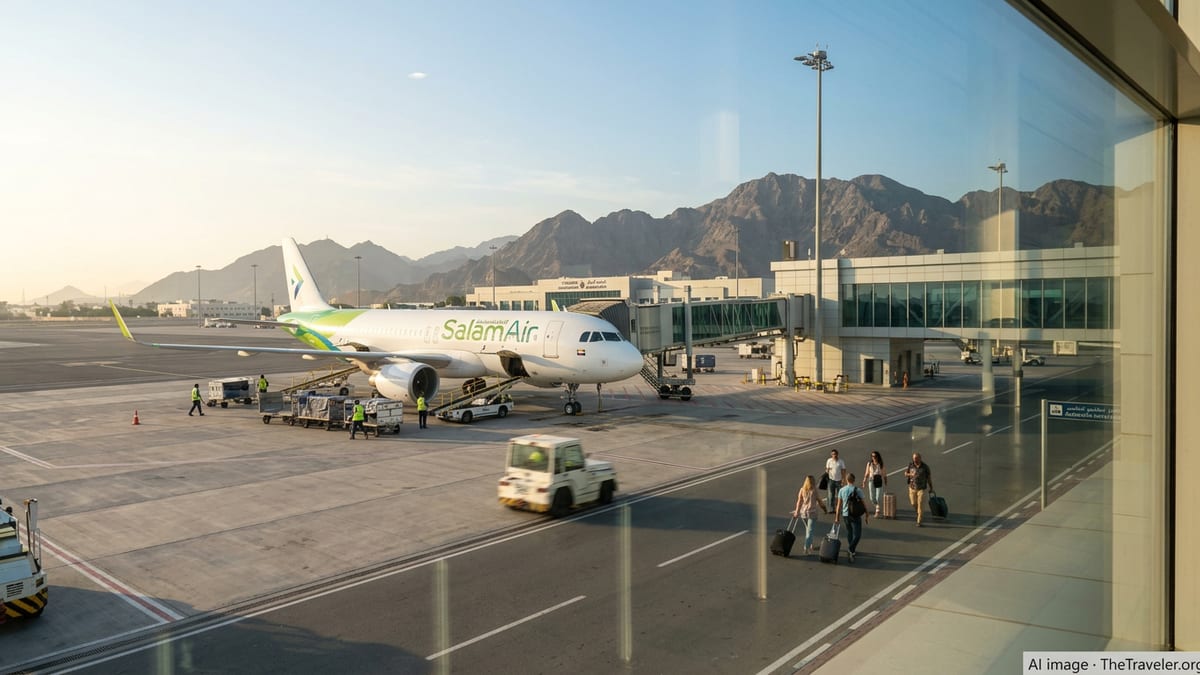
SalamAir is extending its double daily Muscat–Fujairah service until 20 March 2026, reinforcing a key travel corridor at a time of heightened demand and shifting regional air links.
Get the latest news straight to your inbox!
Extended Double Daily Schedule on a Strategic Route
Publicly available information from SalamAir and industry reports indicate that the carrier is operating two daily flights in each direction on the Muscat–Fujairah route through 20 March 2026. The service, marketed as additional daily flights, effectively delivers a double daily schedule between the Omani capital and the east coast emirate.
The current timetable shows morning and afternoon rotations linking Muscat International Airport with Fujairah International Airport. Typical timings place one Muscat departure in the early morning with a mid-morning return from Fujairah, and a second pairing in the mid-afternoon with an early evening return, creating spread-out options across the day for passengers.
Industry summaries of airline schedule changes describe the Muscat–Fujairah expansion as part of a broader set of adjustments by regional carriers responding to temporary airspace closures and capacity constraints elsewhere. Within that context, SalamAir’s decision to maintain a double daily pattern until 20 March positions Fujairah as an important alternative gateway connected via Muscat.
The additional services are framed as temporary, aligned with a period of elevated travel demand and disrupted direct links to other Gulf hubs. However, they also highlight underlying demand between Oman and the UAE’s east coast that may influence future scheduling decisions once regional conditions stabilize.
Enhancing Connectivity and Travel Convenience
For passengers, the expanded Muscat–Fujairah schedule significantly increases flexibility. With two daily options in each direction, travelers have greater choice when planning same-day business trips, weekend breaks or onward international journeys via Muscat. The distribution of flights across morning and afternoon windows facilitates both early starts and later departures, which is particularly useful for time-sensitive travel.
Travel industry coverage notes that Fujairah is being used as a staging point for onward journeys, with passengers connecting in Muscat to destinations such as Istanbul, Cairo and Colombo. The double daily pattern supports these itineraries by making it easier to align Fujairah departures and arrivals with long-haul and regional banks at Muscat International Airport.
The service also offers a new level of convenience for residents and visitors on the UAE’s east coast who previously relied more heavily on airports in Dubai or Sharjah. Accessing Muscat’s growing network through nearby Fujairah can reduce surface travel times for some passengers and spread demand more evenly across the region’s airport infrastructure.
From a traveler-experience perspective, the increased frequency helps mitigate the impact of schedule disruptions. If one rotation is affected by operational changes, passengers may have a same-day alternative, which is particularly relevant in a period of heightened volatility for regional air travel.
Supporting Regional Travel Resilience Amid Disruption
The expansion of SalamAir’s Muscat–Fujairah operations is unfolding against a backdrop of temporary route suspensions and evolving airspace restrictions across parts of the Gulf and wider Middle East. Industry analyses describe Oman and certain UAE airports, including Fujairah, as important relief gateways, absorbing some of the traffic that would normally transit through more congested or restricted hubs.
According to aviation intelligence summaries, SalamAir has temporarily suspended several direct services to other Gulf points while simultaneously adding capacity on selective routes from Muscat, including the twice-daily link to Fujairah through 20 March. This redistribution of capacity is intended to preserve essential connectivity for passengers needing to reach onward destinations in Asia, Europe and the wider region.
Fujairah International Airport has also been highlighted in regional media as a partner in special charter and relief-style operations during early March, with services routed via Muscat to multiple international cities. The scheduled double daily SalamAir link sits alongside these efforts, providing a more predictable, bookable option for travelers in the area.
By maintaining a consistent timetable between Muscat and Fujairah, SalamAir contributes to broader travel resilience, giving passengers additional routing choices during a period when many direct links are constrained. The move illustrates how secondary airports and point-to-point services can play a crucial role in sustaining mobility when major corridors are disrupted.
Opportunities for Tourism and Business on Both Sides of the Gulf
Beyond the immediate operational context, the enhanced Muscat–Fujairah service underscores the tourism and business potential of this cross-Gulf corridor. SalamAir’s own destination materials highlight Fujairah’s coastal landscapes, historic forts and attractions such as Al-Bidyah Mosque, alongside its appeal as a quieter alternative to the busier urban centers of the UAE’s west coast.
For Omani travelers, easier access to Fujairah opens up short leisure breaks on the Gulf of Oman, including beachfront resorts and mountain excursions in the Hajar range. For residents of Fujairah and nearby emirates, the double daily flights provide a convenient gateway to Muscat’s cultural sites, coastal attractions and onward links throughout SalamAir’s network.
Business travel is also a factor. Fujairah is an important regional center for maritime, oil storage and logistics activities, while Muscat is a key hub for government, finance and trade in Oman. More frequent air links can shorten travel times for corporate travelers, support cross-border projects and encourage new commercial ties between companies operating in both locations.
Travel industry observers note that even time-limited capacity increases can leave a lasting impact if they reveal sustained demand. Strong load factors on the double daily Muscat–Fujairah services through 20 March could influence SalamAir’s evaluation of medium-term opportunities on the route or encourage further collaboration between Muscat and Fujairah airport stakeholders.
What Passengers Should Know Before Traveling
With the Muscat–Fujairah flights running twice daily until 20 March 2026, travelers are encouraged by publicly available guidance to check the latest schedules and any operational advisories close to their departure dates. Regional conditions remain fluid, and airlines across the Gulf continue to adjust timings and frequencies in response to airspace developments and demand patterns.
Reports from travel advisories and airline updates emphasize the importance of allowing extra time for connections, especially for passengers using Muscat as a gateway to long-haul flights. Some carriers operating through Oman have recommended arriving significantly earlier than usual when crossing land borders or transferring between airports, reflecting potential congestion and security checks.
Passengers using the Muscat–Fujairah link as part of multi-leg itineraries should pay particular attention to minimum connection times and any rebooking policies if disruptions occur. Travel agents and online booking platforms are highlighting the need for flexible arrangements and clear contact options in the event of schedule changes.
Despite the uncertainties, SalamAir’s decision to keep the double daily Muscat–Fujairah operation in place through 20 March offers a measure of predictability for those planning travel in early spring 2026. As the regional situation evolves, this corridor is likely to remain a closely watched indicator of how Gulf carriers balance demand, safety considerations and network resilience.