

More news on this day
Florida’s Treasure Coast is doubling down on its reputation as a waterside playground, with Salty’s Water Sports emerging as a prominent gateway to jet ski rides, boat rentals and guided tours across the Indian River Lagoon and Atlantic inlets.
Get the latest news straight to your inbox!
Growing Demand For Water Adventures On The Treasure Coast
Publicly available tourism data indicates that Florida’s East Coast continues to report rising visitor numbers into 2026, and the Treasure Coast is positioning itself as a more relaxed alternative to the state’s larger resort hubs. In this environment, demand for water-focused experiences, from jet skiing to wildlife cruises, has become a central driver of local leisure spending.
Within this trend, Salty’s Water Sports has built a footprint across key Treasure Coast access points, including Fort Pierce, Jensen Beach and Sebastian. Information from travel and booking platforms describes the company as a premier provider of jet ski rentals, pontoon and center-console boats, and small-group dolphin and sunset cruises serving residents and visitors along the Indian River Lagoon.
Industry observers note that outfitters offering multiple types of vessels and tours are increasingly favored by travelers who want flexibility without navigating multiple operators. By combining short, high-adrenaline rides with slower sightseeing trips, Salty’s Water Sports aligns closely with that shift, giving mixed groups and families options that can be tailored to different comfort levels on the water.
The growth of such operations also reflects the Treasure Coast’s broader evolution. Local real estate and tourism commentary portrays the region as an emerging lifestyle destination, with waterfront recreation now considered a core amenity for both visitors and new residents. Businesses able to convert the area’s natural waterways into curated, bookable experiences are benefiting from this momentum.
Jet Skis, Boats And Tours Designed For Every Kind Of Rider
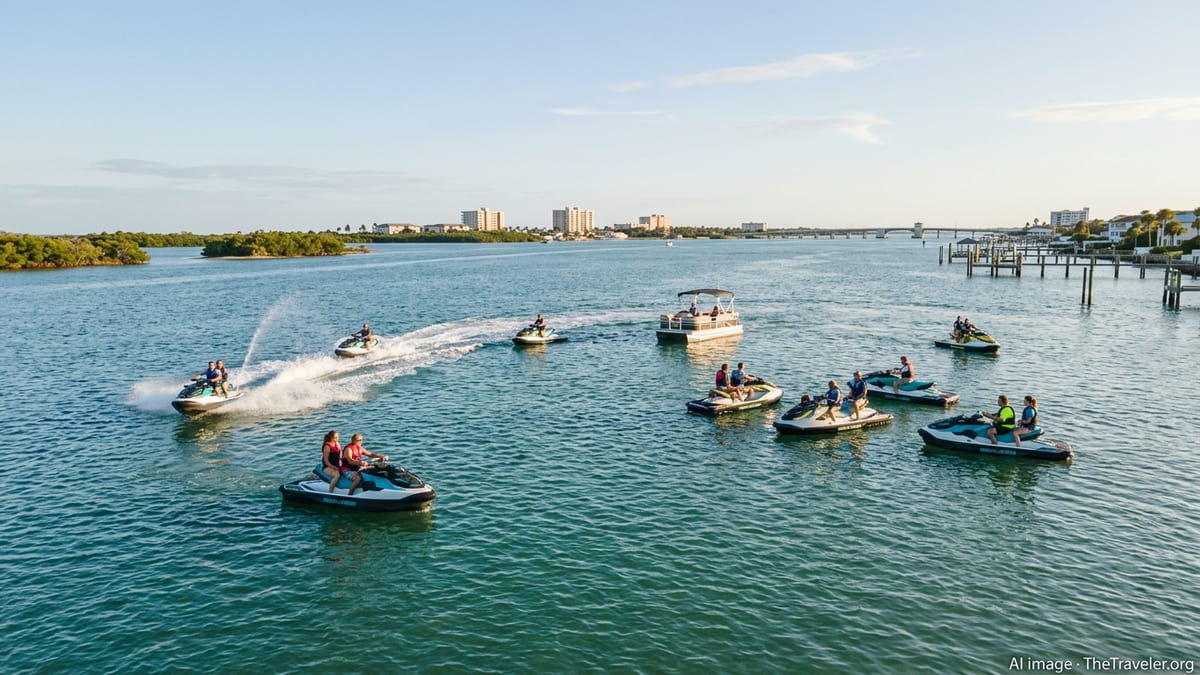
Salty’s Water Sports focuses much of its offering on personal watercraft. Company information indicates that its fleet centers on late-model Sea-Doo jet skis, typically configured for one or two riders and capable of high speeds while still being marketed toward first-time users as approachable and easy to handle. Standard rental durations range from brief sessions suited to quick thrills to multi-hour blocks.
Beyond jet skis, the operator highlights a mix of pontoon boats, center-console vessels and banana boat rides. Pontoons are positioned as slow-paced options for groups that prefer cruising, picnicking and sightseeing along the Intracoastal Waterway, while center consoles cater to guests interested in reaching offshore waters or exploring inlets with more range. This blend of craft is intended to accommodate everyone from families with young children to experienced boaters who do not wish to tow their own vessels.
The company also promotes guided outings that combine recreation with wildlife viewing. Dolphin jet ski tours and small-boat dolphin cruises are marketed as signature experiences, typically running about one to two hours and operating out of multiple Treasure Coast locations. Sunset cruises, which emphasize relaxed viewing of mangrove shorelines and barrier islands as the light changes, add another layer for visitors looking for a lower-intensity way to be on the water.
Travel listings and online reviews frequently reference the appeal of being able to switch between fast-paced activities and more tranquil excursions in the same trip. For many Treasure Coast vacationers, that mix appears to be part of what makes Salty’s Water Sports stand out in a crowded Florida water sports marketplace.
Safety, Licensing And Environmental Awareness On The Water
Operating on Florida’s waterways brings a well-defined set of safety and licensing expectations, and Salty’s Water Sports foregrounds these requirements in its materials. The company notes that riders born after January 1, 1988 must hold a valid boating safety card or obtain a temporary boater certificate before operating personal watercraft or vessels. On-site testing for the temporary certificate is advertised for a modest fee, with guests advised to arrive early to complete the process.
Pre-ride briefings are described as standard practice, covering personal watercraft controls, safe operating distances from other boats and wildlife, and local navigation rules in and around channels and sandbars. Salty’s Water Sports also directs customers to a personal watercraft safety video that outlines basic operational guidance, eco-conscious behavior and etiquette on shared waterways.
Environmental considerations are increasingly part of the conversation around coastal recreation in Florida, especially in sensitive estuarine ecosystems like the Indian River Lagoon. The company points to guidance on respecting seagrass beds, minimizing wake near mangroves and maintaining safe distances from dolphins, manatees and nesting shorebirds. Such messaging aligns with broader efforts by state agencies and conservation groups to reduce the impact of motorized recreation on coastal habitats.
For visitors unfamiliar with local rules, this layered approach to safety and stewardship can be a deciding factor when selecting a rental or tour provider. It also reflects a wider shift in the water sports sector, where operators are expected to function not only as activity providers but also as informal educators on best practices in fragile marine environments.
Club Memberships And Repeat Visitor Appeal
In addition to standard rentals, Salty’s Water Sports has introduced a boat and jet ski club model that targets frequent users. Information published on a dedicated site for the club describes membership tiers beginning around a few hundred dollars per month, providing recurring access to a fleet of boats and personal watercraft without the ownership costs of storage, maintenance and insurance.
Such models have grown across coastal markets as residents seek ways to enjoy boating lifestyles while avoiding the expense and complexity of buying and keeping vessels. On the Treasure Coast, where waterfront communities and second homes are expanding, operators that can offer flexible, subscription-style access to the water are increasingly viewed as part of the broader recreational ecosystem.
The club concept also helps stabilize demand in traditionally slower months, complementing the peak-season tourist trade. By cultivating a base of local and regional members who return regularly, Salty’s Water Sports can smooth out booking patterns and maintain its fleet and staffing at more consistent levels throughout the year.
For returning visitors who plan multiple trips to the Treasure Coast annually, membership offerings present another layer of appeal, providing a predictable way to incorporate boating and jet skiing into each stay without rebooking individual outings every time.
Positioning The Treasure Coast As A Water Sports Hub
As Florida’s coastal destinations compete for visitors, the Treasure Coast is leaning into its identity as a place where waterways remain central to daily life rather than simply a backdrop to resorts. From Fort Pierce’s working waterfront to the inlets and islands near Sebastian and Jensen Beach, the region offers a network of launch points, sandbars and cruising routes that lend themselves naturally to curated water adventures.
Salty’s Water Sports, with locations along this stretch of coastline, functions as one of the more visible gateways to those experiences. Its presence in travel guides, online booking platforms and regional visitor materials underscores how private operators are helping to translate natural assets into accessible activities for travelers who may not have local knowledge or their own equipment.
For the Treasure Coast, the continued growth of companies like Salty’s Water Sports highlights both opportunity and responsibility. The area’s future as a water sports hub will depend on how well recreation businesses, visitors and residents balance high demand for fun on the water with the safeguards needed to protect the ecosystems and shorelines that make these adventures possible.