

More news on this day
A powerful 7.5 magnitude earthquake off Tonga has shaken the wider South Pacific arc, with Samoa now joining Tonga, Fiji and Niue in experiencing a tense sequence of strong seismic events that is drawing fresh attention to regional preparedness and travel risks across one of the world’s most active tectonic zones.
Get the latest news straight to your inbox!
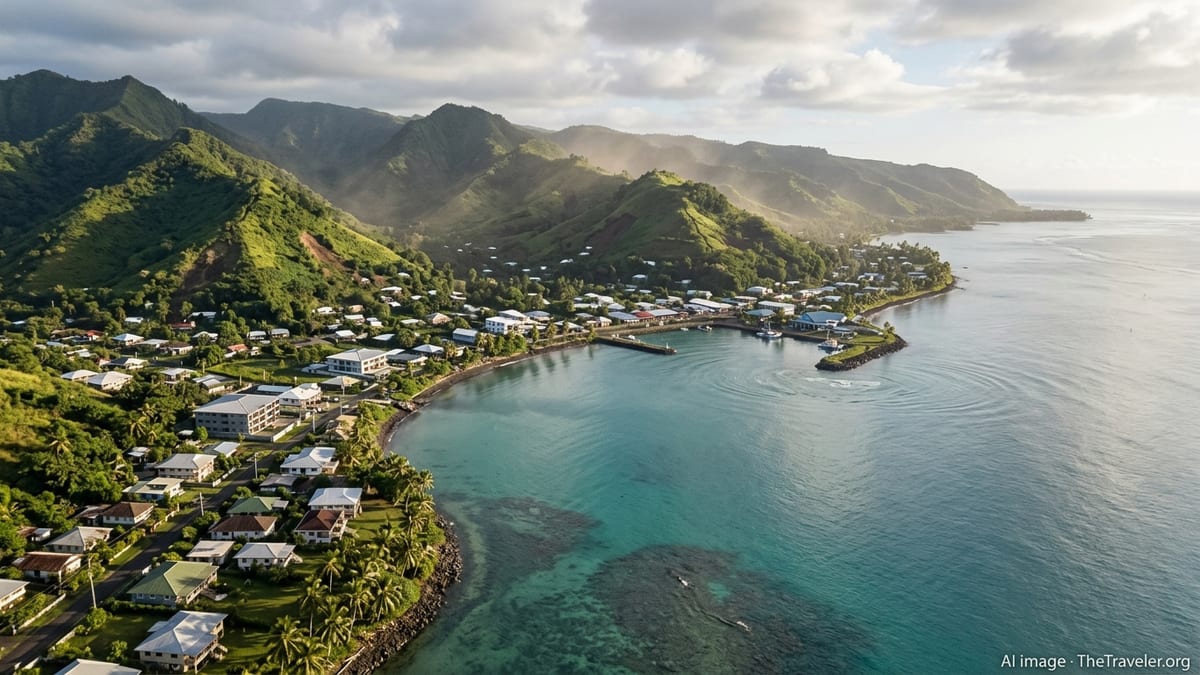
Strong 7.5 Quake Strikes Near Tonga in Deep Pacific Basin
Seismological data from international monitoring agencies indicate that a magnitude 7.5 earthquake struck offshore near Tonga in the early hours of March 24, 2026 UTC, centered west of the Vavaʻu island group. The event occurred at considerable depth in the Pacific plate, consistent with the region’s history of powerful but often deep-focus earthquakes along the Tonga trench.
Preliminary assessments describe the quake as part of a complex zone of subduction where the Pacific plate dives beneath the Australian plate. Deep-focus earthquakes in this sector can be widely felt across the South Pacific basin, including in Tonga, Fiji, Samoa and Niue, though shaking intensity at the surface is often lower than for shallower events of similar magnitude.
According to publicly available information from regional geoscience agencies, early analyses suggest limited immediate damage on land, in part due to the offshore epicenter and depth. However, the size of the event and its proximity to multiple island nations placed tsunami monitoring systems and emergency communication channels on heightened alert.
Tsunami specialists have noted that deep-focus earthquakes are generally less efficient at generating large tsunamis than shallow megathrust ruptures closer to the seafloor. Even so, rapid evaluations of sea level gauges and ocean sensors were initiated across the South Pacific as part of standard procedures following an event of this magnitude.
Samoa Added to a Cluster of Recent Regional Earthquakes
In the days preceding and following the 7.5 magnitude event near Tonga, a series of moderate to strong earthquakes has been recorded in the broader Samoa and Fiji regions. Monitoring summaries list multiple magnitude 5 and 6 class shocks near the Samoa Islands during March 2026, along with a deep magnitude 6.6 class quake in the Fiji Islands region earlier in the month.
This pattern has added Samoa to a cluster of countries experiencing notable shaking within a short time frame, alongside Tonga, Fiji and Niue. Seismologists caution that the South Pacific’s seismicity is naturally high and that temporal clustering of events does not necessarily signal a single connected rupture, but the succession of felt earthquakes has heightened public awareness and concern.
Publicly accessible shakemaps and intensity reports suggest that several of the recent events near Samoa produced light to moderate shaking across populated areas, but without immediate widespread structural damage. Nevertheless, the accumulation of quakes has revived memories of previous destructive events in the region and is prompting renewed scrutiny of building standards, evacuation drills and coastal land use in low-lying communities.
Travelers planning to visit Samoa and neighboring island nations are watching advisories closely, as a string of earthquakes, even without major damage, can disrupt local services, trigger precautionary inspections of infrastructure and affect inter-island transport schedules.
Limited Early Damage Reports but High Sensitivity for Islands and Tourism
Initial open-source reporting from regional media and disaster coordination channels points to limited damage across the main tourist hubs of Tonga, Samoa and Fiji in the immediate aftermath of the 7.5 magnitude earthquake and its related seismic activity. Many of the strongest events took place offshore or at depth, which appears to have reduced the severity of shaking on land.
However, the sensitivity of small island states to even moderate disruptions remains high. Critical facilities such as ports, airports, fuel depots and telecommunications hubs are often concentrated in narrow coastal zones, sometimes only a few meters above sea level. Even short-lived power interruptions, minor landslides or harbor surges can have outsized impacts on essential services and visitor movement.
Publicly available information indicates that transport operators are conducting routine checks on runways, wharves and inter-island ferry terminals. Some resort operators in vulnerable coastal stretches are reported to be reviewing their emergency procedures, signage and muster points, particularly in areas with limited road access to higher ground.
For the travel sector, the main immediate challenge appears to be uncertainty rather than confirmed damage. Travelers and tour operators are monitoring airline schedules, local advisories and accommodation updates to determine whether itineraries require adjustment, especially for island-hopping routes through Tonga, Samoa, Fiji and Niue.
Seismic Context Along the Tonga–Kermadec and Samoa Arc
The latest 7.5 magnitude event fits into a long-documented pattern of major earthquakes along the Tonga–Kermadec trench system, one of the fastest-converging subduction zones on the planet. Historical catalogues list numerous magnitude 7 and larger events in this corridor, including earthquakes that have generated damaging tsunamis across the broader Pacific.
Samoa, positioned to the north of the main Tonga trench line, lies within a complicated zone of interacting microplates and transform faults. This tectonic architecture can produce both deep subduction earthquakes and shallower, potentially more damaging crustal events closer to inhabited islands. The recent quakes around Samoa and Fiji highlight how energy release can migrate along connected plate boundaries over weeks and months.
Experts contributing to publicly available hazard assessments emphasize that while a single large earthquake does not necessarily increase the short-term probability of an even larger event, sequences of activity provide important data for refining seismic and tsunami models. Updated analyses help national authorities and regional organizations calibrate warning thresholds and response timelines, which are critical for island nations with limited evacuation routes.
The dense network of global seismographs, complemented by regional observatories, allows for rapid characterization of quake magnitude, depth and fault orientation. These details influence not only scientific understanding, but also practical decisions about when to issue tsunami bulletins, close ports temporarily or inspect key tourist infrastructure.
Implications for Travelers and Regional Preparedness
For travelers bound for Samoa, Tonga, Fiji or Niue, the recent 7.5 magnitude earthquake and surrounding seismic activity underscore the importance of understanding basic earthquake and tsunami safety in the Pacific. Travel advisories generally encourage visitors to familiarize themselves with local evacuation routes, to note tsunami signage upon arrival and to follow the guidance of hotel or resort safety briefings.
Tourism boards and hospitality businesses in the region have spent years integrating disaster-awareness messaging into visitor materials, reflecting lessons from past tsunamis and cyclones. In the wake of the latest events, publicly available statements from airlines, cruise lines and major hotel groups indicate a continued focus on flexible booking policies and clear communication should itineraries need to change at short notice.
Regional initiatives, supported by international partners, are working to strengthen early warning capacities, expand coverage of coastal siren systems and enhance community education in local languages. The recent earthquake sequence is likely to reinforce those efforts, with fresh data from Tonga, Samoa, Fiji and Niue feeding into updated hazard maps, building codes and evacuation planning.
While current information suggests that tourism across the South Pacific remains largely open, the 7.5 magnitude earthquake near Tonga serves as a reminder that this postcard-perfect region also sits on the restless edge of the Pacific plate. For both residents and visitors, long-term resilience will depend on sustained investment in preparedness as much as on the natural beauty that draws travelers to these islands.