

More news on this day
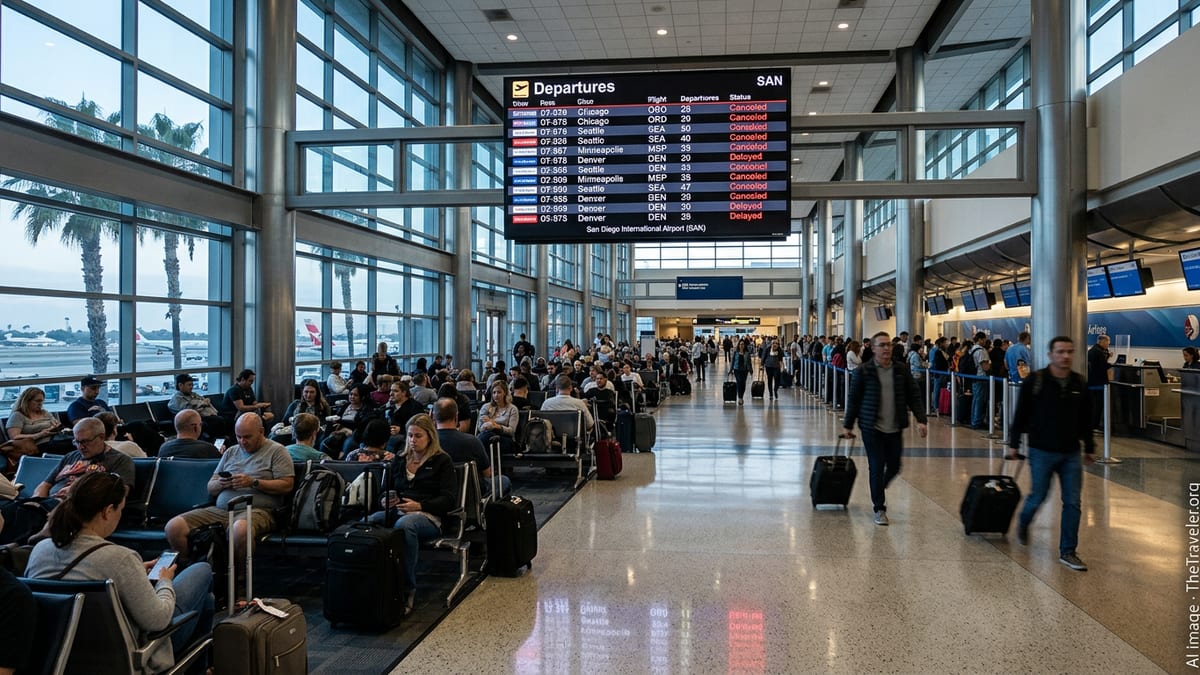
Travelers at San Diego International Airport faced a day of frustration on March 16 as a powerful mid‑March storm system across the Pacific Northwest and Upper Midwest triggered widespread cancellations to Chicago, Seattle, Minneapolis and other key hubs, disrupting plans at the height of the spring break rush.
Get the latest news straight to your inbox!
Storm System Across Multiple Regions Ripples Into San Diego
Publicly available weather and aviation data point to a sprawling March 13 to 16 storm system bringing heavy snow, high winds and low visibility to parts of the Pacific Northwest, High Plains and Upper Midwest. Chicago, Seattle and Minneapolis, three of the most important connecting hubs for San Diego travelers, have all reported significant operational constraints as a result of the conditions.
In Seattle, reports indicate snow and ice have slowed operations at Seattle Tacoma International, with deicing backlogs and runway treatments reducing the rate at which aircraft can depart and arrive. In the Upper Midwest, Minneapolis St. Paul International is dealing with blizzard conditions, while thunderstorms and convective weather around Chicago O Hare are prompting additional air traffic control restrictions.
The combination means that even though skies over San Diego remain comparatively calm, flights between San Diego and affected hubs are being thinned out or canceled outright. When an inbound aircraft is unable to depart from a storm hit hub, the scheduled outbound flight from San Diego is often scrubbed or delayed for many hours, setting off a chain reaction that can stretch across multiple days.
Early schedule snapshots and airline status boards for March 16 show cancellations and rolling delays on services linking San Diego with Chicago, Seattle, Minneapolis, Denver and other connection points tied into these hubs, with some aircraft and crews out of position throughout the network.
Which Routes and Airlines Are Seeing the Most Disruption
The heaviest impact for San Diego travelers is being felt on long haul domestic routes feeding into the storm affected regions. Flights between San Diego and Chicago are particularly vulnerable today because Chicago O Hare serves as a central hub for several major carriers. Ground stops and flow control measures in the Chicago area reduce the number of arrivals allowed each hour, prompting airlines to cancel some San Diego departures rather than operate severely delayed flights.
Services to and from Seattle are also under pressure as the Pacific Northwest experiences rare mid March snowfall combined with gusty winds and intermittent low ceilings. Runway and taxiway conditions at Seattle Tacoma have required repeated treatment, which slows down airport operations and forces airlines to trim schedules, including San Diego links.
Minneapolis bound flights are seeing knock on effects from blizzard and whiteout conditions across Minnesota and neighboring states. Airlines have proactively removed a portion of their Minneapolis schedules to keep aircraft and crews safe, and San Diego departures that rely on those aircraft rotations are among those impacted.
Secondary knock on disruptions are also visible on routes that rely on Chicago, Seattle or Minneapolis for onward connections. Travelers heading from San Diego to East Coast cities, smaller Midwestern destinations, Alaska and parts of Asia are encountering missed connections and rebookings, even when their initial San Diego flight departs close to on time.
What San Diego Travelers Should Expect at the Airport
Passengers arriving at San Diego International today are encountering longer than usual lines at airline check in counters and customer service desks as cancellations accumulate. With multiple carriers trimming flights to the same small group of hubs, alternative routing options can quickly become limited, particularly for travelers heading to smaller regional airports.
Boarding areas for still operating flights to Chicago, Seattle and Minneapolis are significantly more crowded as travelers from canceled services try to secure seats on the remaining departures. Same day standby lists are lengthening, and middle seats on alternative routes through other hubs such as Denver, Phoenix or Dallas are filling fast.
Publicly available airline policies indicate that most carriers are treating the disruptions as weather related, which typically limits automatic compensation but does open the door to flexible rebooking options within a defined travel window. Travelers who booked via third party providers may need additional time to coordinate changes, especially if their itineraries involve multiple airlines.
Given the scale of the storm system and its reach across several time zones, operational experts expect that delays and cancellations may continue to ripple through Monday, even if weather conditions begin to improve in some locations. Aircraft and crew repositioning often lag behind the clearing skies, so San Diego passengers could see residual disruption beyond the peak of the storm itself.
How to Minimize Disruption if You Are Flying Through SAN
For travelers with departures from San Diego International over the next 24 to 48 hours, careful preparation can make a significant difference. Published airline guidance consistently recommends checking flight status frequently on the day of travel, including before leaving for the airport and again upon arrival at the terminal. Schedules that appear normal the night before can shift rapidly once early morning weather briefings translate into revised operating plans.
Travelers holding itineraries that connect through Chicago, Seattle or Minneapolis may wish to explore same day alternatives through less affected hubs if their airline and fare class allow it. Even a slightly longer routing through a different city can increase the chances of reaching the final destination on the intended day, particularly when seats on the most disrupted routes are in high demand.
Allowing additional time at the airport is essential. Security screening and baggage check lines can be longer when many flights are rebooked or consolidated, and gate changes are common as airlines juggle aircraft assignments. Keeping carry on baggage as compact as possible can also make last minute rerouting easier, since some replacement flights may already be close to capacity.
For those whose flights are canceled outright, remaining flexible about departure times, routings and even nearby alternate airports can expand rebooking options. Travelers whose trips are not time critical might consider taking advantage of any flexible change waivers offered by their airline to shift their journeys to later in the week when operations are expected to stabilize.
Outlook for the Coming Days
Forecasts indicate that the core of the storm system affecting the Pacific Northwest and Upper Midwest will gradually move eastward after March 16, bringing improved conditions to Seattle and Minneapolis first, followed by Chicago. As visibility improves and winds ease, air traffic control authorities are likely to allow higher arrival and departure rates, which should enable airlines to restore more of their normal schedules.
However, aviation analysts caution that clearing the backlog of displaced passengers and aircraft can take additional time even after the weather improves. Aircraft that were diverted, held overnight at outstations or delayed by crew duty time limits must be cycled back into position, and this recovery process can continue for several days on the most affected routes.
For San Diego, that means travelers may still encounter occasional cancellations and extended delays on flights to Chicago, Seattle and Minneapolis through the middle of the week, though at a lower intensity than during the height of the storm. Travelers planning new bookings in the next few days might consider choosing flight times earlier in the day, when there is more slack in the schedule for rebooking if problems arise.
As always, conditions remain fluid, and anyone with upcoming travel through San Diego International is advised to monitor airline communications closely, build extra time into connections where possible and be prepared for plans to shift as the national air system works through the disruption.