

More news on this day
San Diego International Airport has introduced a new accessibility initiative called SAN Assist, a personalized support program designed to ease the stress of air travel for passengers with non-visible and non-verbal disabilities, positioning the airport at the forefront of inclusive travel efforts across the United States.
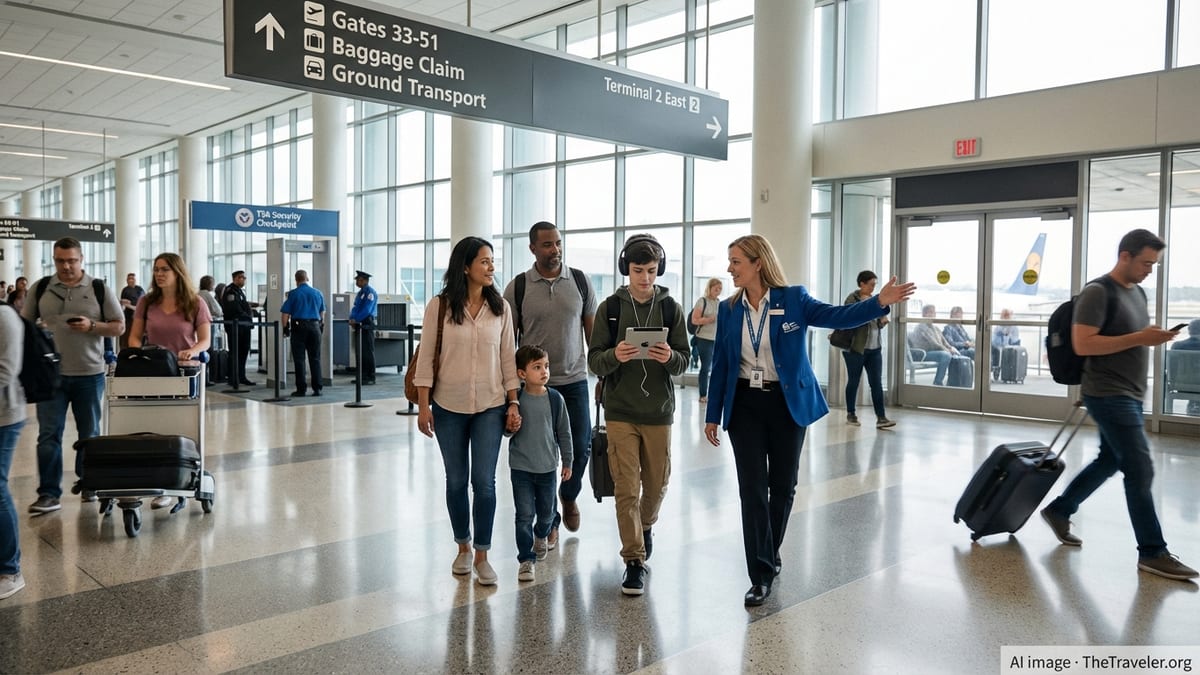
A New Model for Inclusive Air Travel at SAN
Announced this week by the San Diego County Regional Airport Authority, SAN Assist is aimed at travelers whose disabilities may not be immediately apparent to staff or fellow passengers, including individuals with autism, chronic illnesses, anxiety disorders and sensory sensitivities. The program is intended to make every step of the airport journey feel calmer and more predictable, from curbside arrival to departure gate.
Airport officials describe SAN Assist as a response to growing recognition that traditional accessibility measures often overlook non-verbal and neurodivergent travelers who may struggle with crowds, noise, bright lights or complex wayfinding. By layering human support and advance preparation on top of existing services, the airport hopes to address a wide spectrum of needs that are not always captured by standard disability accommodations.
The initiative is available across both Terminal 1 and Terminal 2, and is offered at no additional cost to travelers, subject to availability. Officials say that while the program has been built around the specific layout and operations of San Diego International Airport, the model is designed to be replicable for other U.S. hubs seeking to close accessibility gaps.
Travel Guides Offer One-on-One Airport Support
At the heart of SAN Assist is a new Travel Guide service that pairs passengers with trained airport staff or partners who provide one-on-one assistance on the day of travel. These guides help travelers navigate check-in, security screening and the walk to the gate, adjusting the pace and communication style to the passenger’s comfort level.
Travel Guides can support non-verbal passengers who communicate through devices, gestures, symbols or communication boards, making it easier to express needs such as breaks, quieter spaces or restroom stops. For many families and caregivers, this added layer of assistance is expected to reduce the pressure of managing logistics while simultaneously attending to a traveler’s sensory or communication needs.
The guides are available daily from early morning through late evening, aligning with the busiest departure windows. Requests must be submitted at least three business days in advance so staff can coordinate schedules and ensure that assistance is available from the moment a traveler enters the terminal.
Airport leaders say the Travel Guide role builds on existing customer-service and volunteer programs but is tailored specifically to travelers with non-visible disabilities. Staff receive specialized training focused on sensory awareness, de-escalation techniques and respectful, consent-based support.
Familiarization Tours Help Passengers Practice the Journey
Beyond day-of-travel assistance, SAN Assist offers Familiarization Tours that allow passengers to visit the airport before their actual trip. These scheduled walkthroughs give travelers the chance to experience key steps such as entering the terminal, approaching security, locating restrooms and identifying possible quiet areas, all without the time pressure of a real departure.
The tours are particularly valuable for autistic travelers, people with high anxiety and children or adults using augmentative and alternative communication tools who may benefit from repetition and visual rehearsal. By previewing sounds, lighting and crowd patterns, participants and their caregivers can plan coping strategies and decide on preferred routes long before travel day.
Familiarization Tours are available Monday through Friday during standard business hours and are intended for passengers with upcoming flights. Because they require coordination with airport operations and security, travelers are asked to submit requests two to three weeks in advance. Each tour is customized as much as possible, focusing on the specific airline, terminal and time of day the passenger is likely to use.
Airport officials say early feedback from families and disability advocates has highlighted the tours as a simple yet transformative tool for building confidence, especially for those who have previously avoided flying due to fear of overwhelm or communication barriers.
Responding to National Demand for Neurodiversity-Aware Travel
The launch of SAN Assist reflects a broader shift in the U.S. travel industry toward recognizing neurodiversity and non-visible disabilities as core accessibility concerns rather than niche needs. Advocacy groups have long called for airports to move beyond physical access alone and address the cognitive, sensory and communication challenges that can make air travel daunting.
San Diego’s program arrives at a moment when more families with autistic or non-verbal members are seeking to fly for leisure, education and medical reasons, but often face daunting logistical and emotional hurdles. By formalizing services that anticipate these needs, San Diego International Airport is positioning itself as a potential template for other airports looking to modernize their approach to disability inclusion.
Industry observers note that while a number of airports across the country offer sensory rooms, quiet spaces or hidden disability lanyards, SAN Assist stands out for combining structured advance tours with individualized human support on the day of travel. The program is expected to generate data and feedback that could inform future federal guidance on best practices in airport accessibility.
Airport officials have indicated that they will monitor usage, traveler satisfaction and operational impacts closely over the coming months, with an eye toward adjusting staffing, training and communication materials as demand grows.
How Travelers Can Access SAN Assist Services
Passengers interested in SAN Assist are encouraged to request services as early as possible to increase the chance of securing a Travel Guide or a Familiarization Tour that aligns with their schedule. While the program is designed primarily for those with non-visible and non-verbal disabilities, officials emphasize that eligibility is intentionally broad and based on self-identification rather than formal documentation.
Families and caregivers can outline specific needs when they submit a request, such as extra time at security, help with understanding signage, guidance in finding quieter areas or support for a traveler who may be overwhelmed by crowds. This information helps staff tailor each interaction and avoid assumptions about what a particular disability might require.
Travelers already using existing accessibility services, such as mobility assistance provided through airlines, can layer SAN Assist on top of those arrangements. Airport staff say coordination with airlines and security partners will be key to ensuring that passengers do not have to repeat their needs multiple times at each step of the journey.
As the program scales up, San Diego International Airport plans to expand staff training and outreach to ensure that front-line workers, from security personnel to concession staff, are aware of SAN Assist and understand how to direct travelers to the right support. For passengers with non-verbal disabilities across the country, the initiative signals a growing recognition that truly accessible travel must account for the full spectrum of human communication and experience.