

More news on this day
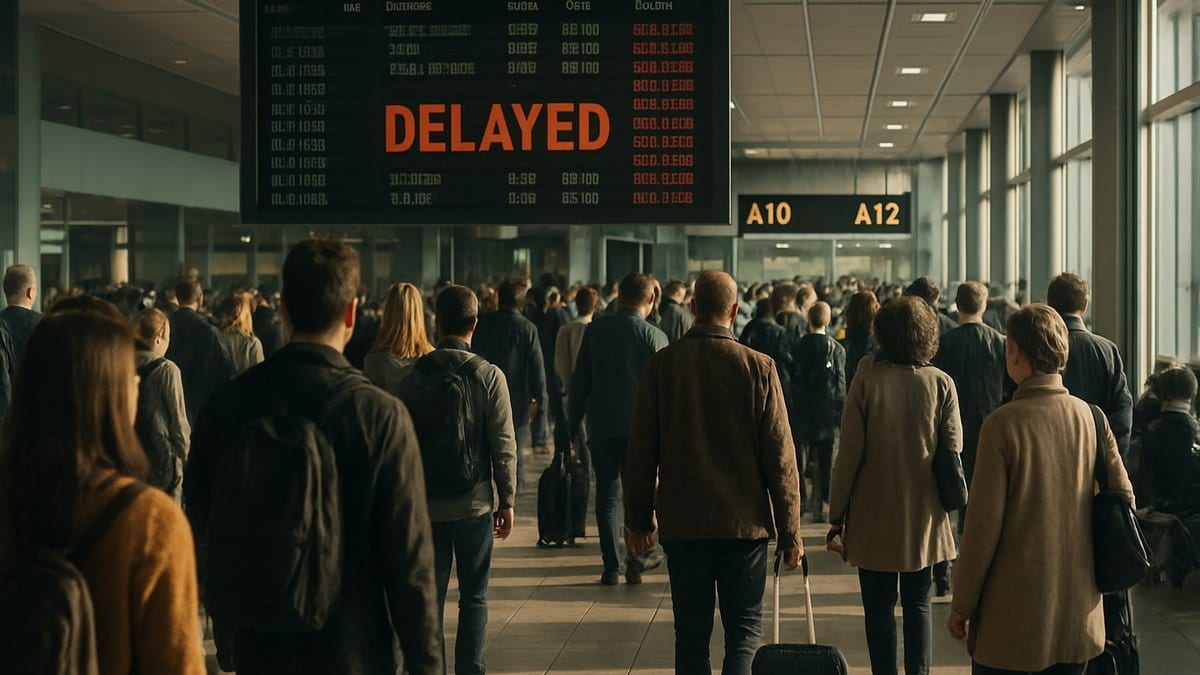
Flight delays at San Diego International Airport on April 12 created a fresh wave of missed connections and schedule disruptions across the United States, adding pressure to an already fragile spring travel period.
Get the latest news straight to your inbox!
Disruptions Mount at San Diego International
Publicly available flight tracking data and travel industry summaries indicate that San Diego International Airport recorded several dozen delayed departures and arrivals on April 12, along with at least one cancellation, affecting routes throughout the domestic network. Reports from aviation monitoring services suggest that the bulk of the disruption concentrated in the late morning and afternoon bank of departures, when aircraft and crews are most tightly scheduled.
Travel and aviation outlets tracking day of operations at San Diego cited more than 40 delayed flights tied to the airport by midafternoon, with carriers including major national brands that operate frequent services to Los Angeles, Chicago and other key hubs. Although the raw numbers in San Diego were modest compared with the largest coastal and Midwestern airports, the timing and the role of the city as a Southwest gateway turned relatively small local issues into a broader national headache.
Recent traveler reports and local coverage in San Diego have highlighted recurring chokepoints at the single runway airport, which continues to handle rising passenger volumes within tight physical constraints. Observers point to the combination of morning backlogs, changing runway configurations and occasional coastal fog as factors that can quickly cascade into rolling delays over the course of a day.
On April 12, those familiar vulnerabilities intersected with a busier than usual spring weekend pattern, leaving airlines with limited slack to recover from even short ground holds or sequence changes. As aircraft departing San Diego left late for hub airports, the delays followed them, narrowing connection windows for passengers across the country.
Nationwide Network Feels the Strain
The San Diego issues emerged against a backdrop of elevated disruption across the United States aviation system on the same date. Aggregated national statistics compiled from flight tracking platforms and industry roundups show that airports including Chicago O Hare, Atlanta, Newark and several major Texas hubs all recorded high numbers of late departures and arrivals on April 12.
One widely cited April 12 snapshot of national operations described more than 2,700 delayed flights and close to 100 cancellations across the domestic network, with some of the heaviest impacts centered on Chicago, Austin, Detroit, Minneapolis and Newark. This pattern reflected operational slowdowns rather than mass cancellations, suggesting airlines were attempting to preserve most of the schedule while absorbing significant minutes of delay.
Texas airports were also under pressure, with coverage focused on Austin, Dallas, Houston and San Antonio collectively reporting hundreds of delayed flights and a smaller number of outright cancellations. As these central and southern hubs struggled to keep aircraft and crews in position, misconnected passengers arriving from San Diego found fewer easy rebooking options.
The resulting grid created a day in which a late departure from San Diego to a hub such as Dallas, Chicago or Newark often translated into missed onward flights to secondary cities, forcing travelers to accept much later departures, overnight stays or reroutes through entirely different hubs. For airlines, the knock on effects included crew rest challenges and aircraft rotations that stretched late into the night.
Weather, Infrastructure and Scheduling Converge
April often brings volatile conditions across multiple US regions, and early April 2026 has already seen several days of heavy disruption in different parts of the network. San Francisco International Airport, for example, reported several hundred delays tied to thunderstorms and low visibility on April 11, while Phoenix and Detroit logged significant delay totals in recent days as local weather and congestion intersected with dense schedules.
Analyses of delay patterns by aviation data specialists suggest that the United States system has become especially sensitive to even localized disturbances, as airlines run fuller schedules with higher aircraft utilization. Research into network wide performance over the past decade indicates that smaller clusters of disruptions at a single airport can now produce outsized effects once they ripple through tightly timed connection banks.
San Diego embodies many of these structural pressures. The airport operates with a single runway and sits adjacent to downtown in constrained airspace, limiting options when traffic surges or when flows must be adjusted for weather or noise abatement. At the same time, new routes and increased frequencies in recent years have raised its importance as a launch point to major hubs and midcontinent cities.
When that kind of gateway suffers a morning or midday wobble, the result is not just local inconvenience but a series of small schedule slips that travel with each aircraft as it moves deeper into the network. On April 12, the interplay between coastal operational limits in San Diego and thunderstorms, congestion and staffing challenges elsewhere contributed to the broad pattern of delays visible on national boards.
Impact on Travelers and Airline Operations
For passengers beginning their journeys in San Diego, the most immediate effect was a familiar one in 2026: longer than expected gate holds, creeping departure times and rushed dashes through hub terminals in search of tight connections. Social media posts and traveler forums referenced missed flights in cities such as Dallas, Chicago and Newark, along with long customer service lines as people sought new itineraries.
Those already mid journey were often confronted with a series of small but compounding delays, where a 45 minute late departure from San Diego translated into a missed connection by a matter of minutes in a downline hub. With many weekend flights operating near capacity, rebooking options were frequently limited to later departures or alternate routings via secondary airports.
For airlines, the April 12 pattern added to a stretch of heavy operational management in early April, following recent days of poor weather in California and the Midwest. Carriers worked to reposition aircraft and crews while minimizing cancellations, a strategy that tends to produce large pools of delayed flights rather than clear cut schedule cuts.
Industry observers note that this approach can be a double edged sword. Preserving the majority of the schedule keeps options open for travelers but also raises the likelihood of rolling delays and knock on disruptions late into the evening, especially when a key origin point such as San Diego starts the day behind schedule.
What the April 12 Snarl Signals for Spring Travel
The events of April 12 add another data point to a spring in which the US aviation system has repeatedly shown how interconnected and fragile it has become. Disruptions in Phoenix, San Francisco and Detroit on preceding days, followed by a San Diego centered ripple that reached major hubs across the country, illustrate how quickly routine irregular operations can compound.
For travelers planning spring and early summer trips that route through San Diego or other busy hubs, recent patterns underline the value of building in longer connection windows, especially when traveling through weather sensitive regions or on late day flights. Travel rights organizations continue to advise passengers to monitor airline apps closely on the day of travel and to consider earlier departures where possible to reduce exposure to rolling evening delays.
For airport operators and airlines, the San Diego ripple provides another reminder that incremental improvements in scheduling buffers, ground handling and infrastructure can have outsized benefits in a network where small shocks now propagate more easily than in the past. With peak summer demand approaching, the April 12 disruptions will likely feature in ongoing internal reviews of how carriers and airports manage capacity across the US system.