

More news on this day
San Francisco International Airport is preparing for significant flight disruptions in the coming months after new Federal Aviation Administration restrictions on some landings sharply reduced the number of aircraft that can arrive each hour.
Get the latest news straight to your inbox!
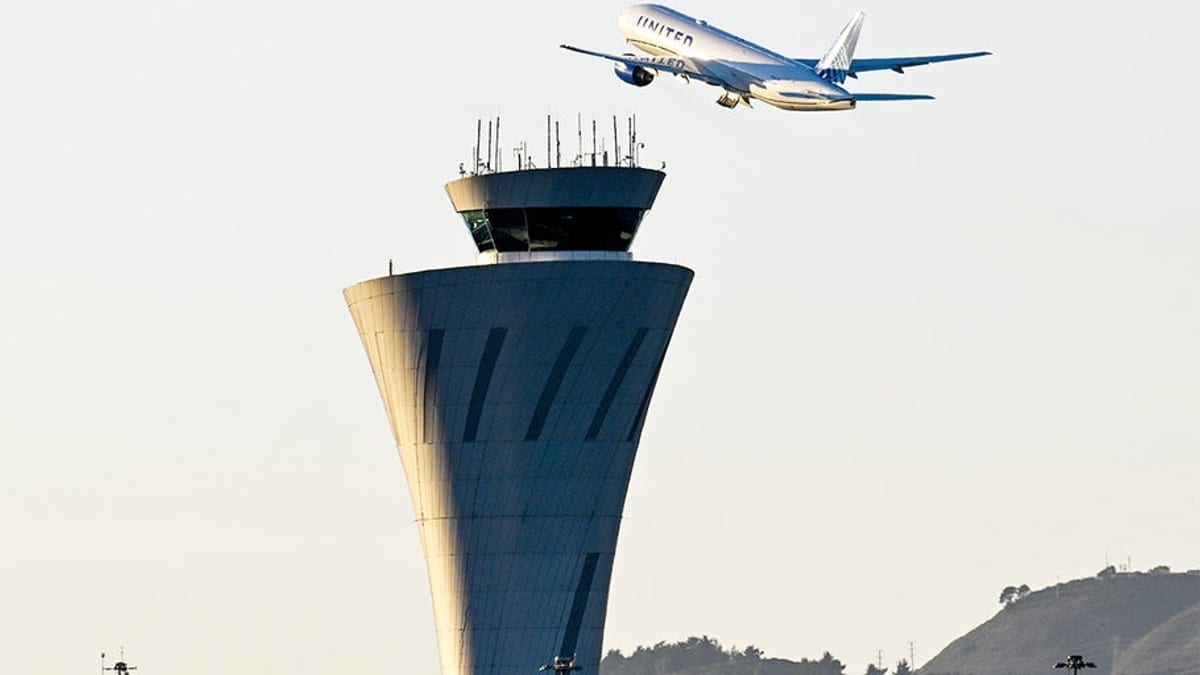
Image by Fox Business
New FAA Rules Cut SFO Arrival Capacity
Publicly available information shows that the FAA has imposed new safety restrictions on approaches into San Francisco International Airport, limiting certain types of landings and reducing the overall number of arrivals that can be handled each hour. The changes focus on side-by-side approaches to the airport’s closely spaced parallel runways, a hallmark of operations at SFO during busy periods and in clear weather.
Reports indicate that the revised rules, announced on March 31, 2026, reduce the airport’s permitted arrivals from a previous ceiling of about 54 per hour to around 36 in some configurations. The cuts come on top of an already constrained operating environment tied to a major runway repaving project, creating a compounded effect on capacity at one of the West Coast’s key international gateways.
According to coverage from national and local outlets, the FAA reassessed procedures for simultaneous approaches to SFO’s east-west runways, which are separated by roughly 750 feet. The agency has now moved to restrict those parallel landings in the interest of additional spacing and separation, a shift that effectively slows the rate at which arrivals can be safely sequenced into the airport.
The new limits apply even in good weather, which traditionally allowed SFO to rely heavily on dual-runway arrivals to handle peak traffic. Aviation industry analysis notes that this structural change means that capacity constraints are likely to persist beyond short-term weather disruptions and could be felt across multiple seasons.
Runway Construction Deepens the Disruption
The FAA rule change coincides with a long-planned construction project that has already taken one of SFO’s two sets of parallel runways out of service. A north-south runway is closed for a six-month repaving program, leaving the airport more dependent on its remaining east-west pair precisely as new federal restrictions take effect on their use.
Airport planning documents and recent news coverage indicate that the runway closure was initially expected to cause a moderate uptick in delays, with forecasts centered around 10 to 15 percent of flights running late during the height of the work. Those projections were based on a reduced but still relatively robust arrival rate that assumed continued use of side-by-side approaches.
With the FAA’s new limitations now layered onto that construction schedule, the overall impact is significantly larger. The hourly arrival rate under the combined constraints is being cut to roughly two-thirds of the previous maximum, leaving fewer slots available for carriers at times when demand remains strong.
The runway currently under construction is expected to reopen in early October, which could restore some of the lost capacity. However, published aviation analysis suggests that the approach restrictions themselves may remain in place beyond the construction period, potentially making the current squeeze on arrivals more than just a short-term construction-related issue.
Delay Forecasts Climb for Summer and Fall Travel
Updated projections from publicly available airport communications indicate that around one-quarter of arriving flights at SFO could now experience delays of at least 30 minutes during the most affected periods. That is a notable jump from earlier estimates, which anticipated a more modest share of disruptions tied solely to runway work.
Travel-industry reports describe a likely pattern in which the bulk of delays cluster around peak periods in the morning and evening, when arrival demand is highest and the reduced hourly cap is most restrictive. At those times, flights may face ground delays at their departure airports or airborne holding near the Bay Area as air traffic control meters arrivals into SFO’s constrained runway setup.
Some aviation analysts note that the impact may ripple well beyond San Francisco. As SFO serves as a major transcontinental and international hub, extended arrival queues can cascade through airline networks, affecting connections and departure times at numerous airports across the United States and overseas.
The degree of disruption will depend in part on how carriers adjust their schedules and how demand evolves through the busy summer and early autumn travel seasons. Early indications suggest that airlines are reviewing their timetables and may re-time or consolidate some services in response to the new arrival limits.
Advice for Travelers Using the Bay Area
For travelers planning trips through San Francisco in the coming months, the latest developments mean a higher likelihood of schedule changes and extended travel days. Consumer-focused travel coverage recommends allowing extra time for connections at SFO, particularly for itineraries involving international arrivals or tight domestic transfers.
Industry guidance also suggests that passengers with flexibility may want to consider flights at off-peak times, when demand for arrival slots is lower and the risk of lengthy holding patterns is reduced. Early afternoon departures and arrivals, outside of the busiest morning and evening waves, may face fewer bottlenecks as the new regime takes hold.
Given that the Bay Area is served by multiple commercial airports, including Oakland and San José, some travelers and airlines may shift certain routes to these alternatives where feasible. While these airports have their own constraints, they are not directly affected by the specific parallel-approach restrictions now in place at SFO, and may offer additional options for minimizing disruption.
Travel publications advise that passengers closely monitor airline notifications and check real-time flight status tools on the day of travel. Because both weather and air traffic conditions can quickly change the operational picture, same-day updates are expected to play a key role in helping passengers navigate the period of reduced capacity at San Francisco International.
Longer-Term Questions for a Major West Coast Hub
Beyond the immediate disruption to summer and fall schedules, the new FAA rules raise broader questions about how SFO will manage growth and reliability in the years ahead. As a primary gateway for transpacific traffic and a major domestic connecting point, the airport has long relied on dense arrival banks supported by parallel runway operations.
Aviation commentators note that if restrictions on side-by-side approaches remain in place on a permanent basis, SFO may face structural limits on how many flights it can handle at peak times, even after the current runway construction concludes. That could prompt airlines to reevaluate their long-term scheduling strategies at the airport, potentially shifting some traffic to other hubs or redistributing flights across the day.
Some industry analysis points to potential mitigations, including refined air traffic management procedures, improvements in navigation technology, and schedule smoothing by carriers. However, most observers caution that such measures are unlikely to fully offset the immediate reduction from more than 50 to the mid-30s in maximum hourly arrivals without physical changes to runway layout or spacing.
For now, San Francisco International finds itself at the center of a complex balancing act between safety priorities and operational efficiency. Travelers passing through the airport in 2026 are likely to feel the effects directly, as the combination of new landing limits and ongoing runway work reshapes the rhythm of one of the country’s busiest aviation gateways.