

More news on this day
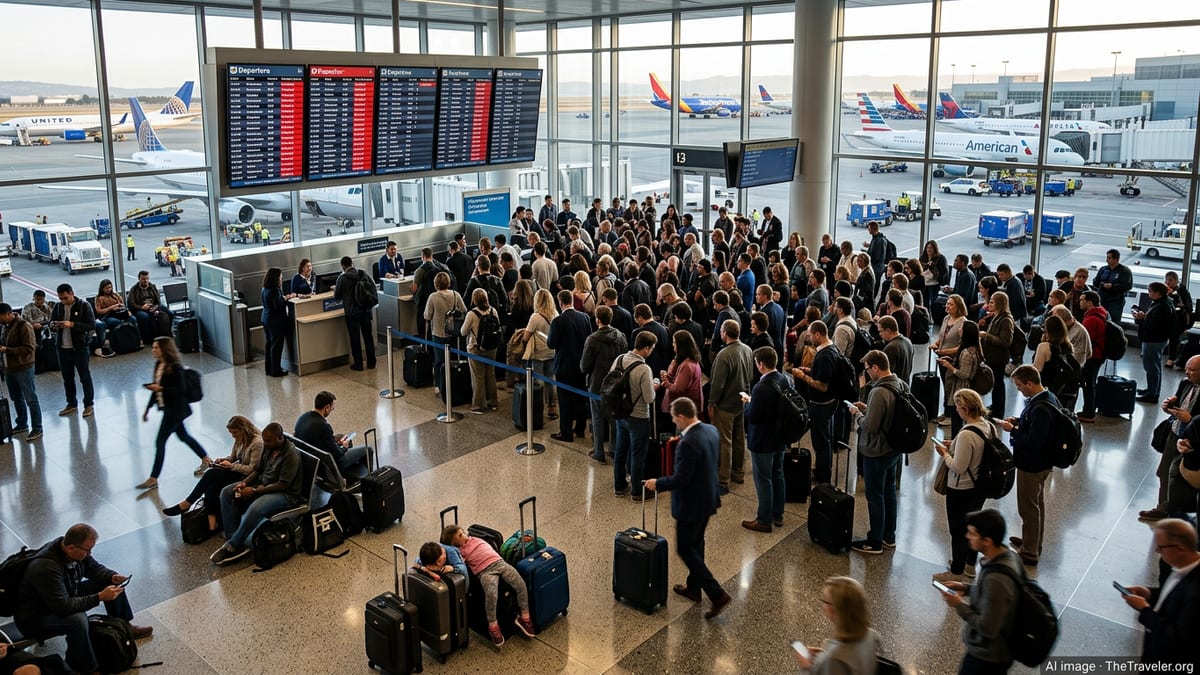
Travelers moving through San Francisco International Airport on March 6 are facing mounting disruption, with 142 flight delays and 5 cancellations affecting services operated by United Airlines, Southwest Airlines, Delta Air Lines and American Airlines and rippling out to Los Angeles, Seattle, Chicago and other major US cities.
Ripple Effects Across Key Domestic Routes
The latest disruption at San Francisco International Airport is concentrating pressure on some of the country’s busiest domestic corridors. Flights connecting the Bay Area with Los Angeles, Seattle and Chicago are among those most affected, as carriers adjust schedules, swap aircraft and rebook passengers in response to the delays. The knock-on effect is being felt both on departures from San Francisco and on inbound services that feed connections across the United States.
United, Southwest, Delta and American all maintain dense schedules at San Francisco, using the airport as a key West Coast gateway. When operations slow, even modest schedule changes can create a cascade of missed connections and crew timing issues. On Friday, that pattern has been visible across multiple departure banks, with morning delays leading to tightened turnaround times throughout the afternoon and evening.
Passengers heading to and from Los Angeles and Seattle are encountering rolling delays as aircraft arrive late from earlier segments, while flights linking San Francisco with Chicago and other Midwestern cities are particularly vulnerable to knock-on congestion. For many travelers, what begins as a short delay in San Francisco is translating into longer waits at connecting hubs nationwide.
Although only a small number of flights have been fully canceled so far, the volume of delayed services is enough to crowd gates, strain customer service desks and complicate same-day rebooking options on already busy routes.
Operational Strain on Major US Airlines
The four largest carriers involved are responding differently to the day’s disruption, reflecting their varying levels of dependence on San Francisco and distinct operational models. United, which runs one of its primary West Coast hubs at the airport, is contending with delays that reverberate through its national network, particularly to hub cities such as Los Angeles and Chicago. Any extended hold at San Francisco can quickly affect aircraft and crew positioning for subsequent departures elsewhere.
Southwest, operating a high-frequency point-to-point network, is seeing schedule compression on popular routes linking San Francisco with Southern California and the Southwest. Even short delays on these shuttle-style flights can remove the built-in buffers that normally help recover from minor operational hiccups, forcing later adjustments across the day’s rotations.
Delta and American, which rely more heavily on other West Coast and central hubs but still operate key domestic links through San Francisco, are focusing on maintaining connectivity for passengers traveling onward to the East Coast and the Midwest. As delays build, both airlines are prioritizing mainline trunk routes and high-demand business markets, sometimes at the expense of thinner services that may be more susceptible to schedule changes.
Across all four carriers, operations teams are weighing whether to hold departures for connecting passengers, which can help reduce misconnects but deepen delays, or to push flights as close to schedule as possible and rely on rebooking options at downline hubs.
Passenger Experience: Long Lines and Tight Connections
For travelers on the ground, the disruption is manifesting as crowded departure areas, lengthy customer service queues and a heightened sense of uncertainty around connection times. At San Francisco, passengers report gate changes, rolling departure estimates and frequent announcements urging customers to monitor airline apps and airport display boards closely throughout the day.
Those flying to Los Angeles and Seattle are particularly exposed to missed onward connections, as many of these flights feed into dense networks at those airports. A late arrival into Los Angeles can mean a tight or missed connection to destinations across the Southwest, while delays into Seattle can complicate evening departures to the Mountain West and the Midwest. Similarly, Chicago-bound travelers facing late departures from San Francisco risk missing final evening departures to smaller regional airports in the central and eastern United States.
Families and leisure travelers heading out for weekend trips are being urged by airline staff to arrive early, pack essential items in carry-on bags and be prepared for possible last-minute gate or timing changes. Business travelers, many of whom are operating on tight same-day schedules, are increasingly turning to airline mobile apps and text alerts to assess whether alternative routings or later flights may offer a more reliable path to their destinations.
At check-in counters and customer service desks, staff are working to issue meal vouchers in the most delayed cases, rebook misconnected passengers and manage expectations around stand-by options on already full flights. With only a handful of cancellations, seats remain scarce and flexible alternatives are limited, extending wait times for those seeking same-day solutions.
Broader Impact on National Air Traffic
The disruption at San Francisco is underscoring how sensitive the US air travel system remains to slowdowns at major coastal hubs. Even a single airport experiencing an elevated level of delays can cause late-arriving aircraft to miss departure slots at other congested fields, leading to further hold times and gate conflicts. For airlines that synchronize their schedules across multiple hubs, an afternoon delay wave on the West Coast can affect evening departure banks thousands of miles away.
Friday’s pattern is also highlighting the role that air traffic management constraints, ground operations and crew duty limits play in amplifying delays. As the day progresses, flight crews may approach their legally mandated working-hour caps, forcing airlines to juggle pairings and, in some cases, to consolidate or cancel individual flights rather than risk unplanned disruptions later in the day.
Major cities including Los Angeles, Seattle and Chicago are seeing secondary effects as delayed aircraft from San Francisco arrive late, compressing turnaround windows and putting pressure on ramp and maintenance teams. Even when weather conditions are favorable, the timing ripple from one airport can leave carriers with fewer options to recover schedules before the end of the operational day.
For travelers planning trips in the coming days, aviation analysts note that residual effects can linger beyond the initial event, particularly if aircraft and crews end the day out of their normal positions. While airlines will aim to restore schedules overnight, some early-morning services on subsequent days may still reflect the aftershocks of Friday’s disruption in the form of swapped aircraft, altered crew rosters or minor retimings.
What Travelers Should Do Now
Passengers scheduled to travel through San Francisco on United, Southwest, Delta or American are being advised to treat departure times on March 6 as fluid and to use airline mobile apps or text alerts as their primary source of updated information. Checking flight status before leaving for the airport and again upon arrival at the terminal can help travelers anticipate longer waits, potential gate changes or rebooking needs.
Those with connections in Los Angeles, Seattle, Chicago or other major hubs may want to review minimum connection times and, where possible, request earlier departures out of San Francisco or later onward flights to create additional buffer. For travelers already holding tight connections, airline agents can sometimes reissue itineraries on alternative routings that offer a better chance of arriving the same day, even if it involves an extra stop.
Experts also recommend that passengers keep essential medications, chargers and a change of clothes in carry-on bags in case delays stretch into the evening or require unexpected overnight stays. Maintaining flexibility around seat assignments or specific flight choices can increase the chances of securing a rebooked itinerary when capacity is constrained.
As the operational picture evolves across the afternoon and evening, travelers are being encouraged to remain patient with frontline staff, who are managing a high volume of requests with limited available seats. While Friday’s disruption has not yet reached the scale of major nationwide meltdowns seen in recent years, the combination of 142 delays and 5 cancellations at a key hub like San Francisco is a reminder of how quickly the US air travel system can come under strain.