

More news on this day
San Francisco International Airport experienced significant travel disruption as at least 86 flights were delayed or canceled, with publicly available data indicating United Airlines absorbed most of the impact and passengers reporting hours-long waits, missed connections and mounting frustration.
Get the latest news straight to your inbox!
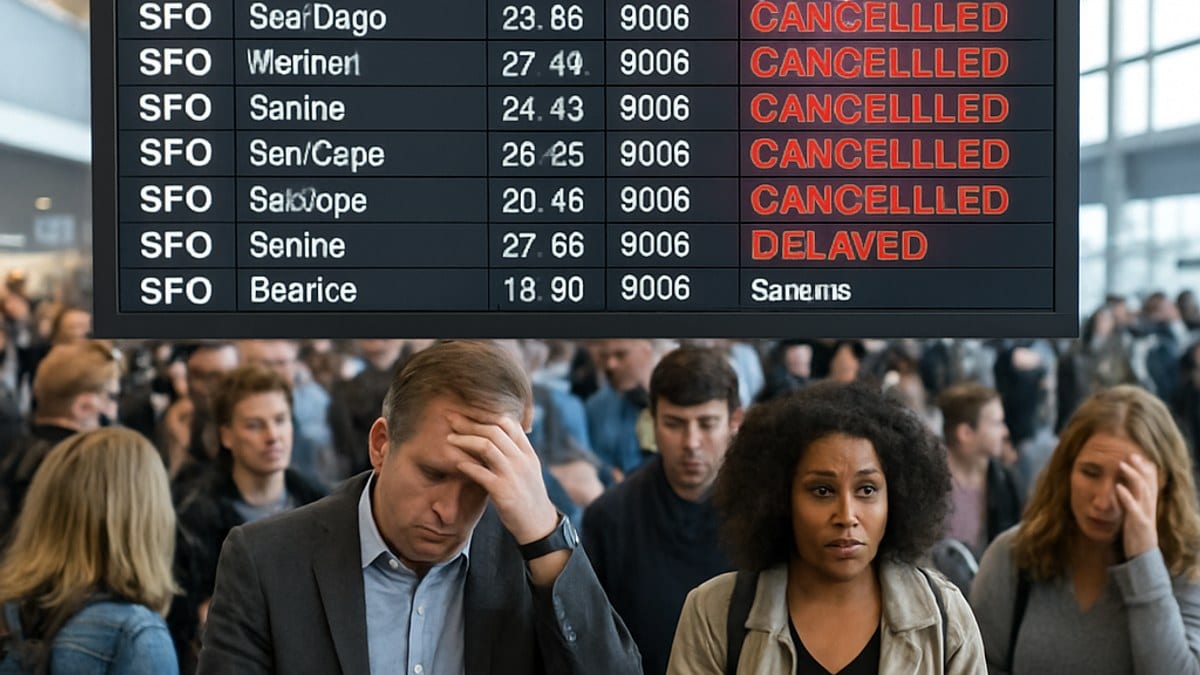
Image by Nomad Lawyer
Dozens of Flights Affected in One Day of Turmoil
Flight-tracking dashboards and airport operations data show that a total of 86 departures and arrivals at San Francisco International Airport were disrupted in a single busy travel period, creating knock-on delays for the rest of the day. The disruptions included a mix of outright cancellations and extended delays, affecting both domestic and international routes.
Published coverage indicates that United Airlines, the airport’s largest carrier by passenger share, saw the greatest number of affected flights. With United operating a dense schedule of hub connections through San Francisco, even a relatively contained operational problem quickly rippled across its network, leaving aircraft and crews out of position.
The impact was visible across departure boards, where clusters of United flights showed late departures of more than an hour alongside cancellations. Other airlines experienced some disruption as well, but the concentration of United services at San Francisco meant its customers were disproportionately caught in the bottleneck.
As the day progressed, the tally of disrupted flights grew, magnified by the cascading effect that even short delays can have across a tightly timed hub operation. Late-arriving aircraft led to further schedule slippage, and tight connecting windows evaporated for many passengers heading onward to other cities.
United’s Dominant Role at SFO Amplifies Disruption
Public financial and planning documents from San Francisco International Airport describe United Airlines as the dominant carrier at the hub, accounting for more than a quarter of the airport’s operating revenues and handling a substantial share of its daily departures. That scale helps explain why United absorbed the majority of the 86 disrupted flights and why the operational shock quickly spread across its timetable.
United’s strategy relies heavily on San Francisco as a gateway for both transcontinental and transpacific travel, with dense connections feeding long haul routes to Asia, Oceania and major hubs across the United States. When departure or arrival flows at the airport slow down, the intricate pattern of banked connections that underpins that strategy becomes vulnerable to disruption.
Publicly available information on airline operations suggests that schedule recovery at a major hub can take many hours once delays reach a certain threshold. Aircraft rotations, crew duty limits and gate availability must all be recalibrated, and carriers often face the choice between holding flights for connecting passengers or sending them on time to protect the rest of the day’s network.
In this latest episode, United’s concentration of flights meant that gate areas serving the airline were among the most crowded parts of the terminal as the disruption unfolded. Lines for customer service, rebooking and baggage services lengthened as more passengers sought alternative routings and overnight arrangements.
Technology Strains and Weather Add to a Fragile System
Recent history at San Francisco International Airport and across the wider aviation system highlights how a combination of factors can push operations into turmoil. Published reports in recent years have documented how powerful Pacific storms, low visibility conditions and runway flow restrictions at San Francisco frequently generate delays even on relatively routine days.
Industry analyses also point to the sensitivity of modern airline operations to technology failures. A high profile global incident in 2024 involving a faulty software update demonstrated how quickly flight check-in systems, crew scheduling platforms and airport information displays can be disrupted worldwide. While the latest San Francisco episode appears more localized, it underscores how dependent large hubs and carriers are on complex digital infrastructure.
United itself has noted in corporate filings that concentrated operations at a small number of major hubs can be vulnerable when local weather, air traffic control constraints or airport infrastructure issues arise. San Francisco’s location on a fog-prone coastline, combined with intersecting runways and busy transpacific flows, has long made it one of the more delay-sensitive airports in the United States.
Travelers caught up in the most recent wave of disruptions reported online that even modest initial delays led to missed connections in other cities, extended tarmac waits and late-night arrivals far from their original schedules. Those individual accounts align with broader patterns aviation analysts have identified in hub-based operations when a single airport experiences a difficult operating day.
Severe Passenger Impact Across Domestic and International Routes
The 86 affected flights at San Francisco translated into thousands of disrupted journeys, as a large portion of United’s schedule consists of connecting passengers using the airport as a transfer point. Domestic services to West Coast, Mountain West and Midwest cities were hit alongside transcontinental flights and some long haul international departures.
Publicly available flight status data show that many disrupted services were pushed back by several hours, in some cases departing late into the evening after originally scheduled morning or midday departure times. For passengers with onward itineraries, those delays often meant forced overnight stays or complete re-routing through other hubs.
Reports shared on social media and travel forums described terminal corridors crowded with travelers waiting for updated information and scrambling to adjust plans. With gate agents attempting to manage rolling changes across multiple flights, some passengers turned to airline apps and third-party tracking tools to identify alternative connections before seats disappeared.
International travelers were particularly exposed where only a limited number of daily departures exist on specific routes. A canceled or heavily delayed flight in those cases can leave customers with few same-day options, raising the stakes for timely rebooking and hotel arrangements when overnights become unavoidable.
Pressure Mounts for Operational Resilience at Key Hubs
The latest disruption at San Francisco adds to growing scrutiny of how resilient large hub airports and their anchor airlines are in the face of compounding pressures. Travel demand has remained strong, but the system’s ability to absorb shocks appears constrained by staffing limits, aging infrastructure and tightly packed schedules.
Aviation consultants note that carriers such as United have taken steps in recent years to add more slack into their schedules at congested hubs, trimming peak-hour flights or adjusting block times to better reflect real-world operating conditions. Even so, days with high disruption numbers at airports like San Francisco suggest that buffers remain relatively thin when multiple stress factors coincide.
Regulators and consumer advocates continue to focus on passenger protections around cancellations and long delays, particularly regarding compensation, hotel coverage and rebooking obligations. While policies vary between countries and regions, public attention to high profile disruption days often renews calls for clearer rules and stronger enforcement.
For San Francisco International Airport and United Airlines, the episode involving 86 disrupted flights serves as another test of how quickly operations can be stabilized once a difficult day unfolds. Travelers, meanwhile, face renewed reminders of the benefits of monitoring flight status closely, building extra time into itineraries through delay-prone hubs and considering alternative routings when major disruptions begin to surface.