

More news on this day
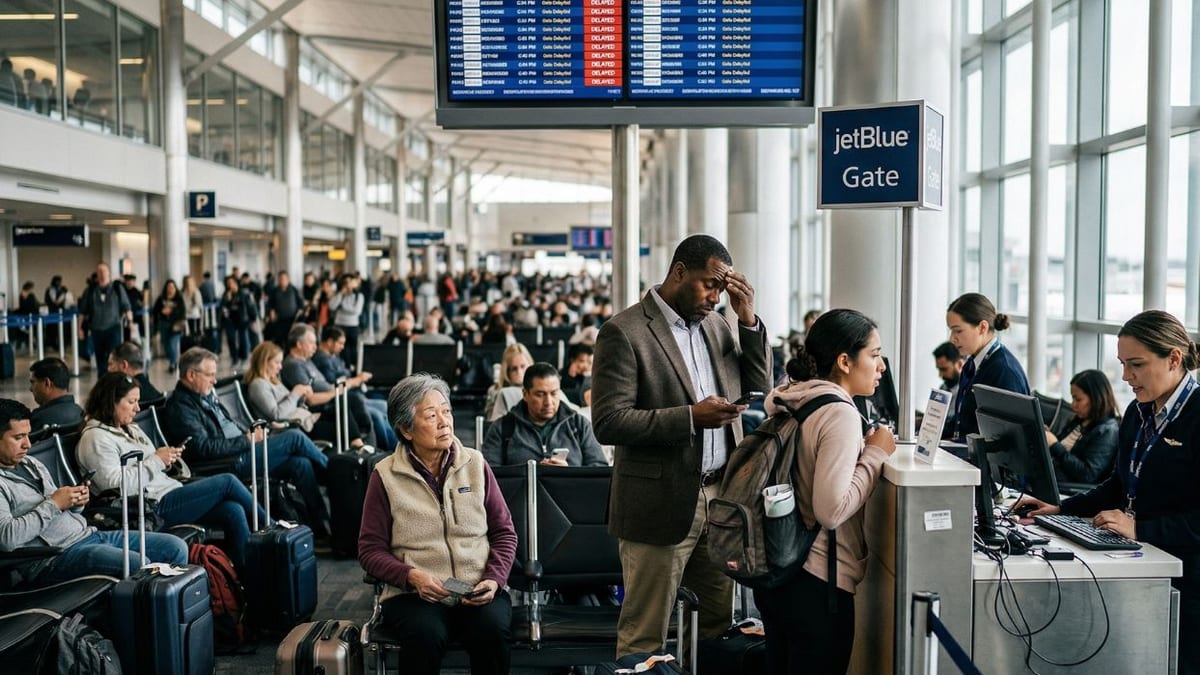
Dozens of travelers at San Jose Mineta International Airport faced disrupted plans today as 39 flights were reported delayed, affecting major carriers such as American Airlines, Delta Air Lines, United Airlines, and Alaska Airlines on some of the airport’s busiest routes to Seattle, Los Angeles, Chicago, New York, and Mexico City.
Get the latest news straight to your inbox!
Widespread Disruption Across Major Airlines and Routes
Publicly available flight-tracking information shows that operations at Mineta San Jose International have been under strain, with 39 departures and arrivals flagged as delayed within a single operating window. The disruption has touched a cross-section of domestic and international services, pushing back departure times and extending waits at the gates.
American Airlines, Delta Air Lines, United Airlines, and Alaska Airlines appear among the most impacted carriers, reflecting their strong presence at San Jose and across West Coast and transcontinental networks. The delayed flights span short-haul hops along the California corridor as well as longer sectors to key Midwest and East Coast hubs.
Core business and leisure routes have been particularly affected. Services linking San Jose with Seattle and Los Angeles, which function as critical feeders into larger national and international networks, have experienced knock-on schedule changes. Longer flights to Chicago and New York, vital for connections to Europe and the eastern United States, have also reported extended departure and arrival times.
International connectivity has not been spared. Mexico City, one of San Jose’s primary cross-border destinations, is among the routes showing delays, underscoring how a local operational challenge can ripple into international itineraries and same-day onward connections throughout Latin America.
How the Delays Are Affecting Travelers on the Ground
Passengers at San Jose have faced a familiar cascade of inconveniences that typically accompany concentrated waves of delays. Many are experiencing longer waits at security, crowded gate areas, and a scramble to rework ground transportation and accommodation plans as revised arrival times push deeper into the day and evening.
As flights to hubs such as Los Angeles, Chicago, and New York shift later into the schedule, travelers with onward connections risk misaligned itineraries. Missed connections can trigger same-day rebooking challenges, especially on popular transcontinental and international legs where remaining seats may already be limited due to strong spring travel demand.
Families and leisure travelers heading to or from Mexico City face added uncertainty when delays cut into carefully arranged vacation or visiting schedules. Even modest schedule slippages can compress short trips, while more severe delays may require shifting hotel reservations, ground tours, or domestic connections within Mexico.
Business travelers are also vulnerable when punctuality falters on high-frequency routes to Seattle and Los Angeles. Meetings, conferences, and same-day return plans can quickly unravel once morning or early afternoon departures push back, forcing last-minute adjustments and, in some cases, fully abandoned travel days.
Broader Pattern of U.S. Flight Disruptions
The San Jose delays are unfolding against a backdrop of elevated operational strain across major U.S. airports this season. Recent national data and published coverage point to several thousand daily delays and hundreds of cancellations on peak days, with weather systems, air traffic flow constraints, and airline scheduling all contributing to the turbulence.
Reports on wider U.S. disruptions over the past week highlight that major hubs in Atlanta, Chicago, Los Angeles, Houston, New York, Denver, Phoenix, and Washington have all seen significant numbers of delayed and canceled flights. In these snapshots, American, Delta, United, Alaska, and several low-cost and regional carriers consistently appear among the airlines managing large volumes of affected passengers.
San Jose’s experience fits within this broader pattern. As a key Bay Area gateway, the airport relies heavily on on-time performance at larger partner hubs. When traffic backs up at airports such as Los Angeles International or Chicago O’Hare, delays can propagate downstream, leading to late inbound aircraft, compressed turnaround times, and subsequent schedule slippage on departing flights.
Historical performance data for U.S. aviation also shows that delays often cluster during periods of strong demand and constrained capacity. While long-term statistics indicate improving reliability for some carriers, even small disruptions can quickly scale when fleets, crews, and airport infrastructure are operating near their limits.
What Passengers Can Do If Their Flight Is Delayed
Travelers scheduled to fly into or out of San Jose are encouraged by publicly available guidance to monitor their flight status frequently on airline apps or through airline customer channels. Same-day schedule changes may not always be reflected immediately on third-party platforms, so direct confirmation with the carrier is typically the most reliable way to track evolving departure and arrival times.
When delays threaten connections in cities such as Seattle, Los Angeles, Chicago, New York, or Mexico City, proactive action can make a significant difference. Many airlines allow travelers to request same-day flight changes or standby options through digital tools, which may help secure an earlier or more reliable onward leg before remaining inventory tightens.
Passengers on longer itineraries may also wish to review their rights and protections for major delays and missed connections. Consumer advocacy resources outline potential eligibility for meal vouchers, hotel accommodation, or partial refunds in certain circumstances, depending on the cause of the disruption and the policies of the operating carrier.
For those yet to depart for the airport, extra buffer time remains a prudent safeguard. Added time can help absorb schedule shifts, long check-in lines, and potential re-screening at security if gate or timing changes require adjustments. For international travel to Mexico City and beyond, arriving early also provides space to resolve any documentation or baggage questions that can further slow progress through the terminal.
San Jose’s Role in a Strained West Coast Network
Mineta San Jose International occupies a pivotal niche in the West Coast aviation landscape, serving as a convenient alternative to the larger but more congested hubs in San Francisco and Oakland. The airport connects Silicon Valley directly to a mix of domestic and international destinations, including frequent services to Seattle, Los Angeles, and major Midwestern and East Coast hubs.
Recent schedule data underscores that Alaska Airlines, American Airlines, Delta Air Lines, and United Airlines maintain a diverse mix of services from San Jose, many of which funnel passengers into their broader national and global networks. When delays accumulate on this portfolio of routes, the effects extend well beyond the local catchment area and into connecting markets across North America and overseas.
The latest wave of 39 delayed flights at San Jose highlights how even a mid-sized airport can experience system-wide pressures that are often more visible at mega-hubs. As carriers look to balance growth in Silicon Valley demand with operational resilience, San Jose’s performance will remain an important barometer of how well the broader West Coast network is coping with ongoing volatility.
For now, travelers using San Jose are navigating a more uncertain operating environment, in which flexibility, close attention to flight information, and a willingness to adjust plans on short notice are becoming essential tools for getting where they need to go.