

More news on this day
Sandblu Santorini is set to relaunch in summer 2026 as part of Hilton’s LXR Hotels and Resorts collection, marking the brand’s first Greek property and underscoring how luxury hospitality on the islands is increasingly intertwined with sustainability and experiential travel.
Get the latest news straight to your inbox!
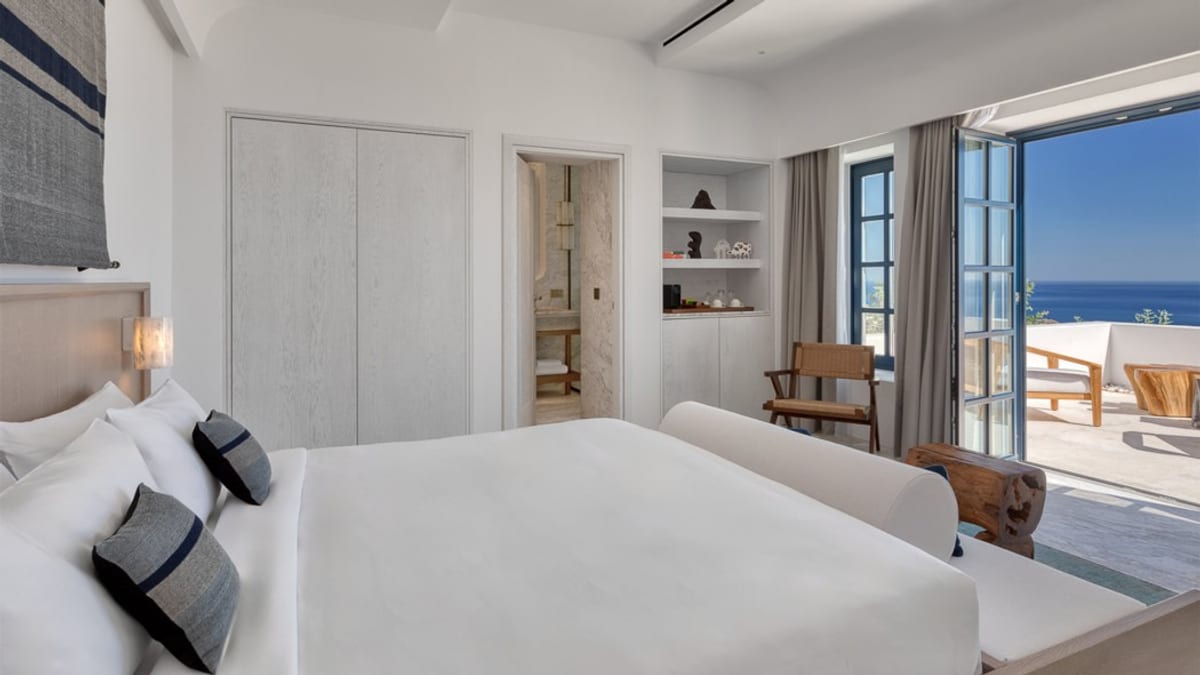
Image by International Hotels News, Hotel Industry & Hospitality News
LXR Arrives in Greece with a Reimagined Sandblu
Publicly available information from Hilton and industry reports indicate that Sandblu Santorini will reopen in 2026 as Sandblu Santorini, LXR Hotels and Resorts, following a repositioning of the existing Sandblu resort near Kamari on the island’s east coast. The property, which first welcomed guests in 2024 as an independent hotel, is being reshaped as a flagship hideaway within Hilton’s luxury and lifestyle portfolio.
The relaunched resort is expected to feature 66 rooms and suites, many with private pools, carved into the slopes below Ancient Thira and overlooking the Aegean and the black sands of Kamari beach. Design details highlighted in published material include stone facades, whitewashed walls and natural textures that mirror Santorini’s volcanic landscape while presenting a contemporary take on Cycladic minimalism.
Hilton’s development pipeline updates describe Sandblu as an intimate sanctuary rather than a large-scale resort, aimed at travelers seeking privacy, personalized service and easy access to both the shoreline and the island’s cultural and natural attractions. The alignment with LXR positions the property in a tier targeting discerning guests who favor boutique character supported by the reach of a global hospitality network.
The reopening also brings Sandblu into Hilton’s distribution and loyalty ecosystem. Travel coverage notes that the resort has begun loading inventory for April 2026 stays, signalling that it will participate in the Hilton Honors program and broadening Santorini’s appeal to long-haul luxury travelers who plan itineraries around points redemptions and elite benefits.
Thoughtful Luxury: Wellness, Gastronomy and Sense of Place
Descriptions of the rebranded Sandblu emphasize a “thoughtful luxury” concept, with amenities designed to showcase Santorini’s landscape and culture rather than overwhelm them. Plans highlighted in trade publications include two infinity pools oriented to sunrise views, a destination spa focused on wellness rituals and volcanic-inspired treatments, and spaces that blur indoor and outdoor living.
The resort’s food and beverage program is presented in available materials as a core part of the guest experience. Reports reference a signature restaurant drawing on Cycladic and wider Greek cuisine, supported by seasonal produce and seafood from the surrounding islands. A separate wine bar is expected to spotlight Santorini’s volcanic terroir, pairing indigenous varietals such as Assyrtiko with contemporary Greek small plates.
Retail and lifestyle elements also form part of the repositioning. Industry announcements describe high-end boutiques, a curated concept store and a concierge-led approach to excursions, including vineyard visits, caldera sailing and guided explorations of ancient sites. The objective is to embed the property within the island’s cultural fabric rather than operate as a self-contained enclave.
This blend of spa, gastronomy and localized experiences places Sandblu firmly within a broader Mediterranean trend towards resorts that function as gateways to their destinations. For Santorini, where visitor numbers are high and competition at the top end of the market is intense, such positioning aims to differentiate the property by depth of experience rather than size or ostentation.
Sustainability Commitments in a Fragile Island Environment
With Santorini facing mounting pressure from overtourism and limited natural resources, the sustainability dimension of Sandblu’s relaunch is central to its narrative. Hilton’s corporate materials and project announcements point to resource-efficient building systems, energy-saving technologies and water management measures designed for an island environment with constrained supply.
The resort’s architecture, which incorporates stonework and low-rise structures stepped into the hillside, reduces visual impact on the landscape and supports passive cooling strategies that can limit energy use. References in development documents to shaded walkways, native landscaping and thoughtful lighting suggest an effort to minimize heat gain and light pollution while preserving the island’s night skies.
Waste reduction and responsible sourcing also feature in the project’s positioning. Available information indicates that Sandblu plans to prioritize local suppliers for food, amenities and design elements, reducing transport emissions and channelling tourism spending into the regional economy. In the context of a small island community, this approach aligns with growing expectations that luxury resorts act as economic partners rather than isolated compounds.
Industry observers note that these measures are part of a wider push among upscale brands in Greece to reconcile high-end development with environmental stewardship. By foregrounding conservation-minded design and operations, Sandblu’s LXR relaunch is likely to be watched as a test of how far global hotel groups can adapt their models to the constraints and opportunities of fragile island destinations.
Boost for Greece’s Expanding Luxury Tourism Sector
The arrival of LXR in Santorini comes as Greece’s luxury tourism sector continues to broaden beyond traditional hotspots and seasonality. Data cited in tourism and investment reports show sustained growth in high-spend arrivals, with visitors drawn by the country’s combination of heritage, natural scenery and increasingly sophisticated hospitality infrastructure.
Sandblu’s repositioning feeds directly into this momentum. By adding a branded luxury option on the less crowded east side of Santorini, the project helps redistribute demand across the island and offers an alternative to the cliffside enclaves of Oia and Fira. Travel analysts suggest that such diversification can ease pressure on overstretched areas while lengthening stays as travelers explore multiple parts of the island.
The partnership model behind Sandblu, involving Hilton and local development firm RMKA Private Company, reflects a pattern seen elsewhere in Greece, where international brands collaborate with domestic stakeholders to scale up premium offerings. This structure enables global operators to expand in a market with complex planning and heritage considerations, while giving local partners access to international distribution and standards.
Looking ahead to the 2026 season, the resort’s reopening is expected to contribute to Santorini’s positioning among Europe’s leading luxury island destinations, competing with Mediterranean peers for long-haul and repeat visitors. The combination of a well-known international brand, a sustainability-framed concept and a distinctive cliffside-meets-beach setting positions Sandblu as a bellwether for how Greece’s next generation of high-end retreats may evolve.
What the Reopening Signals for Future Island Developments
Analysts following Mediterranean hospitality development view Sandblu Santorini as part of a broader shift in how new resorts are conceived on mature tourism islands. Instead of greenfield projects in untouched locations, many recent openings involve the transformation of existing properties, focusing on design upgrades, efficiency improvements and closer alignment with contemporary traveler expectations.
Sandblu’s journey from an independent 2024 opening to a 2026 LXR-branded relaunch illustrates this pattern. Publicly available project descriptions suggest that the focus is less on adding capacity and more on elevating quality, refining the guest mix and embedding the resort within a curated portfolio that can command premium rates while maintaining a relatively small footprint.
For Santorini, where debates over carrying capacity and infrastructure strain are ongoing, such projects may offer a template for reconciling economic aspirations with environmental and social concerns. By concentrating on thoughtful renovations, partnerships with local operators and programs that connect guests to regional culture, high-end brands can demonstrate that growth in the luxury segment need not equate to unchecked expansion.
As Sandblu Santorini prepares to reopen under the LXR flag, attention will turn to how effectively the resort delivers on its promise of low-impact indulgence. Its performance in the seasons following the relaunch is likely to influence both traveler perceptions and investor appetite for similar sustainability-led, experience-rich developments across the Greek islands.