

More news on this day
Şanlıurfa, long known within Türkiye as a cradle of ancient civilizations and spiritual life, is emerging as one of the country’s most dynamic tourism stories, with projections pointing to a record-breaking season in 2026 driven by its archaeological treasures, Ramadan festivities and expanding cultural infrastructure.
Get the latest news straight to your inbox!
Rising Visitor Numbers Put Şanlıurfa in the Spotlight
Recent tourism figures and sector analyses indicate that Şanlıurfa is on track to post its strongest visitor performance yet in 2026, buoyed by sustained growth since the pandemic and heightened international curiosity about southeastern Türkiye. National tourism data show that the country as a whole has been climbing back to and beyond pre-2020 levels, and industry coverage highlights Şanlıurfa as one of the regional destinations benefiting most from this broader rebound.
Göbekli Tepe, the Neolithic site that has become the emblem of Şanlıurfa’s tourism appeal, has repeatedly set new attendance records in recent years. Reports focusing on 2024 and 2025 point to several hundred thousand visitors annually and a clear upward trend, with local projections and sector commentary now targeting the symbolic threshold of one million visitors to the site alone in 2026. When combined with the wider Neolithic landscape and city attractions, analysts suggest that overall arrivals to the province could reach well into the multi-million range for the year.
Travel trade publications and destination marketing material emphasize that this growth is not limited to foreign tourists. Domestic travelers, encouraged by improved road and air links to Şanlıurfa and growing media attention around the city’s heritage, have been steadily increasing their share of overnight stays. Hoteliers and tour operators are responding by expanding capacity ahead of 2026, especially around peak religious holidays and key cultural events.
Archaeological Wonders Lead the 2026 Narrative
At the heart of Şanlıurfa’s 2026 outlook is Göbekli Tepe, recognized globally as one of the oldest known monumental ritual complexes. Located on a limestone ridge northeast of the city, the UNESCO World Heritage site features massive T shaped stone pillars arranged in circular enclosures, many carved with intricate animal reliefs. Coverage by international media and specialist archaeology outlets has framed Göbekli Tepe as a place that is reshaping understanding of early settled life, drawing steadily rising numbers of cultural tourists and academic visitors.
The broader Taş Tepeler, or Stone Hills, project is multiplying this interest. Under this umbrella, Turkish researchers and cultural authorities are developing a constellation of at least a dozen Neolithic sites across Şanlıurfa province, including Karahantepe, Sayburç and Sefertepe. Published reports on the project describe new visitor routes, upgraded signage, and interpretation centers that allow travelers to experience a connected prehistoric cultural landscape rather than a single isolated site.
In 2024 and 2025, Taş Tepeler locations collectively drew several hundred thousand visitors, according to specialist tourism and archaeology magazines that track the initiative. The five year milestone of the project, marked in 2025, has been accompanied by international exhibitions in European capitals highlighting finds from Göbekli Tepe and Karahantepe. Destination analysts expect these high profile showcases to convert into additional long haul tourism demand in 2026, as travelers seek to see in situ the artifacts and architectural forms they first encountered in museums abroad.
Şanlıurfa’s own Archaeology and Mosaic Museum, rebuilt and expanded in the last decade, serves as a gateway to this deep history. Housing many of the most fragile sculptures and reliefs from Göbekli Tepe and nearby sites, the museum has regained momentum after temporary closures related to flooding and is increasingly included on curated cultural itineraries through southeastern Türkiye. The combination of field sites and museum experiences is frequently cited as a key factor in lengthening average stays in the city.
Ramadan Feast and Religious Tourism Boost Spring Occupancy
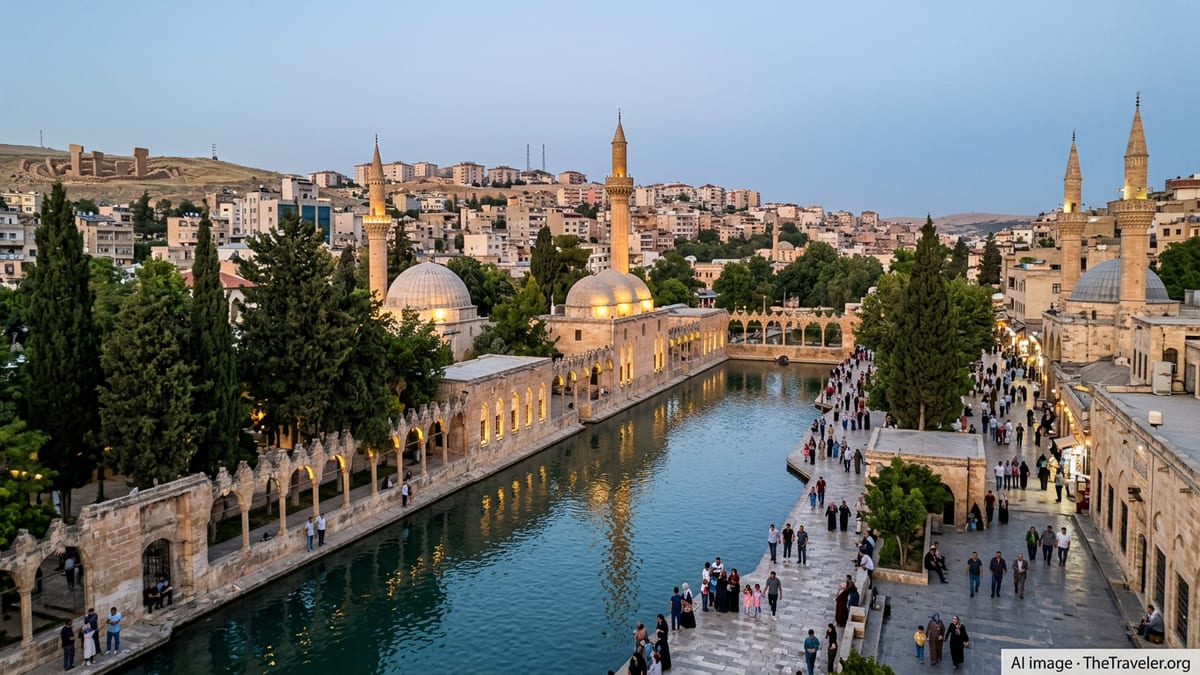
Alongside its archaeological profile, Şanlıurfa is a major center of religious tourism, anchored in its identity as the traditional birthplace of the prophet Abraham and home to venerated sites such as Balıklıgöl. During Ramadan and the subsequent Eid al Fitr holiday, known locally as the Ramadan Feast, the city attracts large numbers of pilgrims and family groups from across Türkiye and neighboring countries, creating one of its most intense annual peaks in demand.
Hospitality sector reports for 2024 and 2025 describe near full hotel occupancy in Şanlıurfa during these periods, with many properties requiring bookings months in advance. Publicly available booking and pricing data show pronounced rate spikes over the final days of Ramadan and the holiday week that follows, reflecting this surge. For 2026, the overlap of anticipated record interest in Göbekli Tepe with the draw of the Ramadan Feast is expected to amplify the spring season beyond historic norms.
Tour package descriptions for upcoming years increasingly pair early morning visits to Göbekli Tepe and Karahantepe with evening iftar experiences in Şanlıurfa’s historic center, where stone courtyard houses and narrow alleys fill with diners. Industry observers note that this blending of spiritual, cultural and gastronomic themes is helping the city appeal to a broader audience, including younger domestic travelers who might previously have favored coastal destinations.
Local tourism planning documents and national strategy papers emphasize efforts to manage this religious and cultural tourism in a sustainable manner. Measures such as timed entries at key sites, expanded pedestrian areas around the old city, and new visitor information services aim to preserve the character of pilgrimage spaces while accommodating rising numbers.
Infrastructure, Events and Global Marketing Shape 2026 Outlook
Infrastructure investment over the past decade is shaping how Şanlıurfa will handle a record tourism season in 2026. Improvements to highways linking the city with Gaziantep and Diyarbakır, combined with increased domestic flight connections, have reduced travel times and made short breaks more feasible. Reports on regional development indicate that upgrades to signage, roadside facilities and rest areas are specifically designed with cultural routes and bus tours in mind.
Planned events and cultural programs also feature in the optimistic forecasts. Şanlıurfa has been integrated at various points into the Türkiye Culture Route Festival framework, and coverage of national cultural policy suggests that additional concerts, exhibitions and heritage themed events are being considered for 2026 to coincide with the growing visibility of Taş Tepeler. Travel trade previews indicate that international tour operators are expanding itineraries that position Şanlıurfa as a highlight within broader tours of Anatolia.
Global marketing campaigns by the Türkiye Tourism Promotion and Development Agency routinely showcase Şanlıurfa’s archaeological and spiritual sites in imagery and video materials targeting long haul markets. Analyses of search trends and social media engagement around Göbekli Tepe and Şanlıurfa show strong year on year increases since 2020, with peaks corresponding to documentary releases and museum exhibitions abroad. Sector commentators argue that this digital visibility is a key driver behind the expectation of another step change in visitation by 2026.
At the same time, conservation and carrying capacity remain central considerations. UNESCO monitoring for Göbekli Tepe has highlighted the importance of robust visitor management and impact assessments for nearby infrastructure projects, such as transport corridors. Public reports on site management plans indicate that revisions are underway to balance wider access with the protection of fragile Neolithic structures, a balance that will be tested as tourist numbers grow.
Cultural Heritage, Cuisine and Community Experiences Deepen Appeal
Beyond headline archaeological discoveries, Şanlıurfa’s living culture is increasingly recognized as an essential part of its tourism proposition. Travel writers and bloggers covering the region point to the city’s courtyard houses, traditional covered bazaars and historic mosques as key elements of the visitor experience. Evening gatherings featuring live local music and regional dishes such as çiğ köfte, lamb kebabs and pistachio rich desserts are frequently highlighted as memorable moments that differentiate Şanlıurfa from more familiar destinations.
Initiatives to support community based tourism have gained momentum, with artisan cooperatives and small guesthouses in and around Şanlıurfa appearing in more international guidebooks and tour catalogues. Reports indicate that these efforts are designed both to spread the economic benefits of tourism more widely and to give travelers a closer connection to daily life in southeastern Türkiye. Walking tours that link lesser known historic quarters with viewpoints over the city are one example of how this grassroots approach is taking shape.
Analysts suggest that the combination of deep time archaeology, sacred landscapes and vibrant contemporary culture is what positions Şanlıurfa for an exceptional tourism performance in 2026. As new discoveries at Karahantepe and other Taş Tepeler sites continue to make headlines, and as Ramadan Feast celebrations fill the city with visitors, Şanlıurfa’s profile on the global travel map appears set to rise further, potentially establishing a new benchmark season that will shape development strategies for years to come.