

More news on this day
Santa Monica is sharpening its coastal tourism appeal with a fresh chapter for the Georgian Hotel, as the restored Art Deco landmark on Ocean Avenue aligns with a Hyatt-affiliated soft brand under new management by Dreamscape Hospitality.
Get the latest news straight to your inbox!
Historic Ocean Avenue Icon Enters New Phase
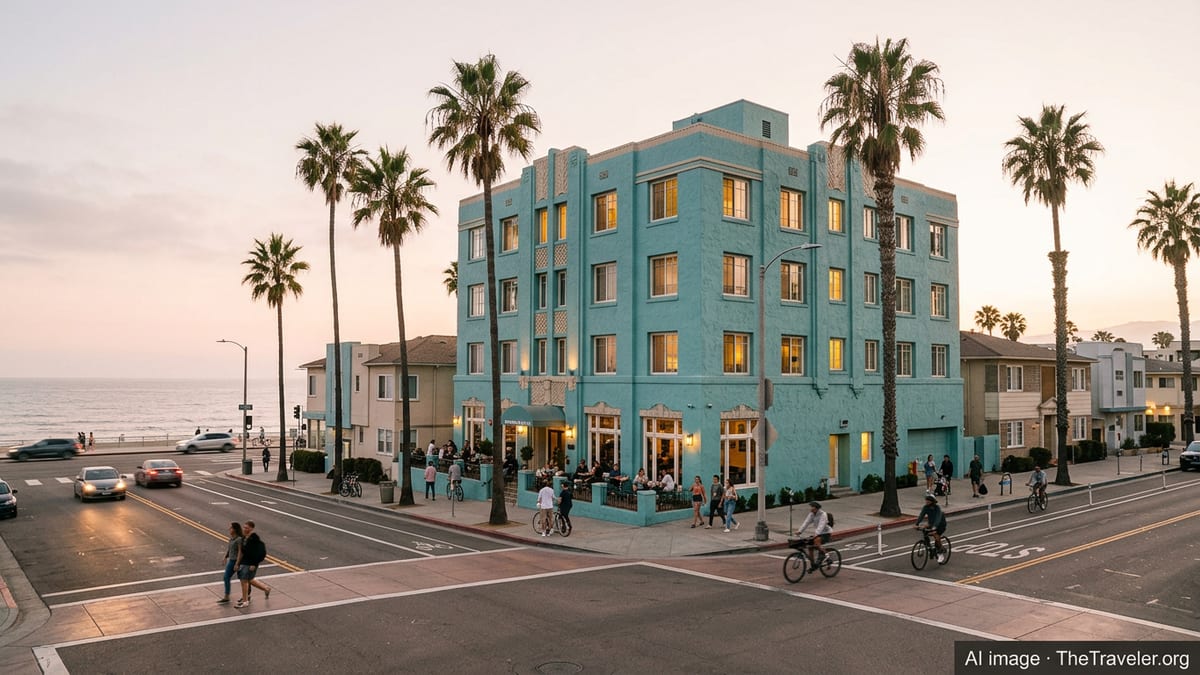
The Georgian Hotel, an eight-story Art Deco property overlooking the Pacific, has been a fixture of Santa Monica’s oceanfront skyline since its opening in 1933. Following a historically informed restoration and full reopening in April 2023, the property has reemerged as one of the city’s most recognizable accommodations, combining its signature turquoise façade with upgraded interiors and amenities.
Reports indicate that the restoration reimagined 84 guest rooms and a series of suites with updated finishes while retaining original architectural elements. Publicly available descriptions highlight refreshed ocean-facing terraces, intimate lounges, and new dining spaces designed to spotlight the building’s 20th-century glamour for a contemporary audience.
In February 2026, Dreamscape Hospitality assumed management of the hotel, with plans for the Georgian to join a Hyatt soft brand. Coverage of the agreement describes the move as a strategic alignment intended to elevate the property’s global profile while preserving its independent character and historic design language.
The combination of a carefully restored landmark and the reach of a major international brand positions the Georgian as a high-visibility anchor on Ocean Avenue, directly supporting Santa Monica’s broader effort to compete in the upper tier of coastal destinations.
Strengthening Santa Monica’s Coastal Tourism Strategy
Santa Monica Travel & Tourism materials and recent economic reports describe the hotel sector as a critical driver of the city’s visitor economy, which generates hundreds of millions of dollars annually in spending. The reimagined Georgian is frequently cited alongside other upgraded oceanfront properties as part of a coordinated hospitality refresh along the shoreline.
Public reports emphasize that Santa Monica has leaned on a mix of renovated historic hotels, new lifestyle properties, and brand transitions to maintain its competitive edge among California beach cities. In this context, the Georgian’s restoration and subsequent move into a Hyatt-affiliated portfolio are viewed as key steps in reinforcing the city’s inventory of upscale rooms within walking distance of the pier, beach, and downtown shopping districts.
By channeling new investment into an existing landmark rather than constructing a replacement tower, the project aligns with local efforts to balance visitor growth with preservation and neighborhood character. Planning and tourism documents point to such adaptive reuse as a way to expand capacity without sacrificing the distinct sense of place that helps attract both domestic and international visitors.
As travel demand along the Southern California coast remains strong, the Georgian’s enhanced marketing reach under a global reservations system is expected to draw additional high-spend guests, contributing to hotel tax revenues that support city services and visitor infrastructure.
Design, Dining, and Heritage as Key Draws
The Georgian’s renewed role in coastal tourism is built in part on its design story. Travel and architecture coverage describes the building as a carefully preserved example of West Coast Art Deco, with bold exterior colors, geometric detailing, and period-inspired interiors that distinguish it from newer glass-fronted hotels nearby.
Inside, the restoration introduced contemporary comforts while spotlighting vintage motifs, from decorative moldings and patterned flooring to intimate bar spaces. According to published features, the hotel’s restaurant and bar programs emphasize Italian-influenced menus and seasonal California ingredients, extending Santa Monica’s reputation as a culinary destination anchored by its long-running farmers market.
The property’s public-facing spaces, including street-level dining and terrace seating, help knit the hotel into the pedestrian experience along Ocean Avenue and Palisades Park. This visibility supports Santa Monica’s strategy of encouraging activated street fronts and experiences that extend beyond overnight guests to day visitors and local residents.
Heritage organizations have also recognized the Georgian’s rehabilitation, citing the project as an example of how investment in historic structures can yield both cultural and economic benefits. That recognition further reinforces the hotel’s positioning as a flagship for a more design-conscious era of coastal hospitality in the city.
Synergies With Other Waterfront Investments
The Georgian’s enhanced role in Santa Monica’s tourism mix coincides with a broader wave of hotel and infrastructure activity along the waterfront. City and tourism materials over the past few years have highlighted new properties near the pier, renovations at established resorts, and long-term redevelopment projects that are expected to reshape the skyline along Ocean Avenue.
Within this landscape, the Georgian functions as a bridge between Santa Monica’s past and future. Its restored façade and period details echo the city’s early 20th-century heyday as a seaside resort, while its partnership with a global hospitality group connects it to contemporary expectations around service, loyalty programs, and digital booking platforms.
Observers note that these synergies are designed to keep Santa Monica competitive with neighboring coastal destinations such as Malibu, Venice, and greater Los Angeles, where new luxury inventory continues to come online. With limited oceanfront land available, repositioning existing assets like the Georgian is seen as a pragmatic route to sustaining visitor growth.
The clustering of upgraded hotels along Ocean Avenue also creates opportunities for joint marketing, events, and curated experiences that can help lengthen average stays and encourage repeat visitation. In that sense, the Georgian’s latest chapter is intertwined with the city’s wider attempt to evolve from a day-trip beach stop into a multi-night base for exploring the region.
Implications for Visitors and the Local Community
For travelers, the Georgian’s integration into a Hyatt soft brand framework is likely to translate into broader awareness, standardized booking channels, and inclusion in major loyalty programs. Travel industry reports suggest that such shifts often lead to increased occupancy and higher average daily rates, particularly at design-driven heritage properties in prime locations.
Locally, the move fits into a complex conversation about tourism, affordability, and neighborhood character along the coast. Public discussions in Santa Monica frequently weigh the economic benefits of visitor spending against concerns over congestion, rising costs, and the changing feel of downtown streets.
Because the Georgian represents a restoration rather than a large-scale new build, some observers frame it as a more measured form of tourism investment, one that leverages an existing footprint and historic asset. At the same time, the hotel’s elevated profile underscores ongoing questions about how to ensure that the benefits of tourism, including jobs and tax revenues, are broadly shared.
As Santa Monica refines its destination strategy in the years ahead, the Georgian Hotel’s evolution under Dreamscape Hospitality and Hyatt will serve as a visible test case for how heritage properties can contribute to a resilient, design-forward, and economically robust coastal tourism economy.