

More news on this day
Santani Wellness Kandy in Sri Lanka is marking its 10th anniversary in 2026 with the launch of a new “Masters in Residence” programme, positioning the hill-country retreat to capture rising global demand for highly personalized, expert-led wellness travel.
Get the latest news straight to your inbox!
A Decade of Pioneering Wellness in Sri Lanka
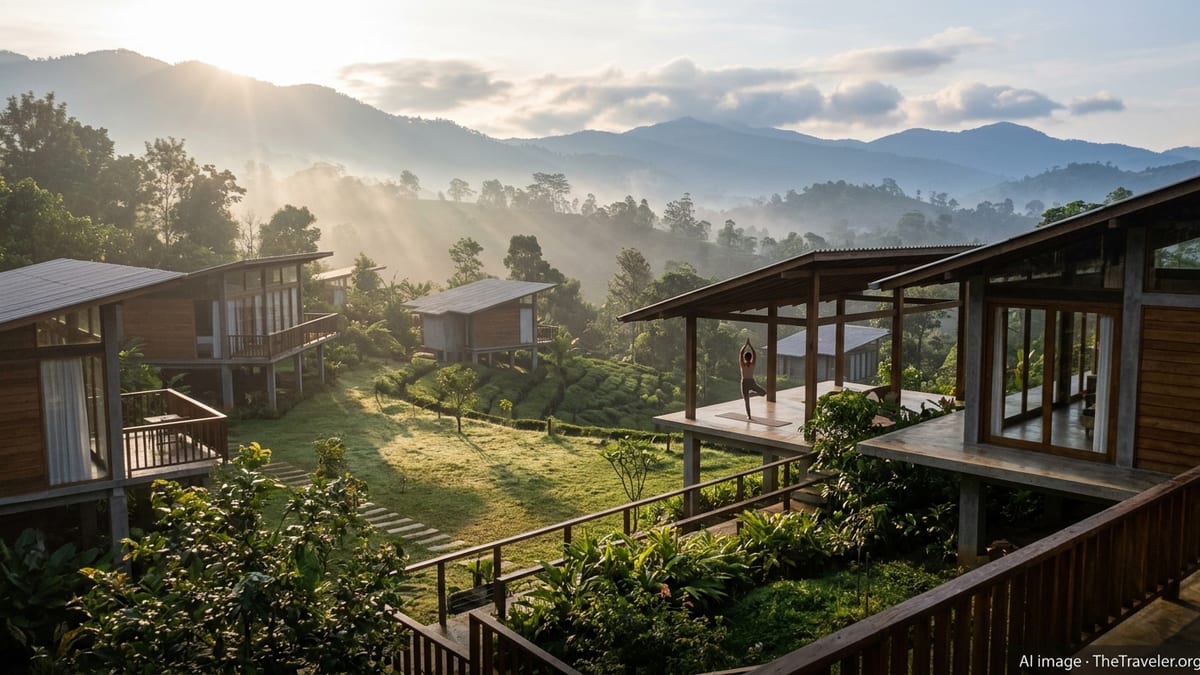
Opened in the hills near Kandy in 2016, Santani has built an international reputation for minimalist design, evidence-informed wellness programmes and a deep integration with the surrounding landscape. Publicly available profiles describe the resort as set on a former tea estate, with open-sided pavilions and chalets that frame views of dense forest and mist-covered mountains while emphasizing natural ventilation and low-impact architecture.
Over the past decade, the property has become a reference point for wellness tourism in Sri Lanka, frequently cited in specialist travel coverage for its tailored Ayurveda-based treatments, yoga and meditation schedules, and focus on sustainable operations. Reports indicate that Santani has also been recognized within global luxury and wellness circles, which has helped raise the profile of Sri Lanka as a serious destination for holistic retreats.
The 10th anniversary in 2026 comes as Sri Lanka’s premium hospitality sector shows renewed momentum following years of economic and political volatility. Commentators on regional tourism trends note growing investment in high-end resorts and wellness-led experiences across the island, suggesting that Santani’s latest initiative is timed to meet a new wave of long-haul visitors seeking restorative stays rather than conventional beach holidays.
Masters in Residence: Bringing Global Expertise to the Hills
The new Masters in Residence programme is structured around visiting practitioners who take up short-term residencies at the resort, offering guests access to specialized skills in areas such as integrative medicine, contemplative practices, somatic therapies and advanced yoga. According to coverage of similar models in the wider wellness industry, a “master” residency typically allows practitioners to run a series of small-group sessions and one-to-one consultations over several weeks, creating continuity for guests checking in at different times.
At Santani, the concept aligns with an existing emphasis on personalization. The resort’s current programmes are described in travel reviews as beginning with in-depth consultations that shape nutrition plans, spa schedules and activity levels. The Masters in Residence framework extends this approach by embedding guest stays within the calendar of each visiting expert, so that travellers booking in 2026 will be able to choose dates that coincide with a particular discipline or methodology that resonates with their goals.
Industry observers suggest that the move responds to a broader shift in wellness travel, where experienced guests increasingly seek access to named experts rather than generic spa menus. By formalizing a roster of masters and framing it around its 10th anniversary, Santani appears to be using the milestone year as a launchpad for a more curatorial, content-driven model of retreat programming.
Programme Design: From Immersive Retreats to Flexible Stays
While full details of the 2026 calendar are still emerging, publicly available information on Santani’s existing packages offers clues to how the Masters in Residence programme is likely to function in practice. Current stays are commonly built around multi-night programmes that combine daily yoga, targeted spa therapies, guided walks and nutritionally calibrated meals, with schedules adjusted after periodic check-ins with the resort’s wellness team.
The Masters in Residence layer is expected to introduce themed periods during which the visiting expert shapes a core strand of the daily schedule. For example, a residency focused on stress regulation might feature breathwork intensives and nervous system education, alongside Santani’s established hydrotherapy and spa facilities, while a master specializing in movement could emphasize posture, strength and mobility sessions complemented by time in nature on the resort’s trails.
Travel trade commentary on similar programmes elsewhere suggests that guests will likely be able to choose between fully immersive retreats tied closely to the master’s curriculum and more flexible wellness stays where participation in master-led sessions is optional. This structure caters both to dedicated wellness travellers seeking transformation and to leisure guests who want a lighter touch introduction to advanced practices within a resort environment.
Strengthening Sri Lanka’s Position in High-Value Wellness Travel
The introduction of Masters in Residence at Santani coincides with a broader push to attract higher-spending visitors to Sri Lanka. Analysts tracking the country’s tourism recovery note particular growth in demand for small-scale, experiential properties in the hill country and along less-developed stretches of coastline, often bundled into itineraries that combine culture, wildlife and wellness.
By emphasizing visiting experts and structured learning alongside relaxation, Santani is aligning itself with global trends in regenerative and “deep” travel, where guests seek not only rest but also skills and insights they can take home. Coverage of the resort’s development plans, including additional villas and expanded spa facilities, suggests that the property is preparing for sustained demand in this niche rather than a one-off anniversary boost.
For Sri Lanka’s wider hospitality sector, the programme provides a high-profile example of how local resorts can differentiate themselves from more commoditized sun-and-sand destinations in the region. Industry commentators point out that the island’s topography and cultural heritage lend themselves naturally to contemplative, retreat-style travel, and that curated expert residencies could become a defining feature of the country’s premium tourism offer in the years after 2026.
What the 10th Anniversary Means for Future Guests
For travellers considering a visit in 2026, Santani’s anniversary year and Masters in Residence launch signal a more structured and content-rich experience than a conventional spa holiday. Prospective guests can expect the core elements that have defined the resort’s first decade: quiet architecture, views over forested hills, flexible daily schedules and an emphasis on digital disconnection.
Layered onto this foundation will be a rotating cast of specialists whose residencies bring fresh perspectives and techniques into the resort’s existing wellness framework. For returning guests, the anniversary programme offers a reason to revisit and experience the property through a different lens, while first-time visitors gain an opportunity to anchor a Sri Lanka itinerary around a defined period of intensive learning and restoration.
As 2026 approaches, Santani’s strategy illustrates how destination spas are evolving in a competitive global market. By combining place-based design with visiting expertise, the resort is betting that the next decade of wellness travel will be defined not only by beautiful settings and high-touch service, but also by meaningful encounters with practitioners who can help guests translate a few days in the hills into longer-term shifts in health and lifestyle.