

More news on this day
The government of São Paulo has launched a 24-year concession and roughly 60 million dollar investment plan to modernize the historic Campos do Jordão railway, positioning the century-old mountain line as a flagship for sustainable tourism and regional development in Brazil’s Serra da Mantiqueira.
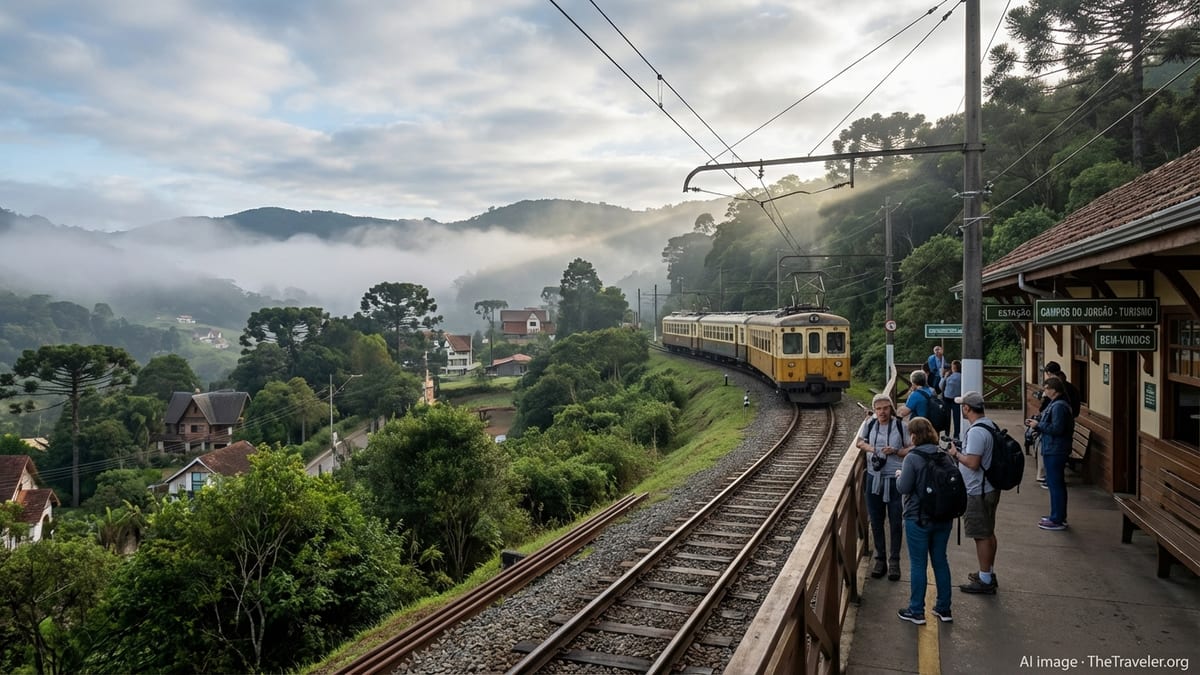
New Concession Puts Tourist Railway at Center of Growth Strategy
The Campos do Jordão line, a 47-kilometer metre-gauge railway linking Pindamonhangaba to the alpine resort town of Campos do Jordão, is set for a comprehensive overhaul under a concession model that combines tourism, mobility and heritage preservation. The project, structured by São Paulo’s Investment Partnerships Program, calls for a private operator to assume responsibility for operations, maintenance and upgrades while the state retains ownership of the assets.
According to official documents and recent announcements, the modernization package for the railway and its associated tourist complex is estimated at about 60 million dollars over the life of the contract. The figure forms part of a broader wave of rail investment in the state, which has bundled tourist lines alongside major commuter and intercity corridors to attract private capital and technical expertise.
Authorities say the concession aims to reposition the Campos do Jordão corridor as a multiuse leisure axis, integrating train excursions with outdoor attractions, local gastronomy and cultural experiences. Once works are completed, the upgraded line is expected to serve not only traditional day trippers but also cyclists, hikers and visitors seeking lower-impact, nature-focused travel.
The contract is scheduled to be awarded through a competitive auction on the São Paulo stock exchange, with the winning bidder required to present a detailed investment plan and service standards. The concession term of 24 years is designed to give the operator enough time to amortize investments while maintaining strict performance and sustainability targets.
From Idled Tracks to Revitalized Tourist Corridor
The revitalization push follows several years of uncertainty for the Campos do Jordão railway, which has faced aging infrastructure, service interruptions and rising maintenance costs. Tourist operations have been reduced or suspended at different moments since 2024, as state officials weighed whether to keep the line under direct public management or migrate to a concession model focused on tourism.
In early 2026, the state government formalized the process with a decree authorizing the concession of the Estrada de Ferro Campos do Jordão complex, including the railway, stations, maintenance facilities and related tourist assets. The move cleared the way for publication of the tender documents and set out technical, financial and environmental obligations for prospective operators.
For local communities, particularly in Pindamonhangaba and Campos do Jordão, the project is seen as a chance to transform a heritage asset into a more reliable engine of jobs and income. Municipal authorities highlight expectations for increased hotel occupancy, higher visitor spending in restaurants and shops, and new business opportunities in guiding, events and outdoor sports.
The railway itself, inaugurated in the 1910s and electrified in the 1920s, has long been a symbol of mountain tourism in São Paulo state. The concession program aims to preserve this historic character while bringing safety, accessibility and comfort in line with the expectations of contemporary travelers.
Upgrades to Stations, Rolling Stock and Visitor Experience
The 60 million dollar investment envelope is earmarked for a broad range of improvements along the 47 kilometer line. Plans include renewal of track and electrical systems, reinforcement of bridges and tunnels, and modernization of signaling to support safer, more punctual operations. Stations will undergo architectural restoration combined with accessibility upgrades, such as step-free access, improved lighting and enhanced passenger information.
Heritage electric trains and tourist coaches are slated for refurbishment, with upgrades to braking systems, interiors and climate control. The concession framework also encourages the introduction of more energy-efficient rolling stock over time, as long as new equipment respects the historical and landscape context of the line.
Passenger-facing enhancements are a central feature of the project. Authorities expect the future operator to redesign the visitor journey, from online ticketing and real-time service updates to integrated tourist packages that combine train rides with entrance to parks, museums and seasonal events. The goal is to increase both the length of stay and average spending per visitor, while distributing flows more evenly across weekdays and low seasons.
New commercial spaces at stations, such as cafes, artisan markets and cultural venues, are also envisaged. These areas are expected to be developed through partnerships with local entrepreneurs, reinforcing the link between the railway and the surrounding economy.
Sustainable Infrastructure at the Heart of the Revamp
In line with São Paulo’s wider rail investment strategy, the Campos do Jordão concession places a strong emphasis on environmental responsibility and low carbon tourism. The project documentation highlights the electric nature of the line as a competitive advantage, offering an alternative to car-dependent access to the Serra da Mantiqueira, one of the state’s main weekend and holiday escapes.
The investment plan calls for measures to improve energy efficiency across the system, including modern traction equipment, regenerative braking where feasible and upgraded electrical substations. Station refurbishments are expected to prioritize natural lighting and ventilation, efficient lighting systems and water-saving fixtures, alongside landscaping that uses native vegetation.
Environmental management commitments extend beyond infrastructure. The future concessionaire will be required to implement waste reduction and recycling programs, control noise in sensitive natural areas and adopt responsible tourism practices in cooperation with local authorities and conservation agencies. These obligations are meant to align the railway with the conservation of nearby state parks and protected areas.
Officials argue that by reshaping the tourist offer around rail access, walking and cycling, the project can help relieve road congestion and reduce emissions associated with car traffic to the mountain resort. The approach is consistent with the state’s broader efforts to pair transport concessions with environmental and social performance metrics.
Integration With Parks, Museums and Cycling Routes
Beyond the tracks themselves, the concession bundles a series of attractions that are intended to form a coherent tourist complex. Chief among them is the Reino das Águas Claras Park, a riverside green area that will be revitalized and reopened to the public with free access, offering trails, picnic areas and environmental education spaces connected to nearby stations.
The project also covers the Railway Memory Museum and a collection of historic buildings, workshops and smaller stations along the route. These sites are set to be restored and curated as part of a narrative about the role of the railway in opening up the mountains and shaping early twentieth century health and leisure tourism in the region.
A new cycling and walking route is planned to run alongside portions of the railway, linking the district of Eugênio Lefèvre to central Pindamonhangaba. Designed for leisure cycling and touring rather than daily commuting, the trail will include safe crossings over rivers and roads, rest areas and scenic viewpoints tailored to the mountainous terrain.
By connecting rail, park and cycle infrastructure in a single concession package, São Paulo aims to create a more diversified and resilient tourism product. Officials hope that visitors will combine activities, staying longer in the region and exploring both the historic train and the surrounding landscape, while residents gain improved access to leisure spaces and nonmotorized mobility options.