

More news on this day
Hundreds of travelers at Sarasota Bradenton International Airport faced an abrupt halt to their plans this week as multiple flights to major hubs including Atlanta, Miami and Chicago were suddenly cancelled, raising fresh questions for spring break passengers about whether their upcoming trips are at risk.
Get the latest news straight to your inbox!
A Regional Airport Caught in a National Meltdown
Publicly available flight tracking data and social media posts indicate that Sarasota Bradenton International Airport has been swept up in a wider disruption affecting air travel across the eastern United States. Cancellations on routes linking Sarasota to key connecting hubs in Atlanta, Miami and Chicago have left passengers queuing at service desks, searching for rental cars and scrambling to rebook scarce seats.
The timing could hardly be worse. The turmoil comes in the heart of the March travel rush, when Sarasota’s beaches and nearby Gulf Coast destinations are packed with vacationers and seasonal residents. With Sarasota heavily reliant on connections through major hubs, even a limited number of cancelled departures can cascade into widespread headaches for travelers trying to reach or leave southwest Florida.
Observers note that when hub airports such as Atlanta, Chicago and Miami experience large-scale disruption, smaller airports with high volumes of connecting traffic often feel the effects hours or even days later. That dynamic appears to be playing out in Sarasota this week, as airlines pare back schedules and consolidate flights while they reposition aircraft and crews.
Storms, Staffing Strains and a System Under Pressure
Recent national coverage shows that a powerful storm system sweeping across the Midwest and East Coast has triggered thousands of cancellations and delays at some of the country’s busiest airports, including in Atlanta and Chicago. The same reports point to a partial federal government shutdown, now in its second month, as an additional source of pressure on airport security staffing and screening times.
Those twin factors help explain why flights linking Sarasota to major hubs have been particularly vulnerable. When conditions deteriorate and airlines must trim operations, they typically prioritize protecting long-haul and core hub-to-hub services. Nonstop flights between smaller destinations and big hubs are often among the first to be cut, especially later in the day when crews are approaching duty limits.
Airline operations experts frequently describe this as a ripple effect. Severe weather and staffing challenges at a handful of large airports lead to aircraft and crews being out of position across the network. Even when skies clear, it can take days for carriers to rebuild normal schedules, and passengers departing from or heading to leisure-heavy airports such as Sarasota may see their flights cancelled despite calm local conditions.
Stranded Passengers Turn to Cars, Hotels and Standby Lists
Accounts shared on travel forums and social platforms over the last several days highlight the human impact of the disruption. Travelers on Sarasota flights routed through Atlanta, Miami and Chicago describe last-minute cancellations, missed connections, and lengthy waits at customer service desks as they compete for limited rebooking options.
Some passengers connecting between Sarasota and Atlanta report resorting to one-way car rentals from other Florida airports after learning that onward flights to Sarasota were unavailable. Others describe overnight stays at crowded hotels near major hubs, or sleeping in terminal seating areas while monitoring standby lists for any available seat back to Florida.
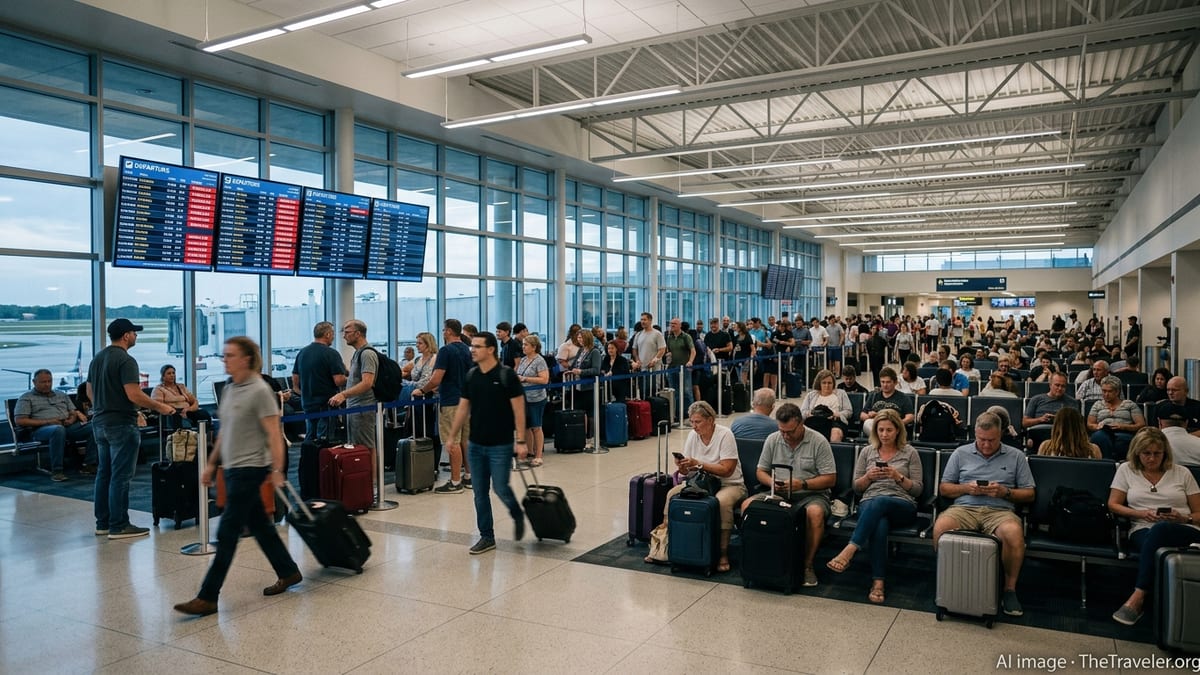
At Sarasota Bradenton International itself, observers report that the departure boards have shown clusters of cancellations on hub routes, particularly in banked periods when multiple flights to Atlanta or Chicago would normally depart within a short window. Check-in areas have remained orderly but busy, as airline agents work to rebook passengers whose plans have been upended, often onto itineraries involving additional layovers or even different airports.
What Today’s Cancellations Mean for Upcoming Trips
For travelers holding tickets to or from Sarasota over the coming days, the central question is whether their trips are at risk. Recent disruption patterns at major hubs suggest that the greatest vulnerability lies with itineraries involving tight connections and late-day departures from Sarasota, particularly to Atlanta, Miami and Chicago, where schedules have been under sustained stress.
Travel industry analysts note that even as airlines restore more of their schedules, residual issues can persist. Aircraft and crews may still be out of position, leaving some individual flights subject to cancellation with little notice. Travelers connecting through hubs that have recently experienced severe weather or operational strain face a higher probability that a missed connection or rolling delay could disrupt their journey.
Passengers are encouraged by consumer advocates to monitor their flight status frequently in the 24 hours leading up to departure and to enroll in airline text or app alerts. Those with flexibility may improve their odds by choosing earlier departures from Sarasota, allowing more options to be rebooked later in the day if a cancellation occurs. Travelers with urgent plans sometimes opt to fly nonstop to alternate Florida airports and continue by car when hub connections appear particularly fragile.
Know Your Rights if Your Sarasota Flight Is Cancelled
The recent turmoil has also renewed attention on passenger rights when flights are cancelled. Guidance from the U.S. Department of Transportation states that when an airline cancels a flight for any reason and a passenger chooses not to travel, the traveler is generally entitled to a full refund for the unused portion of the ticket, even for nonrefundable fares.
Consumer advocates stress that this principle applies regardless of whether the disruption is caused by weather, air traffic control issues, or operational decisions by the airline. While carriers often first offer travel credits, vouchers or rebooking options, passengers who decide to abandon their trip can typically request a cash refund instead. Additional compensation or amenities such as hotel stays and meal vouchers depend on the specific airline’s policies and whether the disruption is considered within the carrier’s control.
In the meantime, Sarasota travelers face an uncertain few days as airlines work to stabilize their networks. With national storm systems still moving across key air corridors and the wider aviation system under unusual strain, the safest assumption for anyone flying through hubs like Atlanta, Miami or Chicago is that conditions remain volatile. For many holding tickets in and out of Sarasota, staying informed, building in extra time and knowing their rights may prove just as essential as sunscreen and beach reservations.