

More news on this day
Sarawak is preparing to convene around 1,000 delegates in Sibu for a major Southeast Asian tourist guides conference, a gathering expected to highlight the state’s ambitions as a regional hub for professional guiding and niche tourism development.
Get the latest news straight to your inbox!
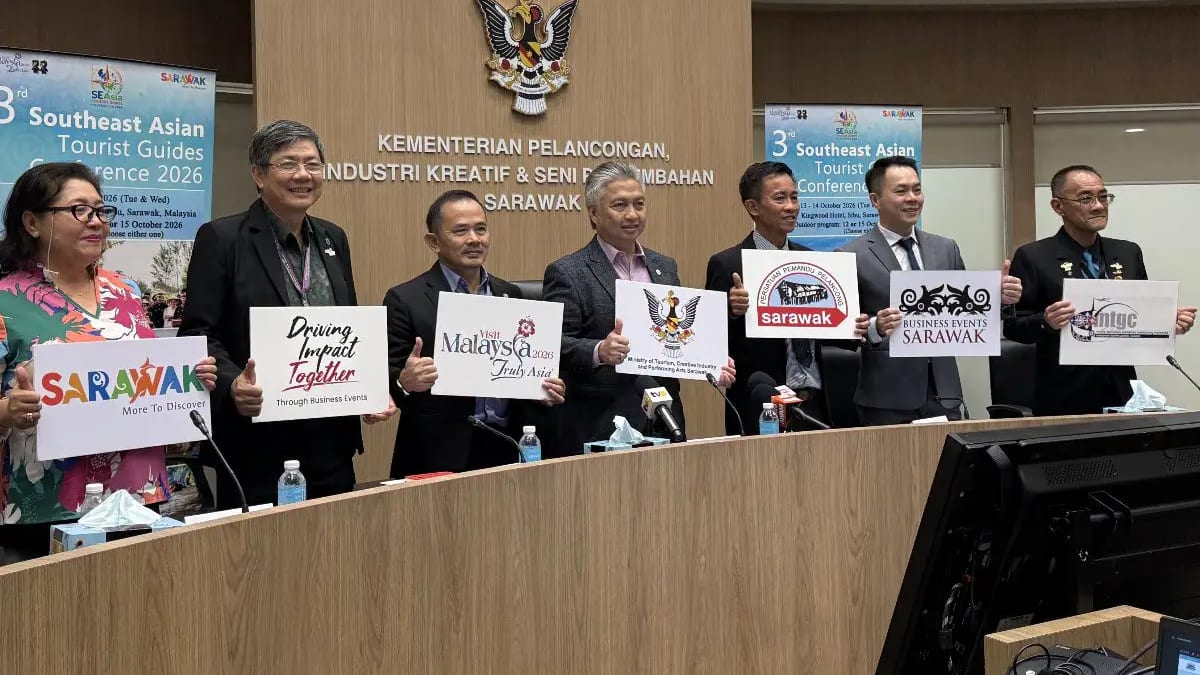
Image by Focus on Travel News
Regional Tourist Guides to Converge on Sibu
Publicly available information indicates that Sarawak is positioning Sibu as the focal point for an upcoming Southeast Asian tourist guides conference, with organisers targeting around 1,000 delegates from across the region. The event builds on Sarawak’s recent efforts to attract association meetings and professional congresses as part of its wider business events strategy.
Reports on earlier programmes show that Sarawak-based guide networks have already hosted ASEAN-focused tourist guide activities in the state, signalling growing confidence in local capabilities to manage complex, multi-day events. The upcoming conference in Sibu is being framed as a scale-up, intended to attract not only working tour guides but also trainers, association leaders and tourism educators from across Southeast Asia.
The projected delegate number would make the Sibu gathering one of the more substantial specialist tourism meetings in Borneo, underscoring rising demand for structured training and cross-border collaboration among guides. Organisers are understood to be drawing interest from both established urban destinations and emerging secondary cities around the region.
By centring the conference on tourist guides rather than general tourism promotion, Sarawak is aligning itself with a growing emphasis on skills, accreditation and service quality in regional travel markets. Industry observers note that this focus reflects broader trends in experiential travel, where guides play a central role in delivering authentic and responsible visitor experiences.
Sibu’s Growing Role in Sarawak’s Business Events Strategy
While Kuching has long been Sarawak’s primary convention city, recent destination marketing materials highlight Sibu as an increasingly important node in the state’s business events ecosystem. Sector briefings describe Sibu as well supplied with mid-sized hotels and meeting venues, with a collective capacity of more than 1,000 delegates for plenary sessions and breakouts.
Conference planning guides point to a network of hotels in Sibu able to provide function rooms, ballrooms and auxiliary spaces suitable for training workshops, plenary meetings and social functions. This supply has given organisers greater flexibility to distribute events across multiple venues, accommodating parallel sessions and informal networking without overburdening a single facility.
Sibu’s location in central Sarawak also places it within reach of riverine communities and cultural attractions that are likely to feature in conference study tours and technical visits. Destination overviews emphasise the town’s long-standing role as a trading centre along the Rajang River, a setting that allows visiting guides to explore heritage tourism, river cruising opportunities and community-based initiatives in the surrounding area.
Travel planners say such attributes support Sibu’s positioning as a complementary option to Kuching and Miri for association meetings that value access to both urban amenities and nearby cultural landscapes. Hosting a 1,000-delegate tourist guides conference is seen as a test of the city’s ability to handle larger-scale, content-driven regional events.
Focus on Skills, Standards and Cross-Border Collaboration
Programme outlines circulating in regional tourism circles suggest that the Sibu conference will place strong emphasis on professional development for guides, including updates on digital tools, safety protocols and evolving visitor expectations. This mirrors the agendas of recent international tourist guide webinars and training programmes, where topics have included the use of online platforms, artificial intelligence tools and new formats for hybrid tours.
Organisers are expected to use plenary and breakout sessions to explore regional approaches to certification and continuing professional development, with the aim of making qualifications more portable across Southeast Asian destinations. Industry commentary points out that more aligned standards could make it easier for guides to participate in cross-border tours and multi-country itineraries, especially along cruise and overland routes.
Another likely theme is sustainable and responsible guiding, reflecting wider tourism commitments to environmental stewardship and community benefit. Case studies from within Borneo and neighbouring countries are anticipated to highlight how guides can help manage visitor flows, interpret sensitive ecosystems and support local livelihoods without over-commercialising cultural practices.
The Sibu conference is also expected to provide a platform for guide associations to discuss welfare issues such as income security, health coverage and working conditions. Pandemic-era disruptions placed renewed attention on the precarity of freelance guiding, and regional gatherings have increasingly incorporated sessions on advocacy, mutual aid and the diversification of income streams.
Economic Impact and Opportunities for Sarawak Tourism
Business events analysts regularly highlight the value of professional conferences as high-yield tourism opportunities, given the longer average stays and higher daily spending of delegates compared with leisure visitors. A 1,000-delegate gathering in Sibu is expected to generate demand for hotel rooms, food and beverage services, local transport and event support, providing a boost to the city’s visitor economy over several days.
Beyond direct spending, destination marketers view the conference as an opportunity to showcase Sarawak’s products directly to the very professionals who influence what visitors see and do. Familiarisation activities and post-conference tours may expose guides to lesser-known attractions and community initiatives, potentially broadening future itineraries they design or lead.
Observers also note potential spillover benefits for local training providers, cultural performers and small tourism businesses that may be contracted to contribute to the programme. Participation in panel discussions, demonstrations or field visits can help these stakeholders build regional networks, refine their offerings and increase visibility among decision-makers in the guiding community.
For Sarawak’s broader tourism strategy, successfully hosting a specialised regional conference in Sibu adds to a track record of meetings that can be leveraged in future bids. Destination profiles emphasise that consistent delivery of well-managed events strengthens perceptions of reliability, which is a central factor for international associations when selecting host cities.
Positioning Sarawak Within the Southeast Asian Tourism Landscape
Regional tourism reports describe Southeast Asia as an increasingly competitive marketplace, with destinations investing in infrastructure, branding and partnerships to attract both leisure travellers and business events. Sarawak’s decision to host a large-scale tourist guides conference in Sibu reflects a strategy of differentiation based on culture, nature and community engagement rather than mass tourism volumes.
Analysts point out that by focusing on the professional community that shapes on-the-ground visitor experiences, Sarawak is targeting a group that can amplify its narrative long after the conference concludes. Guides who develop deeper familiarity with the state’s landscapes and cultures may be more inclined to recommend Sarawak to future clients and tour operators.
The event also dovetails with wider conversations about dispersing visitors beyond primary gateways. By promoting Sibu as a capable host city, Sarawak signals that its tourism offer extends across multiple urban centres and rural corridors, which could encourage more balanced development and help mitigate pressure on flagship attractions.
As Southeast Asian destinations work to rebuild and evolve their tourism sectors, the forthcoming gathering of around 1,000 tourist guides in Sibu is being watched as a case study in how professional networks, mid-sized cities and niche conferences can work together to strengthen regional travel ecosystems.