

More news on this day
Thousands of passengers across northern and western Europe have been left stranded after a fresh wave of disruptions involving SAS and Icelandair led to 26 flight cancellations and 34 delays, snarling traffic through Oslo, Copenhagen, Stockholm, Reykjavik, London, Paris and several other cities at the start of the busy spring travel period.
Get the latest news straight to your inbox!
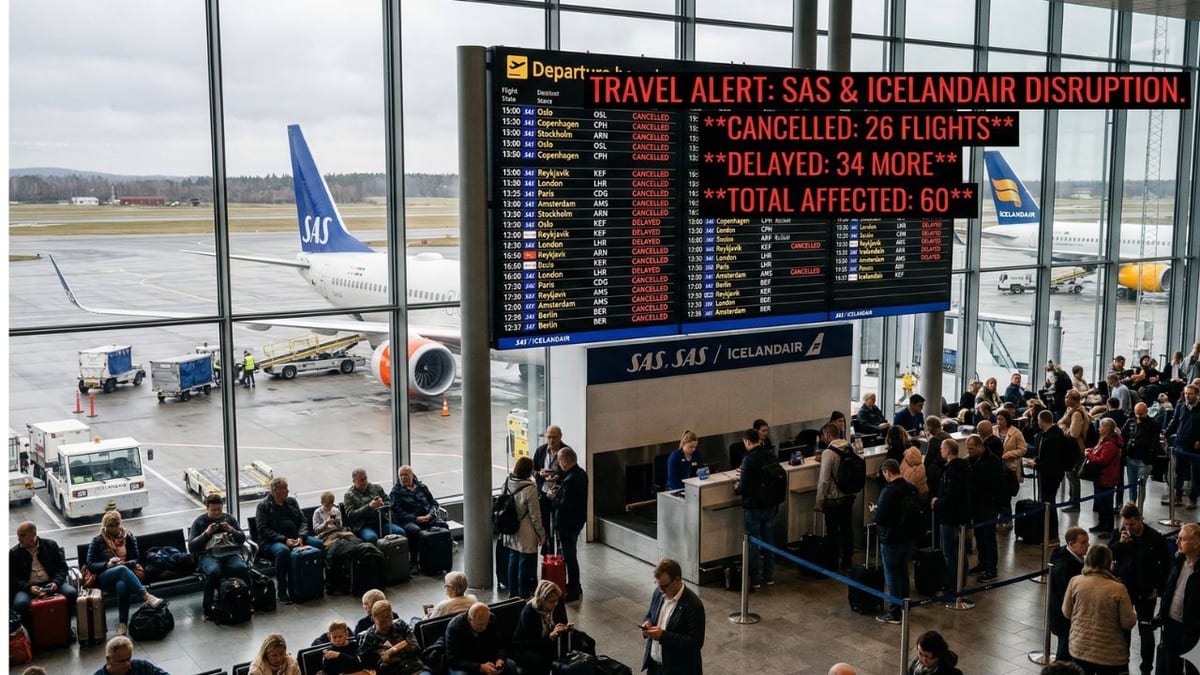
Cluster of Disruptions Across Key Northern European Hubs
Publicly available flight tracking data for the first week of April indicates that the cancellations and delays were concentrated on core Nordic and transatlantic routes linking Scandinavia and Iceland with major European capitals. Reports point to disrupted services on both short haul intra-Scandinavian flights and medium haul connections into the United Kingdom, France and other European markets.
Oslo Gardermoen, Copenhagen Kastrup and Stockholm Arlanda have all experienced elevated levels of disruption in recent days, with the latest wave of problems on April 6 compounding an already strained operational picture. Earlier in the month, Copenhagen recorded more than 150 delayed flights and dozens of cancellations in a single day, and the renewed cancellations by SAS have added to a backlog of passengers seeking alternative options.
Reykjavik’s Keflavik Airport has also featured prominently in the pattern of disruption, with Icelandair services in and out of Iceland affected alongside other European carriers. The knock-on impact has been felt on routes to the United Kingdom, including London, and to continental European gateways such as Paris, where late inbound aircraft have translated into further scheduling slippage.
In London and Paris, airport departure boards have shown clusters of late-running or canceled flights tied to SAS and Icelandair rotations from the Nordic region. While the overall scale of disruption at those hubs is smaller than in Scandinavia, the affected flights often act as key feeders into larger long haul networks, magnifying the impact on onward travel plans.
Operational Pressures, Weather and Capacity Constraints
Recent coverage of the European aviation sector highlights a combination of factors behind the unstable schedules. Weather has played a role, with strong winds and unsettled conditions over parts of Denmark, Norway and neighboring countries at the start of April contributing to air traffic control restrictions and slower-than-normal recovery from delays.
At the same time, airlines across Europe are facing renewed cost pressures linked to higher jet fuel prices and a tightening supply of aircraft and crew. Publicly available information on SAS scheduling decisions for April shows that the carrier has already been trimming parts of its program in response to rising fuel costs, focusing on targeted cancellations in an effort to protect operational reliability on its most critical routes.
Icelandair has also been operating in a challenging environment. Published flight performance data for the carrier’s key transatlantic and European services show solid on-time metrics over the late winter period, but the complexity of operating a hub-and-spoke network through Reykjavik means that delays on one leg can quickly cascade across multiple markets when aircraft and crews are out of position.
Industry analysts note that when cost pressures, weather disruptions and high seasonal demand coincide, the margin for error shrinks sharply. Even a modest number of cancellations, such as the 26 flights scrubbed by SAS and Icelandair in this latest episode, can translate into thousands of passengers seeking rebooking at short notice, especially when 34 additional flights in the same network are significantly delayed.
Passengers Face Overnight Stays, Missed Connections and Limited Options
Reports from airport terminals and social media posts describe scenes of long queues at customer service counters in Oslo, Copenhagen and Reykjavik as travelers attempted to secure new itineraries. With the disruption occurring at the start of the spring travel period, many flights over the following days were already heavily booked, reducing the number of immediately available seats for stranded passengers.
Publicly available material on typical airline response procedures indicates that re-accommodation options in such situations can include moving passengers to later departures on the same airline, shifting them to partner carriers where agreements exist, or in some cases placing them on independent airlines when alliance options are exhausted. However, these alternatives are constrained when multiple flights in the same geographic corridor are affected at once.
Travelers connecting through London and Paris have faced additional complications when missed links to long haul services created further knock-on effects. In some cases, overnight hotel stays and rebookings a day or more later have been required, particularly for passengers heading to destinations with limited daily frequencies. Accounts shared online suggest that some travelers were advised to consider rerouting via alternative hubs if they wished to minimize extended delays.
For families and leisure passengers, the disruption has meant lost vacation days and unexpected expenses for food, transport and accommodation. For business travelers, missed meetings and rescheduled commitments have added to the sense of frustration that has marked several recent episodes of European air travel disruption.
Rights, Remedies and Guidance Under European Rules
European and United Kingdom passenger rights regulations provide a framework for assistance and, in some cases, financial compensation when flights are canceled or heavily delayed. Under these rules, airlines are generally expected to offer care and support, which can include meals, refreshments and hotel accommodation where necessary, along with rebooking on the next available service.
Specialist passenger advocacy services and regulatory guidance note that the exact level of entitlement depends on the length of delay, flight distance, and the cause of the disruption. When problems are attributed to extraordinary circumstances such as severe weather or air traffic control restrictions, compensation payments may not apply, though obligations to provide basic care and re-routing options typically remain in force.
Publicly available guidance encourages affected passengers to retain boarding passes, booking confirmations and receipts for any out-of-pocket expenses. These documents are often required when submitting claims directly to airlines or, if necessary, to alternative dispute resolution bodies and national enforcement agencies responsible for overseeing the regulations.
Consumer organizations also stress the importance of monitoring airline communication channels, including apps and text alerts, both during and after the disruption. In previous cases involving SAS, Icelandair and other European carriers, passengers who documented their interactions and expenses in detail have generally reported smoother resolution processes compared with those who relied solely on verbal assurances.
What Travelers Can Do During Ongoing Spring Disruptions
With aviation data and recent reporting indicating a turbulent start to April across parts of the European network, travel experts are advising passengers with upcoming trips through Oslo, Copenhagen, Stockholm, Reykjavik, London and Paris to plan for potential disruption. Checking flight status frequently in the 24 hours before departure and allowing extra connection time within Europe are among the most commonly cited precautionary steps.
For those who are already affected, publicly available advice from travel rights groups suggests that passengers should first seek written confirmation of any cancellation or major delay, then proactively ask about rebooking options, including the possibility of rerouting via different hubs. When practical, documenting the information displayed on airport departure boards and capturing screenshots of airline communications can help support later claims.
Analysts expect that airlines, including SAS and Icelandair, will continue fine-tuning their schedules through the spring to balance demand, cost and operational resilience. While the latest episode of 26 cancellations and 34 delays represents only a fraction of daily European traffic, it underscores how quickly targeted disruptions can escalate into a travel nightmare for thousands of people when they cluster around a handful of critical hubs.
As the season progresses, travelers and industry observers will be watching closely to see whether recent investments in staffing, ground handling capacity and digital rebooking tools are sufficient to prevent similar cascades of cancellations and delays during upcoming peak periods.