

More news on this day
Thousands of travelers across northern Europe faced major disruption today as SAS and Icelandair cancelled 26 flights and delayed 34 more, disrupting schedules at Oslo, Copenhagen, Stockholm, Reykjavik, London, Paris and several other cities.
Get the latest news straight to your inbox!
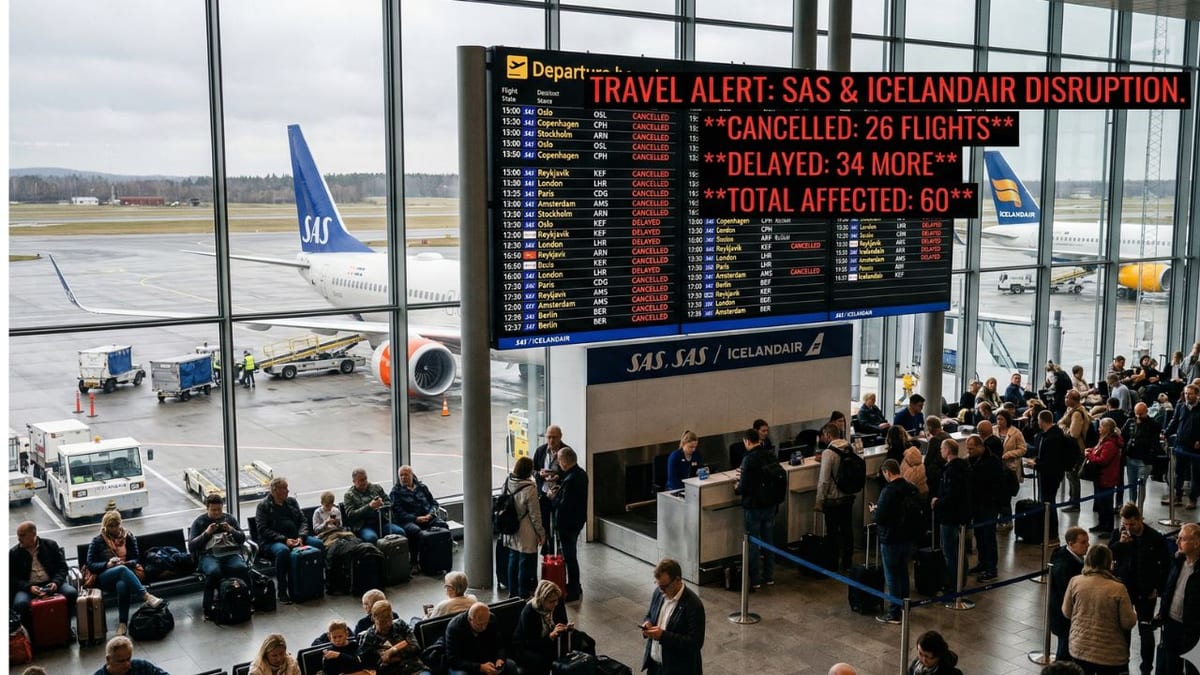
Major Hubs Across Northern Europe Hit Simultaneously
The latest disruption hit some of Europe’s most important aviation hubs, with ripple effects across the wider network. Publicly available flight-tracking data and airport information boards showed clusters of cancellations and heavy delays affecting both intra-Scandinavian services and key international routes.
Oslo, Copenhagen and Stockholm, which together form the backbone of SAS operations, experienced knock-on impacts throughout the day as crews, aircraft and departure slots fell out of sequence. Reykjavik and Keflavik, central to Icelandair’s transatlantic model, also reported multiple grounded services and late departures, affecting onward links between Europe and North America.
Further disruption was recorded in London and Paris, where delayed and cancelled services fed into already congested schedules. Travelers reported missed connections and overnight stays as they attempted to rebook onto remaining seats on alternative departures.
Operational data reviewed by travel-industry outlets indicated that the 26 cancellations and 34 delays were concentrated over a relatively short window, compounding the impact on passengers who suddenly found limited options for same-day travel.
Stranded Passengers Face Long Queues and Limited Options
Across affected airports, stranded passengers encountered long queues at ticket desks and self-service kiosks as they sought rebookings and hotel vouchers. Social media posts and traveler forums described crowded terminal areas in Oslo, Copenhagen and Stockholm, with many passengers waiting hours for clarity on new itineraries.
In Reykjavik and Keflavik, travelers attempting to continue onward to London, Paris and other European cities reported a shortage of early rebooking options, as Icelandair’s disrupted rotations created bottlenecks on popular routes. Some passengers indicated that they were offered re-routings via secondary hubs, often involving additional connections and extended travel times.
In London and Paris, the problems were most acute for those relying on tight connections onto long-haul flights. Missed onward departures left some travelers facing last-minute changes to hotel reservations, car rentals and tour bookings, adding to the financial and logistical burden of the disruption.
While many travelers were eventually accommodated on later flights, publicly available accounts suggest that a significant number were forced to extend their stays overnight, either at airport hotels or in city centers, as airlines worked to reposition crews and aircraft.
Fuel Costs, Weather and Infrastructure Strains Behind Recent Turbulence
The latest problems for SAS and Icelandair come amid a wider period of turbulence for European aviation. Recent reporting on the sector has highlighted a sharp rise in jet fuel prices, which has already prompted SAS to trim parts of its April schedule and warned of more targeted cancellations to control costs and maintain reliability.
Parallel coverage of airline operations around Iceland and Scandinavia has pointed to challenging weather conditions and power-supply issues in recent weeks, which at times have affected both airport infrastructure and local transport links used by staff and passengers. Although each disruption event has its own specific triggers, the cumulative effect has been a more fragile operating environment for carriers across the region.
Industry analysis also notes that tight aircraft utilization and lean staffing levels leave little margin when several flights are disrupted in quick succession. When rotations fall behind, delays can cascade across an entire day’s schedule, particularly for hub-and-spoke networks that depend on precise timing for connections.
According to published scheduling data, both SAS and Icelandair continue to adjust their timetables in response to fuel prices, demand patterns and operational constraints, increasing the risk that short-notice changes will periodically affect travelers through the spring season.
What Passengers Can Expect in Terms of Support and Rights
Passenger-rights frameworks in Europe provide a baseline of protections when flights are cancelled or heavily delayed, though the exact entitlements depend on the airline, origin and destination of the journey, and the cause of the disruption. Publicly available guidance from SAS and Icelandair outlines options that typically include rebooking on the next available departure, refunds for unused tickets and, in some circumstances, meal vouchers and hotel accommodation.
For flights departing from European Union or European Economic Area airports, as well as services operated by EU or EEA carriers, travelers may fall under the scope of European air-passenger regulations that can entitle them to standardised care and, in certain situations, financial compensation. However, exceptions often apply where disruptions stem from factors described as extraordinary circumstances, such as severe weather or broader airspace issues.
Consumer advocates encourage passengers to retain boarding passes, booking confirmations and receipts for reasonable expenses incurred during delays, such as meals or overnight stays, as these documents may be required when submitting claims through airline channels. Online claim forms and customer-service portals are the primary avenues for travelers seeking refunds or compensation once their trip is complete.
Specialists also note that complex itineraries involving multiple airlines, codeshares or separate tickets can complicate the claims process. In such cases, travelers are typically advised to start with the airline that sold the original ticket and then follow any carrier-specific instructions for documenting and filing a disruption claim.
Ongoing Caution Advised for Spring Travel Through Northern Europe
With SAS and Icelandair already navigating a challenging mix of higher fuel costs, volatile weather and dense seasonal schedules, travel analysts are urging passengers to build extra flexibility into plans involving northern European hubs. Recent patterns indicate that even when core operations remain largely stable, localized clusters of cancellations and delays can emerge with limited warning.
Experts who track aviation data suggest that travelers transiting Oslo, Copenhagen, Stockholm or Reykjavik in the coming weeks should monitor their bookings frequently through airline apps and airport-information feeds. Early awareness of schedule changes can expand rebooking options and reduce the likelihood of overnight stranding.
For long-haul passengers connecting through London or Paris on SAS, Icelandair or partner airlines, wider connection windows and flexible hotel and ground-transport reservations may help mitigate the risk of missed onward flights. Trip-insurance products that cover delays and cancellations are also attracting renewed attention from frequent travelers planning complex itineraries.
Although today’s disruption affected a relatively limited number of individual flights, the concentration of cancellations and delays at major hubs underlines the vulnerability of tightly scheduled networks. For now, publicly available information suggests that SAS and Icelandair are working through backlogs and repositioning aircraft, but travelers planning to pass through the affected cities are being advised to remain vigilant and allow additional time for their journeys.