

More news on this day
Scandinavian travelers heading into the busy spring season are facing widespread disruption after SAS announced plans to cancel at least 1,000 flights in April, pulling services across Norway, Sweden and Denmark amid sharply higher fuel costs linked to the conflict in the Middle East.
Get the latest news straight to your inbox!
Fuel Shock Triggers Sweeping April Schedule Cuts
Publicly available coverage from Scandinavian business media indicates that SAS will ground a minimum of 1,000 flights in April, following a first wave of cancellations in March as jet fuel prices surge. The airline’s leadership has described the cuts as a response to a “fuel shock” tied to escalating tensions and supply disruptions stemming from the Iran conflict, which has rippled through global energy markets.
Reports indicate that SAS operates roughly 800 flights per day in normal conditions, meaning the April reductions represent several days’ worth of operations removed from the schedule over the course of the month. While the carrier has played down the scale of the move in relative terms, the concentrated impact over peak travel periods is already being felt by passengers who had counted on frequent domestic and regional links.
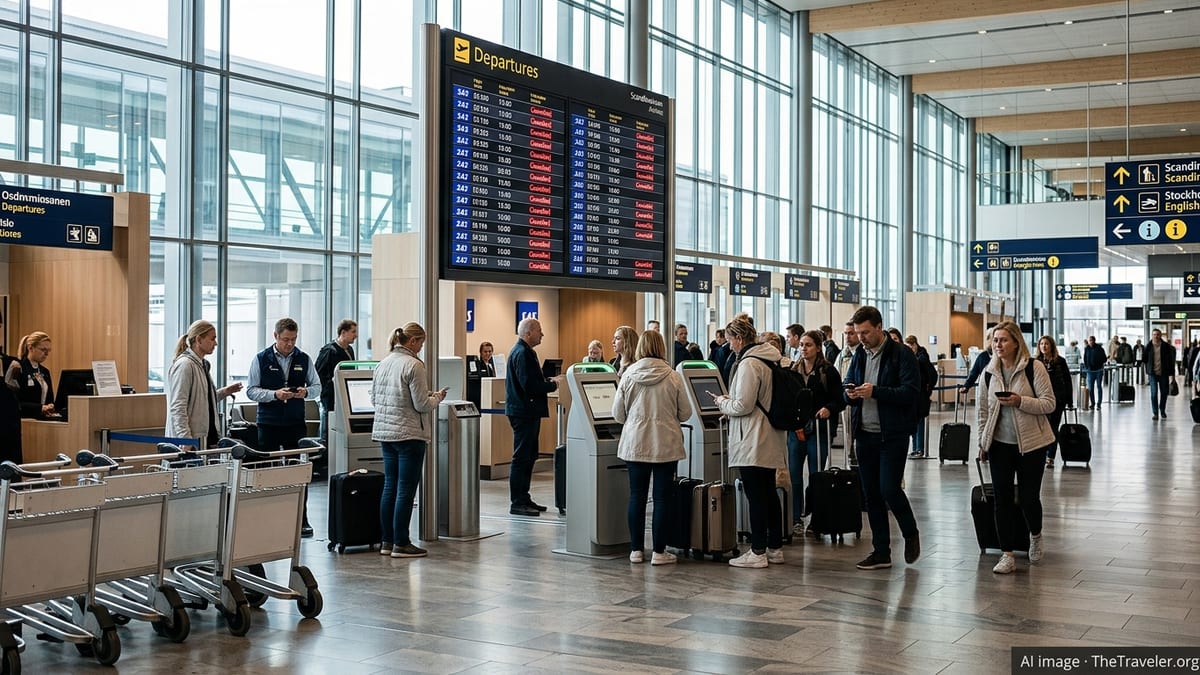
The decision follows several weeks in which SAS gradually added cancellations instead of announcing a single, consolidated cut. Travelers checking departure boards in Norway and Sweden over recent days have seen mounting numbers of “cancelled” notices, especially on shorter domestic hops that rely heavily on predictable, low-margin operations vulnerable to fuel price spikes.
Analysts quoted in Nordic financial outlets note that airlines across Europe are contending with higher fuel costs, but SAS appears to be reacting particularly aggressively on its Scandinavian network, targeting routes where alternative carriers or transport options exist.
Domestic Networks in Norway, Sweden and Denmark Hardest Hit
Published timetables and airport data show that the heaviest impact is falling on domestic routes within Norway and Sweden, along with some short-haul services in Denmark. Norwegian media reports highlight more than 100 domestic Norwegian flights affected over a single week, including links between major hubs such as Oslo, Bergen, Stavanger and Trondheim.
In Sweden, travelers are seeing cancellations on core business and leisure corridors radiating from Stockholm, as well as regional services that connect smaller cities to Scandinavian hubs. Denmark’s domestic network, already relatively limited compared with its neighbors, is also facing selective cuts, raising concerns for travelers relying on short hops to reach long-haul departures from Copenhagen.
Rail and road alternatives soften the blow on some corridors, but for travelers in more remote regions of Norway and northern Sweden, air links remain the most practical option. The loss of frequency can turn what was once an easy day trip into an overnight journey, particularly when tight connections to international flights are involved.
Compounding the challenge, several of the affected routes are typically popular with both business travelers and families heading for Easter and late-spring getaways. As cancellations cluster around high-demand dates, pressure on the remaining seats and on rival carriers intensifies, pushing some fares higher and narrowing options for last-minute rebookings.
Travelers Scramble for Alternatives as Spring Plans Unravel
Scandinavian travel forums and social media threads are filling with accounts from passengers who have received short-notice cancellation messages for April flights. Some report being automatically rebooked onto less convenient itineraries, often involving extra stops or significantly longer travel times, while others say they have been left to piece together new journeys on their own.
Publicly available information from consumer organizations and aviation watchdogs underscores that affected travelers may be entitled to refunds or rerouting under European Union passenger rights rules, depending on the circumstances of each disruption. However, navigating those options can be time-consuming, particularly when call centers and digital support channels are under heavy strain.
Many travelers with fixed plans around Easter, weddings, or onward long-haul departures are opting to secure seats on competing airlines such as Norwegian or Widerøe, which, according to Norwegian press coverage, are currently operating their schedules without fuel-related cancellations. Others are shifting journeys to rail, ferries, or even long-distance driving, especially on routes with robust ground infrastructure.
For some passengers, the immediate concern is less about compensation and more about certainty. With April still weeks away and SAS signaling that “at least” 1,000 flights will be impacted, some travelers are proactively adjusting itineraries now rather than waiting for potential last-minute schedule changes.
Competitive Pressure Mounts as Rivals Keep Flying
The decision by SAS to trim its program sharply just ahead of the spring travel wave is drawing attention to the competitive landscape in the Nordic market. Reports from regional outlets indicate that Norwegian and Widerøe are, for the moment, maintaining normal schedules despite facing the same broad fuel price environment, a contrast that could shift market share in the short term.
Travel experts quoted in local media suggest that carriers with more flexible fuel hedging strategies or different route structures may be better positioned to absorb short-term price shocks without resorting to mass cancellations. For SAS, which is in the midst of a long-term restructuring and strategic reset, the fuel spike adds another layer of complexity to its turnaround narrative.
Industry observers note that travelers’ immediate experiences during episodes like this can have lingering effects on brand perception, particularly among infrequent leisure customers who may not distinguish between short-term operational decisions and longer-term reliability. If rival airlines are seen as more stable through the spring period, they could benefit not only in April but across the broader summer booking window.
At the same time, some analysts caution against drawing sweeping conclusions from a single month’s disruption, pointing out that airlines periodically recalibrate capacity in response to volatile costs. How SAS manages communication, rebooking, and any further schedule adjustments will likely shape customer sentiment as much as the raw number of cancelled flights.
What Spring and Summer Travelers Should Do Now
For travelers with SAS tickets in April, consumer advocates and travel planners are advising a proactive approach. Checking reservation details frequently, monitoring email and app notifications, and verifying flight status directly with airports in Norway, Sweden and Denmark can provide early warning of schedule changes.
Where cancellations have already been confirmed, publicly available guidance from European passenger rights resources indicates that travelers can typically choose between a refund or rerouting at the earliest opportunity, which may involve alternative carriers if SAS has no suitable options. Documenting all communication, keeping receipts for any additional expenses, and reviewing insurance policies can help travelers protect their financial position.
Those planning new trips for late spring or early summer are weighing whether to book with SAS now or wait for greater clarity on the carrier’s post-April schedule. Some travel advisers recommend building in longer connection times, favoring morning departures that offer more same-day backup options, and considering flexible or refundable fares where budgets allow.
As Scandinavia heads into a period that normally marks the start of lighter days and increased travel, the extent to which SAS stabilizes its operations after the April cuts will be closely watched by both travelers and industry analysts. For now, passengers across Norway, Sweden and Denmark are left to juggle changing timetables while hoping that the worst of the disruption is contained to early spring.