

More news on this day
Scandinavian Airlines is moving to transform inflight connectivity across Scandinavia and beyond, committing to roll out Starlink-powered WiFi on its entire fleet in a phased program that industry observers say could reset passenger expectations for staying online in the air.
Get the latest news straight to your inbox!
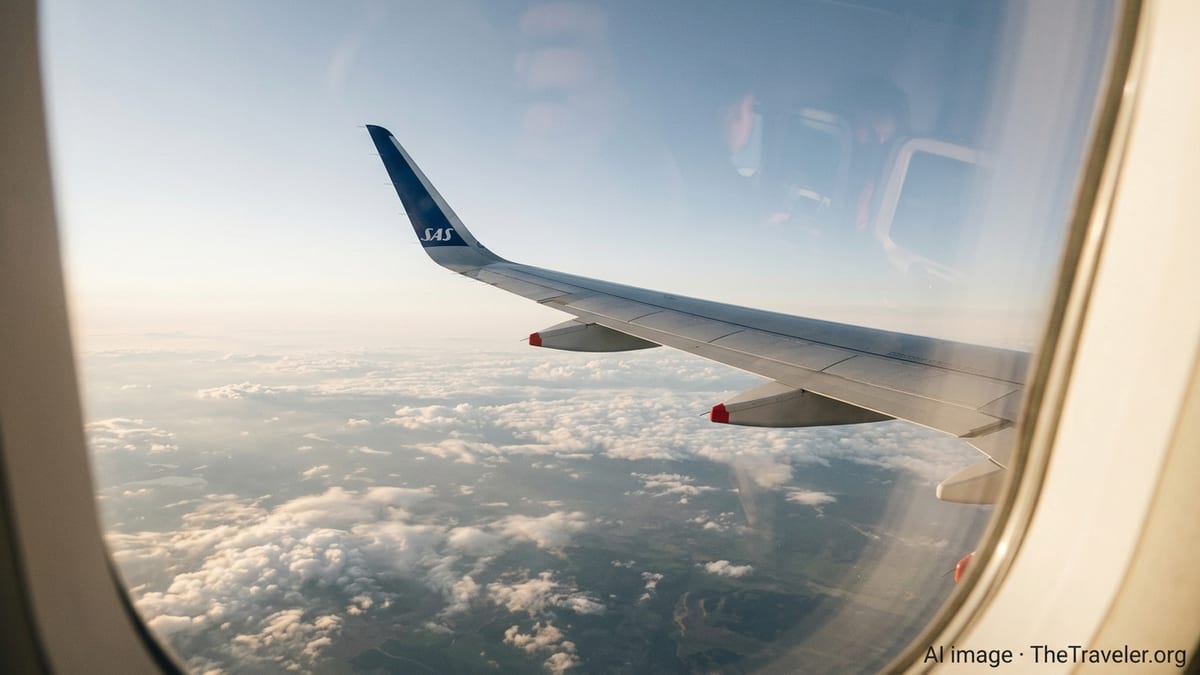
A Strategic Shift in Nordic and European Air Travel
The decision by Scandinavian Airlines, commonly known as SAS, to adopt Starlink’s low Earth orbit satellite network marks a pivotal shift in the competition for connected travelers over Europe and the North Atlantic. Publicly available information shows that the airline plans to introduce the service progressively from the end of 2025, with installation work extending over several years as more aircraft cycle through modification lines.
According to published coverage, SAS intends to make the Starlink connection available across all travel classes, aligning the carrier with a growing group of airlines turning to next-generation satellite constellations to overcome the coverage gaps and congestion that have hampered traditional inflight WiFi. The move builds on SAS’s earlier investments in high-speed connectivity on short and medium haul routes, but extends that ambition fleet-wide and into more challenging airspace, including polar routes.
The initiative comes as SAS navigates a broader transformation of its business, including new ownership structures and membership in the SkyTeam alliance. Analysts note that a consistent, high-performance digital experience is becoming a core differentiator for network airlines in Europe, particularly for premium and corporate travelers who increasingly expect reliable broadband from gate to gate.
Industry reports indicate that SAS aims to position itself as a leader in Swedish and wider Nordic aviation when it comes to onboard connectivity, using the Starlink rollout as a key element in a refreshed customer proposition as the carrier emerges from restructuring.
What Starlink Brings to the Cabin
Starlink’s aviation offering relies on a dense mesh of low Earth orbit satellites that communicate with compact aero terminals mounted on the fuselage, allowing aircraft to connect to the network with significantly lower latency than traditional geostationary satellite systems. Public documentation on Starlink’s aviation service highlights typical performance that supports video streaming, cloud-based work applications and real-time messaging without the high lag that has long characterized inflight internet.
For passengers on SAS, the practical implications could be substantial. Reports indicate that the service is intended to be available from shortly after boarding until arrival, rather than only at cruise altitude, and that it will be offered at no additional charge for a large share of customers, including loyalty program members. That model mirrors a wider industry trend in which connectivity is shifting from a paid add-on to an embedded part of the travel experience.
Beyond speed, coverage is a central advantage. Low Earth orbit constellations are designed to maintain connectivity over oceans and high latitudes, areas that are especially relevant to SAS, which operates extensive services over the North Sea, North Atlantic and towards Arctic regions. Travel industry analysts suggest that being able to assure connectivity on those sectors could appeal strongly to both leisure travelers sharing their journeys in real time and business passengers working en route.
Technical briefings from Starlink and independent aviation technology outlets note that the hardware has been optimized for minimal drag and weight, factors that airlines increasingly scrutinize as they balance digital upgrades with fuel burn and emissions targets.
Rollout Timeline and Fleet Integration
Official SAS material released in early 2025 describes a phased introduction of Starlink WiFi, beginning on selected aircraft at the end of that year and expanding across the fleet as more jets are retrofitted. The program spans narrowbody aircraft used on intra-European routes as well as widebodies serving long haul destinations, although the pace of installation is expected to vary by fleet type.
Publicly available planning documents and investor communications indicate that the airline sees 2026 and 2027 as important years for accelerating installations, with a growing share of departures from hubs such as Copenhagen, Stockholm and Oslo offering the upgraded connectivity. During the transition, passengers can expect a mixed experience, with some aircraft equipped with Starlink, others still relying on existing providers and a minority operating without WiFi, particularly among regional or wet-leased units.
To manage expectations, SAS has signaled through customer information channels that availability may differ by route and aircraft registration during the rollout. Travel forums and schedule data suggest that retrofits typically occur during planned maintenance visits, a strategy that helps limit aircraft downtime but naturally extends deployment over several seasons.
The airline’s recent network announcements for the 2025 summer season already highlight investment in onboard experience and connectivity as part of broader capacity growth, underlining how the Starlink project is integrated with fleet renewal and cabin upgrades rather than treated as a standalone technology trial.
Competitive Context in Europe’s WiFi Race
SAS’s embrace of Starlink comes amid a rapid escalation in the inflight connectivity race among European and transatlantic carriers. According to recent aviation technology coverage, Air France, International Airlines Group carriers and several smaller European airlines have either begun trial operations with Starlink or committed to large-scale installations in the second half of the decade.
Industry consultants note that while early adopters focused on differentiating themselves through paid premium WiFi tiers, the competitive frontier has now shifted toward making fast, stable connectivity widely available without extra fees. In this context, SAS’s decision to offer complimentary access across the fleet places it among a subset of airlines using free WiFi as a loyalty and branding tool, particularly in the Nordic market where digital adoption and expectations are high.
The move also reflects broader trends in aviation, where cabin connectivity is increasingly linked to operational efficiency. With reliable broadband, airlines can support real-time aircraft health monitoring, dynamic flight planning tools and more efficient crew communications. Public reports on Starlink’s aviation deployments highlight these back-end benefits as a significant part of the business case, even if the most visible impact for travelers is simply that social media feeds and video calls work better at 35,000 feet.
Market research cited in recent satellite industry analyses projects that Starlink could account for a sizable share of commercial aviation connectivity by the early 2030s, with thousands of aircraft worldwide expected to come online. SAS’s commitment places it firmly within that first wave of European network airlines betting that low Earth orbit systems will become the default standard.
Sustainability, Operations and Passenger Expectations
As airlines scrutinize every onboard addition for its climate impact, SAS has framed the Starlink rollout as consistent with its broader sustainability agenda. Technical summaries published by Starlink and aviation media describe antenna designs that aim to minimize aerodynamic drag compared with earlier satellite systems, thereby limiting any increase in fuel consumption. While the incremental impact per flight is relatively small, reductions at fleet scale are increasingly important as regulators and customers focus on emissions.
Operationally, the airline is expected to combine Starlink with existing connectivity providers during the transition, which may create a period where crews manage multiple systems and passengers encounter slightly different interfaces depending on which aircraft they board. Travel industry reporting suggests that carriers going through similar transitions have focused on clear in-cabin communication and simple sign-on procedures to smooth the experience.
For passengers, the standard by which inflight WiFi is judged is shifting from whether a connection exists at all to whether it behaves like a reliable ground-based broadband link. Early deployments of Starlink on other carriers have been closely watched by frequent flyers, with many comparing performance directly against home or office internet. SAS’s rollout will be measured against the same yardstick, particularly on longer sectors where travelers expect to work seamlessly over virtual private networks, join video meetings or stream content without interruptions.
As installation progresses over the next several years, the Scandinavian carrier’s bet on Starlink is likely to influence how travelers perceive not only SAS but the wider Nordic aviation market, where connectivity, punctuality and environmental performance are emerging as intertwined pillars of competitiveness.