

More news on this day
Hundreds of passengers were left stranded across Denmark, Norway and Sweden after a fresh wave of disruption hit SAS on Thursday, with 119 flights delayed and 26 cancelled, snarling connections to major European hubs including Paris, Stockholm, Berlin and London.
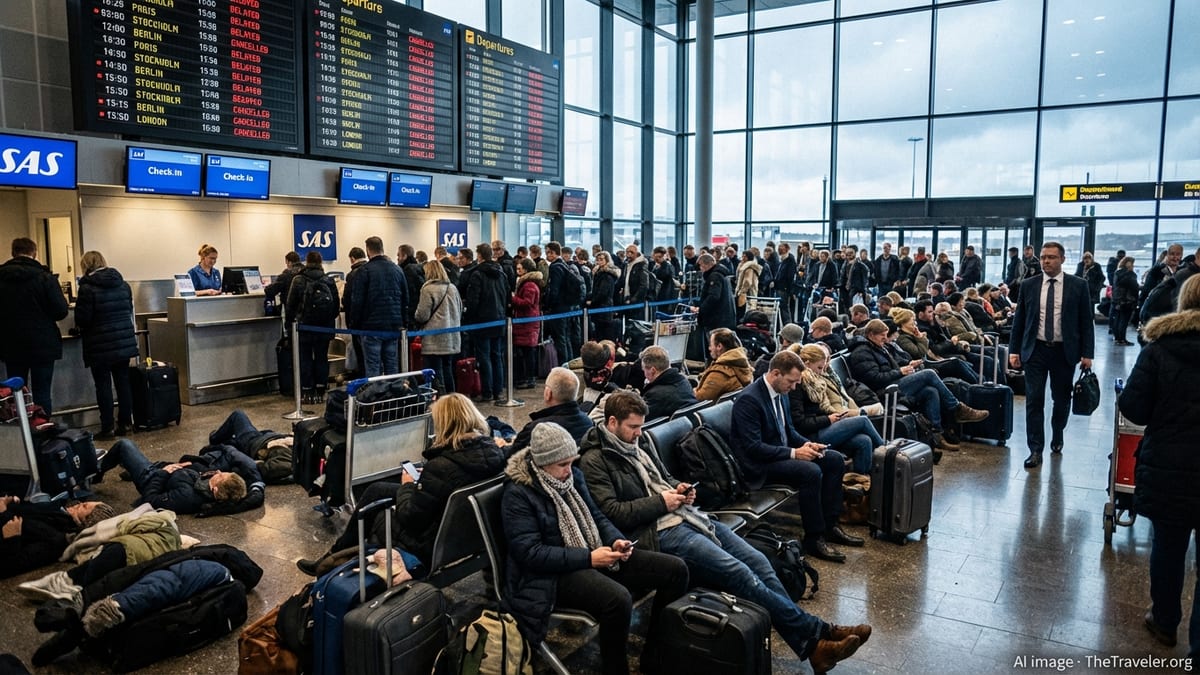
Scandinavian Hubs Buckle as Schedules Unravel
The disruption rippled through SAS operations at key Scandinavian gateways, with Copenhagen, Stockholm Arlanda and Oslo Gardermoen among the most affected airports. Passengers reported long queues at check-in and transfer desks as early-morning delays cascaded into the afternoon, disrupting both intra-Nordic services and long-haul connections.
Services linking Scandinavia with major European capitals, particularly Paris, Berlin and London, were hit by a mix of outright cancellations and rolling delays. Travellers heading to and from these cities faced missed meetings, disrupted holidays and, in some cases, overnight stays as limited spare capacity left few immediate rebooking options.
While SAS did not immediately publish a full route-by-route breakdown, operational data showed that short-haul European flights bore the brunt of the delays, with rotation issues meaning aircraft and crews were frequently out of position. That in turn affected later departures from Scandinavia’s main hubs, intensifying congestion during already busy travel periods.
Regional airports in Denmark, Norway and Sweden also felt the knock-on effects, with secondary routes into the larger hubs delayed as SAS prioritized heavily booked trunk services. For some passengers on these feeder flights, the disruption meant losing onward connections to Paris, Berlin, London and other major cities entirely.
Passengers Face Long Queues, Missed Events and Limited Alternatives
At check-in halls from Copenhagen to Stockholm, passengers spoke of confusion at departure boards, repeatedly changing boarding times and overburdened customer-service counters. Travellers with tight onward connections to European and intercontinental flights were among the hardest hit, scrambling to secure alternative routings before seats on rival carriers sold out.
Business travellers in particular reported missing scheduled meetings and conferences in Paris, Berlin and London after morning departures were delayed beyond the three-hour mark or cancelled outright. With many flights operating near capacity in late winter, even minor schedule changes quickly translated into full flights and waiting lists for rebookings.
Families returning from school-break trips and leisure travellers heading to city breaks likewise faced uncertainty over when they would reach their destinations. Some were offered hotel accommodation and meal vouchers when delays stretched into the evening, while others opted to abandon trips altogether when the earliest available rebooking options extended into the following day.
Travel agents across the region reported a spike in calls from stranded customers seeking help navigating rebooking rules, refund rights and alternative routes. With other European airlines also contending with weather-related and operational challenges in recent weeks, options to reroute via other hubs such as Amsterdam, Frankfurt or Zurich were sometimes limited or came at additional cost.
What SAS Is Telling Affected Travellers
SAS encouraged passengers to monitor their flight status closely via its app and online tools, and urged those with flexible itineraries to consider rebooking to later services where possible. The airline said it was working to stabilize schedules and reposition aircraft and crews, but acknowledged that knock-on effects could persist for several rotations as operations were recalibrated.
Staff at airport service desks focused initially on same-day connections, prioritizing passengers who risked being stranded overnight or missing long-haul departures out of European hubs. In some instances, travellers were moved to partner carriers on shared routes to cities such as London and Paris when seats were available, although those options quickly became scarce on busier departures.
For passengers facing cancellations, SAS has been offering the standard choice between a later flight on the airline, a change of routing where feasible, or a refund of the unused portion of the ticket. Travellers were advised to retain receipts for meals, refreshments and any additional accommodation where these were not directly provided, in case they could be reclaimed later as part of their expenses.
However, lengthy hold times on customer-service phone lines and busy airport counters meant some passengers turned to social media and online forums to seek guidance in real time. Seasoned frequent flyers shared practical tips on securing seats, tracking aircraft rotations and asserting their rights when delays exceeded key compensation thresholds.
Passenger Rights Under European and UK Rules
The latest disruption has once again focused attention on the protections available to travellers under European and UK air-passenger regulations. Under these rules, passengers on flights departing from EU and EEA airports, as well as those flying on EU or UK carriers into the region, may be entitled to assistance and, in some circumstances, financial compensation when flights are heavily delayed or cancelled.
Eligibility depends on several factors, including the length of the delay at arrival, the distance of the flight and whether the disruption was caused by circumstances within the airline’s control. Technical and operational issues that are not deemed extraordinary can trigger compensation obligations, while events such as extreme weather or air-traffic-control restrictions typically do not.
Regardless of whether compensation is payable, airlines are required in many cases to provide care, such as meals and refreshments after a certain waiting period, and hotel accommodation when an overnight stay becomes necessary because of a delay or cancellation. Passengers left waiting for rebooking to Paris, Stockholm, Berlin or London were urged by consumer advocates to request written confirmation of disruption and to keep detailed records of their expenses.
Travel rights organizations in Scandinavia noted that while most major carriers, including SAS, set out their obligations in conditions of carriage and online FAQs, passengers often only discover the specifics when something goes wrong. This latest episode, they argue, underscores the importance of airlines clearly communicating entitlements during large-scale disruption, particularly when hundreds of travellers are stranded at multiple airports simultaneously.
Broader Strain on Europe’s Air Travel Network
The problems facing SAS came against a backdrop of wider operational strain across Europe’s aviation network this winter, with multiple carriers reporting elevated levels of delays and cancellations in recent weeks. Adverse weather, air-traffic congestion and staffing challenges at both airlines and airports have combined to make timetables more fragile, especially at busy hubs such as Paris, London, Berlin and Amsterdam.
Scandinavian travellers have been particularly exposed to these pressures, as disruptions at home hubs often coincide with problems at onward connecting airports. A late departure from Copenhagen or Stockholm can quickly lead to missed slots at busy continental hubs, compounding delays and forcing last-minute changes to routings.
Industry analysts say that while overall capacity in European aviation has largely rebounded, the system remains vulnerable to sudden spikes in disruption. Tight crew and aircraft availability, along with lingering infrastructure constraints at some airports, can leave airlines with limited room to absorb shocks before schedules begin to unravel.
For passengers, the latest SAS disruption is a reminder to build extra time into connections, keep a close eye on flight status notifications and understand their rights before traveling. As winter gives way to the busier spring and summer seasons, both airlines and airports will be under pressure to reinforce resilience and avoid a repeat of the large-scale strandings seen across Scandinavia and beyond.