

More news on this day
A Scandinavian Airlines flight from Copenhagen to Dublin made an urgent descent into Dublin Airport after declaring a mid-air emergency, prompting a rapid response from air traffic controllers and ground crews on Wednesday morning.
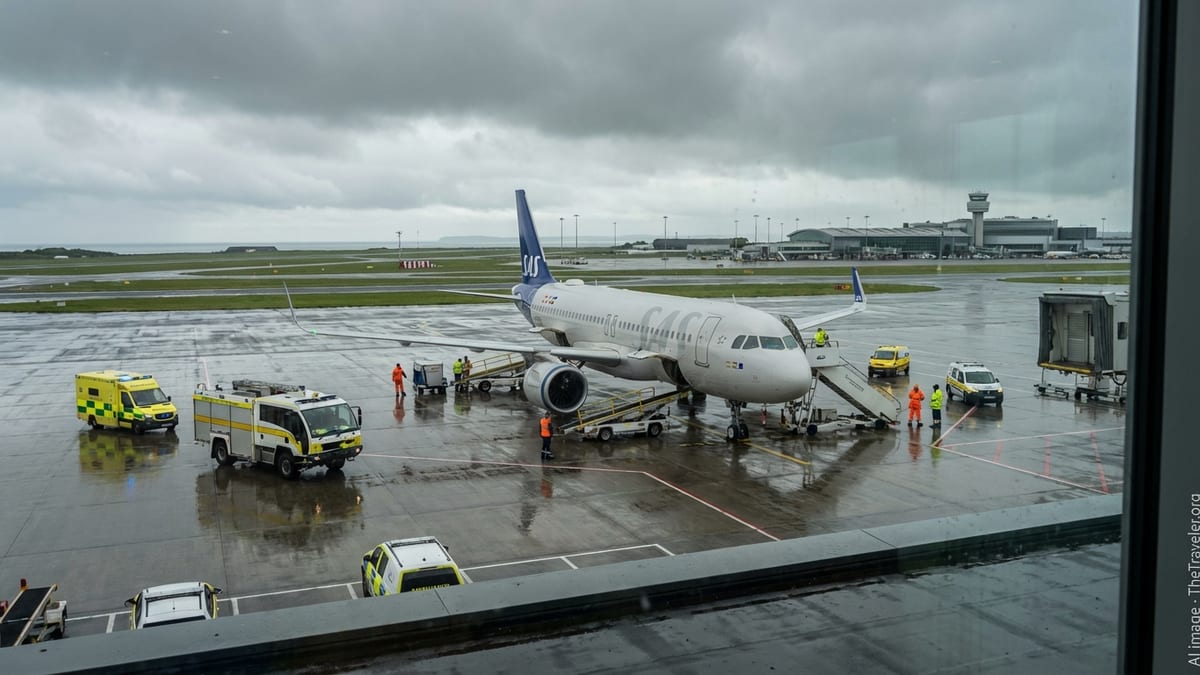
Mid-Air Alert Over United Kingdom Skies
Scandinavian Airlines flight SK537, operating an Airbus A320neo from Copenhagen to Dublin on February 25, 2026, issued an emergency alert while cruising towards Ireland, triggering heightened attention from air traffic control. The aircraft, which had departed Copenhagen Airport late morning local time with a routine arrival scheduled into Dublin, was still en route over the United Kingdom when the situation onboard deteriorated.
The crew transmitted the general emergency code known as Squawk 7700, a transponder signal that immediately flags distress to controllers monitoring the route. Radar trackers registered the alert as the jet prepared to cross into Irish airspace, with controllers swiftly moving other aircraft to provide SK537 with a clear path and landing priority into Dublin Airport.
While the flight continued to Dublin rather than diverting to another airport, the declaration of an emergency meant that aviation authorities and first responders in the Irish capital were quickly brought to standby readiness ahead of the aircraft’s arrival.
Medical Emergency Triggers Priority Landing
According to initial reports, the cause of the alert was a serious medical emergency involving a passenger on board. Cabin crew requested immediate medical assistance, prompting the pilots to coordinate with air traffic control for the fastest possible arrival into Dublin. Witness accounts from flight data tracking suggested the jet adjusted its profile to expedite descent and approach while remaining within normal safety parameters.
Upon landing, the aircraft was granted priority handling on the runway and taxiways, with emergency vehicles positioned close to the stand to meet the flight. Paramedics and airport medical teams boarded shortly after the aircraft’s arrival to attend to the affected passenger. The overall status of other travellers and crew was reported as stable, and there were no indications of any technical or safety issues with the aircraft itself.
The condition of the passenger requiring treatment has not been officially disclosed, and Scandinavian Airlines had yet to release a detailed public statement at the time of writing. Standard procedure typically involves coordination between the airline, airport authorities and local health services before any further information is shared.
Understanding the Squawk 7700 Code
For many travellers, seeing news of an aircraft declaring an emergency can be alarming, particularly when the Squawk 7700 code is mentioned. In commercial aviation, this four-digit code is broadcast via the aircraft’s transponder to signal a general emergency, allowing controllers to immediately recognise the situation and prioritise the flight in the surrounding airspace.
The code itself does not specify the nature of the problem. It can be triggered by a wide range of scenarios, including medical incidents, technical anomalies, smoke alerts, security concerns or other operational issues that require urgent attention. In this case, early indications point to a purely medical situation, rather than any mechanical malfunction or structural concern involving the aircraft.
Once Squawk 7700 is set, controllers typically establish direct, continuous communication with the cockpit, clearing other traffic from the aircraft’s path and preparing ground services at the intended airport or at an alternate field if a diversion is necessary. For passengers, the most visible signs are often a change in flight profile and an announcement from the crew explaining an unscheduled landing or expedited arrival.
Operations at Dublin Airport Remain Stable
Despite the heightened response around SK537, operations at Dublin Airport continued largely unaffected, with no major disruption reported to other departures or arrivals. Priority landings for medical emergencies are relatively rare but well rehearsed, and airports build such contingencies into their daily traffic management plans.
Arriving passengers from the Scandinavian Airlines flight were briefly delayed during disembarkation as medical teams worked on board, but the aircraft later cleared the stand to allow ground handling to proceed. For most connecting passengers and those continuing their journeys from Dublin, schedules remained intact, underscoring how efficiently a single-aircraft emergency can be handled within a busy European hub.
The incident also highlights the importance of Dublin’s role as a key gateway between Scandinavia and Ireland. The route between Copenhagen and Dublin is served regularly by Scandinavian Airlines, carrying both leisure travellers and business passengers who rely on the connection for onward links across northern Europe and the North Atlantic.
Passenger Safety and Crew Training in Focus
Events such as the SK537 emergency underscore the core priority placed on safety and medical readiness in modern commercial aviation. Cabin crew undertake extensive training in first aid, cardiopulmonary resuscitation and the use of onboard medical equipment, including automated external defibrillators, so they can respond quickly when a traveller falls ill at altitude.
Airlines also work closely with ground-based medical advisory services that can be contacted directly from the cockpit or cabin to help assess symptoms and recommend immediate treatment while the aircraft is still airborne. These experts can support decisions on whether to continue to the destination, divert en route or request priority handling into the nearest suitable airport.
For travellers, the incident serves as a reminder of the value of disclosing relevant health conditions when appropriate and of carrying essential medication in hand luggage rather than checked bags. While medical emergencies in flight remain statistically rare, the rapid, coordinated response to the Scandinavian Airlines alert over the United Kingdom shows how crews, controllers and airport teams work together to protect passenger welfare even when far from the ground.