

More news on this day
Hundreds of passengers were left stranded across Scandinavia and key European hubs on Friday as regional carrier SAS Link delayed 22 flights and cancelled 15 more, disrupting links between Denmark, Norway, Sweden and destinations including Geneva, Brussels, Oslo and Stavanger.
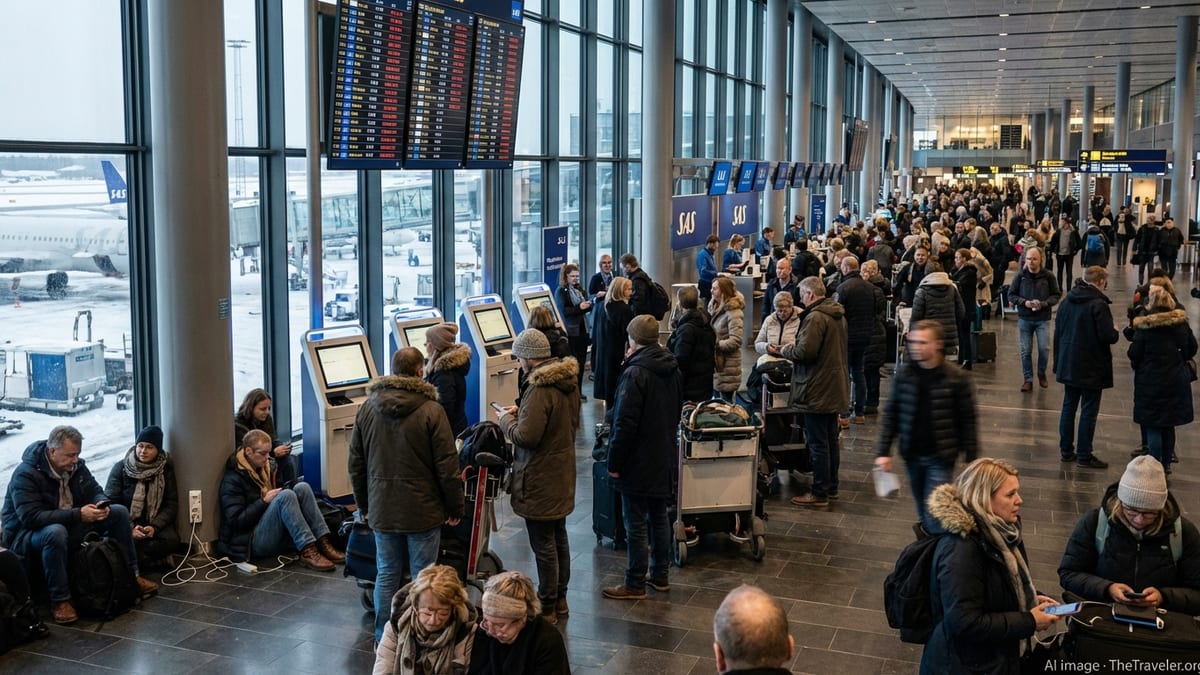
Regional Disruption Ripples Across Scandinavia
Fresh operational disruption at SAS Link, the regional arm of Scandinavian Airlines, created a cascade of delays and cancellations on February 21, snarling travel plans across Denmark, Norway and Sweden. The problems hit a mix of domestic and international routes, concentrating pressure on Oslo, Bergen and Stavanger while spilling over into wider European services.
According to airport and flight-tracking data compiled on Friday, SAS Link was responsible for the largest share of regional disruption, with 22 delayed services and 15 outright cancellations. While the numbers may seem modest compared with continent-wide chaos seen during peak holiday meltdowns, the tight, spoke-like structure of Scandinavia’s air network meant that each scrubbed or late departure quickly translated into missed connections, overnight stays and rebookings for onward journeys.
Passengers reported long queues at service desks and self-service machines in Oslo and Copenhagen, as they sought rerouting options to reach destinations across Scandinavia, central Europe and the Mediterranean. Many short-haul sectors operate only once or twice daily in winter, meaning that the loss of a single rotation can force travellers to wait until the next day or accept multi-stop routings through secondary hubs.
The disruption came as Nordic carriers and airports were still managing residual winter-weather impacts and high seasonal sickness among crews, factors that have stretched operational resilience across the region in recent weeks.
Oslo, Bergen and Stavanger Bear the Brunt
Norway’s three key western and southern gateways felt the sharpest impact from Friday’s SAS Link problems. Oslo Gardermoen, the country’s main international hub, saw more than 100 flights depart behind schedule across all airlines, with SAS Link’s delayed rotations particularly affecting domestic feeders and short international hops to neighbouring countries.
At Bergen and Stavanger, smaller but strategically important airports for Norway’s energy and maritime sectors, a total of 14 cancellations and well over a hundred delays were recorded over the most recent disruption cycle. Travellers bound for remote coastal communities and offshore connections were among those hardest hit, given the limited ground transport alternatives and infrequent flight schedules outside peak business hours.
Business travellers and commuters reported missing meetings and shift handovers after early morning flights were pushed back repeatedly or removed from departure boards at short notice. In several cases, passengers described being held onboard delayed aircraft while waiting for de-icing slots and crew duty-time clearances, only to be asked to disembark after the flights were eventually cancelled when operating windows closed.
Airport staff at Oslo, Bergen and Stavanger worked to rebook affected passengers on later SAS, Norwegian or Widerøe services, but full flights and tight winter schedules meant that many travellers had to accept overnight hotel stays or complex routings through Copenhagen, Amsterdam or Stockholm to reach their final destinations.
Geneva, Brussels and Other European Hubs Affected
While the disruption was most intense within Norway, its effects quickly spread across the broader SAS Link network, which ties Scandinavian cities to key European hubs. Services linking Scandinavia with Geneva and Brussels were among those caught in the knock-on delays, complicating itineraries for travellers heading to winter sports destinations and European institutions.
Passengers flying between Brussels and Oslo reported late departures and equipment changes, with some connections to Stavanger and northern Norway missed as a result of earlier delays in the day. In Geneva, late-arriving aircraft from Scandinavia forced tight turnaround times, with airport information screens showing a succession of delayed regional departures as crews and ground handlers attempted to recover the schedule.
Travel agents in Switzerland and Belgium said they spent much of the day reissuing tickets for passengers whose carefully timed itineraries depended on smooth same-day connections via Scandinavian hubs. For skiers and holidaymakers returning from the Alps to regional airports in Norway and Sweden, even short disruptions on Geneva services risked turning weekend getaways into extended, unplanned stays.
Elsewhere, smaller European cities with limited SAS Link frequencies also felt the effects. With many winter routes operating at just one daily frequency, a single cancellation effectively wiped out any possibility of same-day travel, pushing demand onto competing carriers or forcing travellers onto overnight trains and buses.
Passengers Face Queues, Confusion and Extra Costs
Across affected airports, stranded passengers described a familiar pattern of rolling estimated departure times, packed departure areas and long lines at customer-service counters. Many travellers took to social media to report that they received only sparse information via airport displays and airline apps as the day’s disruption unfolded.
Families travelling with children and elderly passengers were especially vulnerable, as meal options, quiet seating and hotel availability became tight during peak disruption periods. Some travellers reported spending hours queuing to speak with airline agents, only to be told that remaining seats on alternative flights had already been snapped up by those rebooked earlier in the day.
The disruption also inflicted financial strain on some passengers, who faced extra out-of-pocket expenses for ground transport, meals and additional nights of accommodation when airline-provided hotel rooms ran out near major airport clusters. Business travellers noted that missed client meetings, conferences and offshore crew changes would likely have knock-on effects beyond the immediate travel window.
Consumer-rights advocates in Scandinavia said the latest wave of disruption highlighted the importance of clear communication and proactive rebooking tools, especially on regional networks where rail or road alternatives are limited or time consuming across mountainous and coastal terrain.
What SAS Link Says About the Operational Issues
SAS Link, which operates shorter regional routes within the broader SAS network, attributed the disruption to a combination of operational challenges that included aircraft rotation issues and staffing constraints amid a congested winter schedule. The carrier has not reported any single safety-related incident or large-scale technical fault that would fully explain the concentrated disruption, suggesting a convergence of smaller setbacks over a compressed period.
The airline reiterated that safety remained its top priority and that flights would not depart unless all operational criteria were met. It pointed to staffing of call centres and airport desks, together with digital self-service options, as the main channels through which affected customers could seek rebooking assistance, refunds or travel vouchers where applicable.
Industry observers note that regional operations like SAS Link are particularly sensitive to minor disruptions. With smaller fleets and tight aircraft utilisation, the late arrival of a single aircraft can cascade into multiple downstream delays, especially when spare aircraft and crews are limited. In winter conditions, any additional need for de-icing or weather-related rerouting can quickly amplify the strain.
Scandinavian Airlines and SAS Link have faced heightened scrutiny in recent years over customer service and compensation processing, with some passengers complaining that payouts and refunds after cancellations can take months to resolve. The latest wave of disruption is likely to renew calls for swifter handling of claims arising from operational delays.
Rights and Remedies for Stranded Travellers
Under European air-passenger rules, travellers whose flights are significantly delayed or cancelled for reasons within an airline’s control may be entitled to care, rerouting and, in many cases, financial compensation. This typically includes meal vouchers, hotel accommodation where an overnight stay becomes necessary, and reimbursement of reasonable additional expenses arising directly from the disruption.
Legal experts in Scandinavia advise affected passengers to keep detailed records of boarding passes, booking confirmations and receipts for out-of-pocket costs such as meals, taxis and extra nights in hotels. These documents can later form the basis of compensation or reimbursement claims filed directly with the airline or, if necessary, escalated through national enforcement bodies and arbitration schemes.
Passengers whose journeys involved multiple legs or codeshare flights are encouraged to submit claims to the marketing carrier listed on their ticket, even if certain segments were operated by partner airlines. In the case of SAS Link disruptions, most tickets are sold under the SAS banner, which means passengers typically deal with SAS for any subsequent compensation or refund processes.
Consumer organisations caution that processing times for claims can vary widely, and that travellers should be prepared for a potentially lengthy back-and-forth with airline customer-service departments. Nonetheless, they stress that passengers should not forgo their rights, particularly where delays or cancellations exceed several hours and cause missed connections or overnight stays.
Broader Strain on Europe’s Winter Flight Network
The SAS Link disruption comes against a wider backdrop of winter strain on Europe’s aviation system. Over recent weeks, a combination of snow, strong winds, fog and capacity constraints at busy hubs has led to a patchwork of delays and cancellations from the Nordics down to southern holiday destinations.
Data from aviation-analytics providers show that across Europe, more than a hundred flights were cancelled and thousands delayed on February 20 alone, with multiple carriers struggling to keep to published schedules. While Scandinavia has long experience in operating in harsh winter conditions, even well-prepared airports can encounter bottlenecks when de-icing capacity, runway clearance and tight turnaround times collide with staffing shortages.
Regional airlines like SAS Link sit at the heart of this fragile ecosystem, carrying passengers from smaller cities and remote communities to major hubs for onward connections. When regional links falter, the result is often stranded travellers far from home, clogged rebooking systems and aircraft flying with empty seats on key trunk routes after misaligned connections.
Analysts warn that without increased investment in resilience, including spare aircraft, flexible crewing and improved data-driven scheduling, winter disruptions of the type seen this week could become a recurring feature rather than an exception across Europe’s regional networks.
How Travellers Can Reduce the Risk of Disruption
While passengers cannot control airline operations or winter weather, travel experts say there are steps that can help limit the impact of disruptions like those seen at SAS Link. Booking earlier flights in the day, avoiding tight minimum connection times and opting for through-tickets on a single carrier can all improve the chances of completing a journey, even when delays occur.
Passengers are also encouraged to download their airline’s mobile app and enable notifications, which can provide the earliest updates on gate changes, delays and rebooking options. In many cases, travellers can accept alternative flights or request refunds directly through digital channels, bypassing long queues at crowded airport desks.
For itineraries involving critical time-sensitive events, such as cruises, conferences or onward rail journeys, industry advisers often recommend arriving at least a day early in winter months, particularly when travelling via weather-prone hubs. Though it adds to up-front cost, this buffer can provide valuable insurance against exactly the kind of cascading regional disruption now affecting Scandinavia.
As SAS Link works to stabilise its schedules and clear the backlog of displaced passengers, travellers across Denmark, Norway, Sweden and connected European cities face another reminder of how closely knit and yet fragile the continent’s air transport web remains in the depths of winter.