

More news on this day
Scandinavian Airlines is preparing to introduce free, high-speed Starlink Wi-Fi for EuroBonus members, signaling a major shift in how passengers in Sweden stay connected in the air and underscoring a broader push to modernize the onboard experience across the carrier’s network.
Get the latest news straight to your inbox!
A New Era of High-Speed Connectivity at 35,000 Feet
Publicly available information shows that Scandinavian Airlines is moving ahead with plans to equip its fleet with Starlink, the low Earth orbit satellite network developed by SpaceX, in a phased rollout beginning at the end of 2025. The initiative will bring high-speed, low-latency internet to passengers across all cabins, with EuroBonus members set to receive access at no additional charge.
Starlink technology is designed to provide consistent coverage over oceans and remote regions, including challenging northern latitudes that are central to Scandinavian routes. Reports indicate that this will allow travelers flying to and from Sweden to maintain a stable connection even over the North Sea, the Atlantic and the Arctic, areas where traditional satellite systems have often struggled.
According to airline communications, passengers will be able to connect from the moment they board until the aircraft reaches the gate on arrival, replacing earlier systems that only activated at cruising altitude. This gate-to-gate capability is presented as a significant upgrade for business and leisure travelers who increasingly expect continuous digital access during their journeys.
Free Access for EuroBonus Members Strengthens Loyalty Proposition
The decision to offer high-speed Wi-Fi free of charge to EuroBonus members places digital connectivity at the center of Scandinavian Airlines’ loyalty strategy. Published material about the program indicates that EuroBonus has long incorporated Wi-Fi benefits and other digital tools, but the integration of Starlink marks a notable step up in both speed and coverage.
By removing Wi-Fi fees for EuroBonus members, the airline is positioning connectivity as a core membership perk rather than a paid add-on. This aligns with a wider pattern in the Nordic market, where frequent flyers are often early adopters of digital services and expect their loyalty programs to deliver practical, everyday advantages.
Industry analysis suggests that such benefits can be particularly influential for travelers based in Sweden and neighboring countries who make frequent short- and medium-haul trips within Europe. For this group, complimentary high-speed Wi-Fi can make the difference between an unproductive travel day and an extension of the office or home environment in the air.
Impact on Air Travel Experience in Sweden
The Starlink rollout is expected to have a visible effect on how passengers in Sweden experience air travel, especially on routes linking Stockholm, Gothenburg and other Scandinavian gateways with major European hubs. High-speed connectivity is becoming a key differentiator in a region where travelers are accustomed to robust digital infrastructure on the ground.
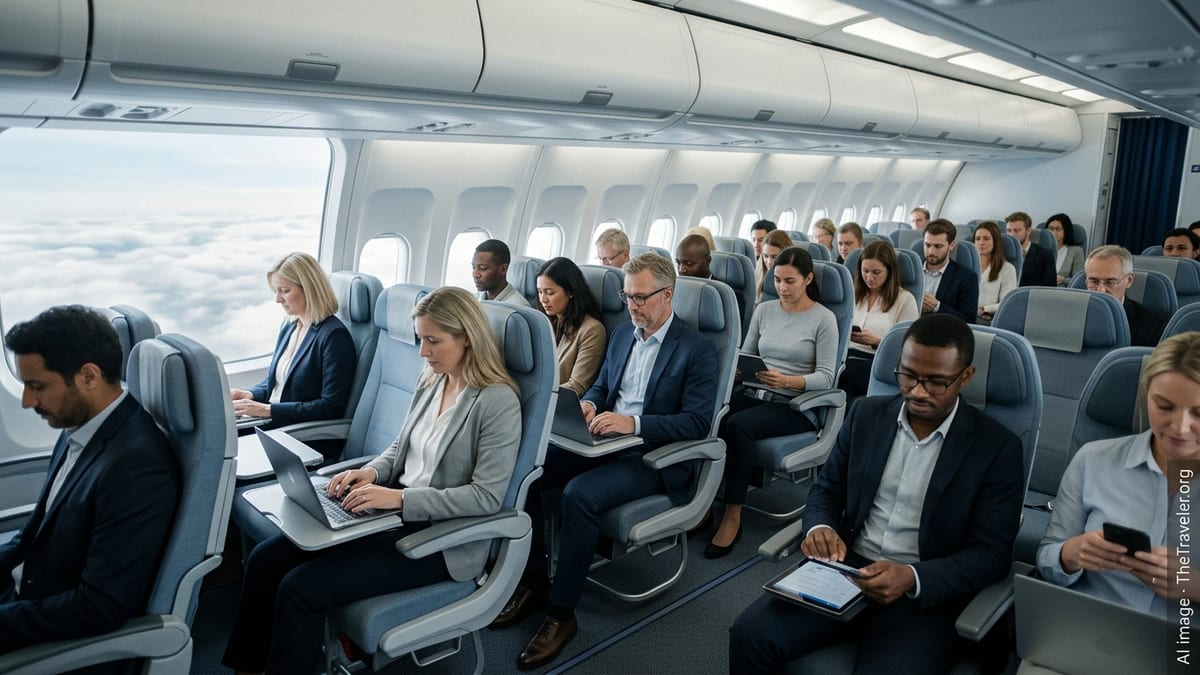
For business travelers, reports indicate that the ability to run video meetings, access cloud-based tools and send large files without significant delay could substantially change how travel days are planned. Rather than working offline and syncing later, passengers will be able to maintain real-time communication with colleagues and clients throughout the flight.
Leisure travelers in Sweden are also expected to benefit from smoother streaming, social media use and messaging, reducing the friction of long days in transit. For families, stable Wi-Fi can make multi-hour flights more manageable, supporting onboard entertainment across multiple devices at once.
As Swedish airports continue to invest in upgraded terminals and ground connectivity, the addition of high-performance Wi-Fi in the air adds another layer to the country’s reputation as an early adopter of digital solutions in transport and public services.
From Earlier Wi-Fi Investments to a Full Starlink Upgrade
Scandinavian Airlines has spent the past decade building out its onboard connectivity, initially through partnerships that brought high-speed Wi-Fi to parts of its short- and medium-haul fleet and to long-haul aircraft. Earlier systems offered strong performance on many European routes and, in some cases, free access for selected EuroBonus tiers and premium cabins.
However, coverage gaps and latency limitations remained on more remote and transoceanic sectors. Publicly available reports on the new Starlink agreement describe the upcoming service as a generational upgrade, designed to address those weaknesses with a denser satellite network and improved hardware on the aircraft.
The move to Starlink also dovetails with a broader renewal of the carrier’s product, from cabin refurbishments to new-generation aircraft. Airline communications highlight that Starlink terminals are engineered to minimize aerodynamic drag, which the company presents as part of its efforts to reduce fuel consumption and support long-term climate goals.
For EuroBonus members in Sweden, the transition means that earlier variations in connectivity quality between aircraft types should gradually be replaced by a more uniform experience, particularly as more of the fleet is equipped over the second half of the decade.
Competitive and Strategic Implications in the Nordic Market
The decision to make Starlink Wi-Fi a free benefit for EuroBonus members comes at a time of intense competition in Northern Europe, as carriers jostle for market share on both domestic and international routes. Analysts note that digital services, punctuality and network reach are playing a larger role in traveler choice, in addition to price.
Scandinavian Airlines’ recent network and alliance moves, along with new and expanded partnerships across Europe, show an emphasis on connecting Nordic travelers more efficiently through key hubs. The investment in high-speed Wi-Fi is tied to this strategy, presenting a consistently connected experience from smaller regional airports in Sweden through to major intercontinental gateways.
For Sweden specifically, where a high proportion of the population is accustomed to fast mobile and fiber networks, the bar for what counts as acceptable onboard connectivity is relatively high. Offering free, high-speed access to EuroBonus members positions the airline to meet those expectations and could pressure competitors to refine their own Wi-Fi offerings on services to and from the country.
As the Starlink rollout progresses from late 2025 onward, travelers in Sweden are expected to see incremental changes as more aircraft come online with the new system. If performance matches current projections, the initiative could help redefine what passengers in the region consider standard for staying connected in the sky.