

More news on this day
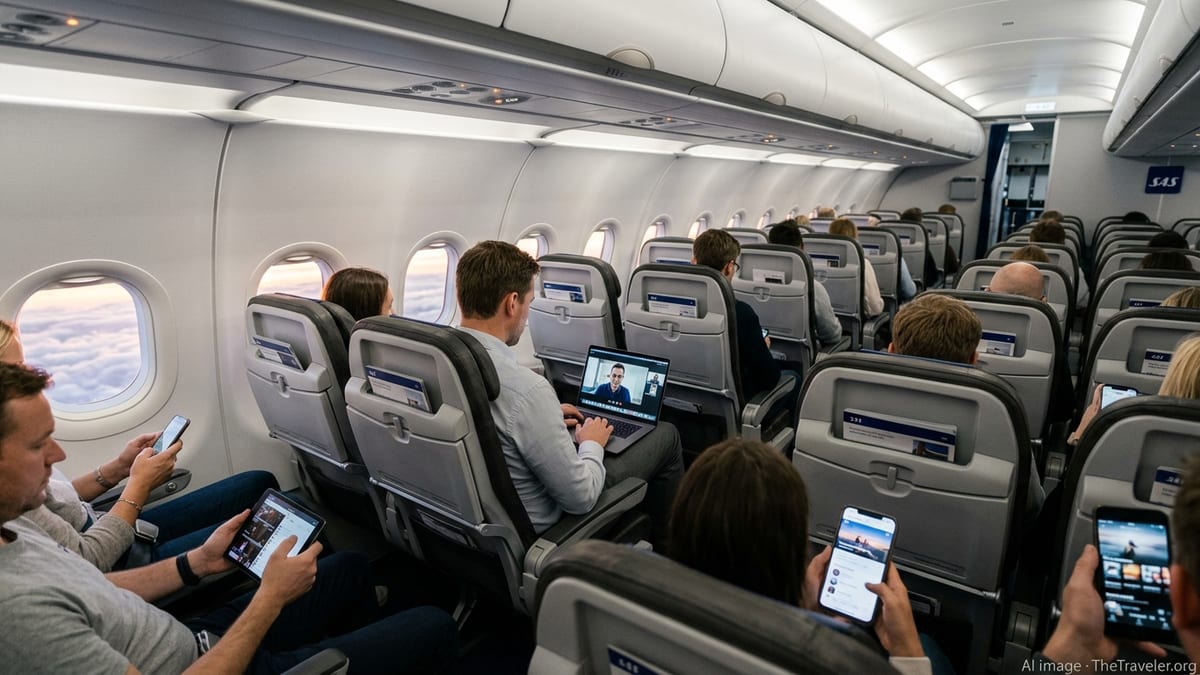
Scandinavian Airlines is moving to transform onboard connectivity, unveiling plans for free, high-speed Starlink Wi-Fi for EuroBonus members with peak inflight speeds reported at more than 500 Mbps on test flights, positioning the Sweden-based carrier at the forefront of Europe’s inflight internet race.
Get the latest news straight to your inbox!
A New Phase in SAS’s Digital Strategy
The Starlink agreement marks a major upgrade to SAS’s existing inflight internet, which has historically been limited to select aircraft and slower ground-based systems. Publicly available information from the airline and industry reports indicate that the carrier will phase in Starlink across its mainline Airbus fleet first, before extending the technology to long-haul aircraft.
The move comes as SAS, now aligned with the SkyTeam alliance and backed by a new ownership structure led by Air France-KLM and financial investors, seeks to sharpen its competitive edge on both European and intercontinental routes. Enhancing digital services onboard, especially for frequent flyers, has emerged as a central pillar of that strategy.
Analysts following loyalty programs note that EuroBonus has become a key differentiator for SAS in Northern Europe, and free, high-performance Wi-Fi is seen as a powerful new benefit layered onto an already popular scheme. Industry coverage suggests the carrier is aiming to position EuroBonus as one of Europe’s more technologically forward frequent flyer programs.
For SAS, the partnership with Starlink also signals a broader bet on satellite-based solutions to meet fast-growing passenger expectations for seamless connectivity, particularly on routes where traditional air-to-ground systems are limited or unavailable.
Free High-Speed Access for EuroBonus Members
Under the plan, access to the new Starlink network will be free of charge for EuroBonus members, covering all tiers from entry-level participants to elite status holders. Passengers will authenticate using their loyalty credentials, with the Wi-Fi portal recognizing membership details and opening full-speed browsing without an extra fee.
Regional reporting from Scandinavia indicates that some early flights equipped with the new hardware have already delivered peak download speeds surpassing 500 Mbps, far exceeding the performance of most legacy inflight networks. Even under heavier loads, measured speeds in excess of 200 Mbps have been noted, suggesting that streaming, large file transfers, and collaborative cloud-based work should all be feasible at cruising altitude.
For non-members, SAS is expected to continue offering access paths that may involve paid plans or bundled connectivity through selected telecom partners. However, positioning the richest experience as a complimentary benefit for EuroBonus members is likely to encourage more casual travelers to enroll in the program before or during their journeys.
This emphasis on free high-speed connectivity mirrors a wider industry trend, but SAS’s decision to couple it directly to its loyalty program differentiates the offer in a crowded European market, where many carriers still rely on tiered pricing or heavily throttled free options.
Phased Rollout Across the SAS Fleet
The rollout of Starlink will not occur overnight. Official communications and independent aviation coverage describe a phased introduction beginning with short and medium-haul Airbus A320-family aircraft, many of which either lack Wi-Fi entirely or operate older systems with limited bandwidth. Once a critical mass of aircraft is upgraded, free access is expected to be activated consistently, giving EuroBonus members a more predictable experience when they board.
Longer term, SAS plans to extend Starlink installations to its intercontinental Airbus A330 and A350 fleet. This phase is especially significant for business travelers who rely on connectivity during long transatlantic and Asia-bound flights, where continuous, high-capacity satellite coverage provides a clear advantage over piecemeal regional solutions.
Industry observers note that full fleet completion is projected to take several years, with milestones spread between late 2025 and 2027. During this period, passengers can expect a mix of connectivity types across different aircraft, with SAS gradually standardizing on Starlink as its primary high-speed platform.
Operational data from early flights also suggests potential efficiency gains. The Starlink antenna units are designed with aerodynamics and power consumption in mind, which could help mitigate fuel penalties that sometimes accompany legacy satellite systems, a factor closely watched in an era of high fuel costs and climate-focused regulation.
What Starlink Technology Brings Onboard
Starlink’s network is built around a large constellation of low Earth orbit satellites, enabling lower latency and higher throughput compared with many previous-generation inflight connectivity services. For passengers, this translates into more stable video calls, quicker page loads, and smoother high-definition streaming, even when an aircraft is crossing remote regions or large bodies of water.
Technology coverage indicates that Starlink-equipped aircraft can deliver aggregate bandwidth often measured in the hundreds of megabits per second, with peak speeds over 500 Mbps under favorable conditions. While actual performance will vary depending on route, weather, and the number of active users on board, the system is designed to offer a step-change from the single-digit or low double-digit megabit speeds that have characterized many older inflight networks.
The antennas used on SAS aircraft are engineered to sit flush with the fuselage, minimizing drag while electronically steering beams to track satellites as the aircraft moves. Inside the cabin, passengers connect through a familiar Wi-Fi portal, but the underlying backhaul is significantly more capable than traditional air-to-ground or geostationary satellite solutions.
For SAS, aligning with a rapidly expanding global constellation also provides future-proofing. As Starlink continues to add satellites and ground infrastructure, capacity and coverage over Scandinavia, the North Atlantic, and other key SAS markets are expected to improve further, benefiting both the airline and its customers over time.
Implications for EuroBonus and the Wider Market
The introduction of free Starlink Wi-Fi is likely to increase the perceived value of EuroBonus membership, particularly for travelers who regularly work or study while flying. Travel loyalty commentators already point to inflight connectivity as one of the most used day-to-day benefits, alongside priority services and lounge access, and SAS’s decision to remove the paywall for members may strengthen retention and encourage higher engagement with the program.
The initiative also places competitive pressure on other European carriers, many of which still charge for high-speed access or limit free connectivity to basic messaging. As more passengers experience broadband-like performance on SAS flights, expectations may rise across the region, prompting rivals to accelerate their own satellite-based upgrades.
At the same time, the project illustrates how inflight connectivity has become deeply intertwined with airline economics and branding. By integrating Starlink into its loyalty proposition, SAS effectively turns bandwidth into a form of soft currency, rewarding repeat customers not only with points and upgrades but with a more productive and connected journey.
For travelers, the practical impact could be substantial. As the rollout advances and more aircraft come online, EuroBonus members boarding a SAS flight in Stockholm, Copenhagen, or Oslo will increasingly find that their ability to stream, conference, and collaborate in the sky resembles their experience on the ground, signaling a new chapter in how Scandinavian passengers stay connected at 35,000 feet.