

More news on this day
Scandinavian carrier SAS is preparing a major upgrade to its onboard experience, partnering with SpaceX’s Starlink to introduce free, high-speed Wi-Fi across its entire aircraft fleet in a phased rollout beginning in late 2025.
Get the latest news straight to your inbox!
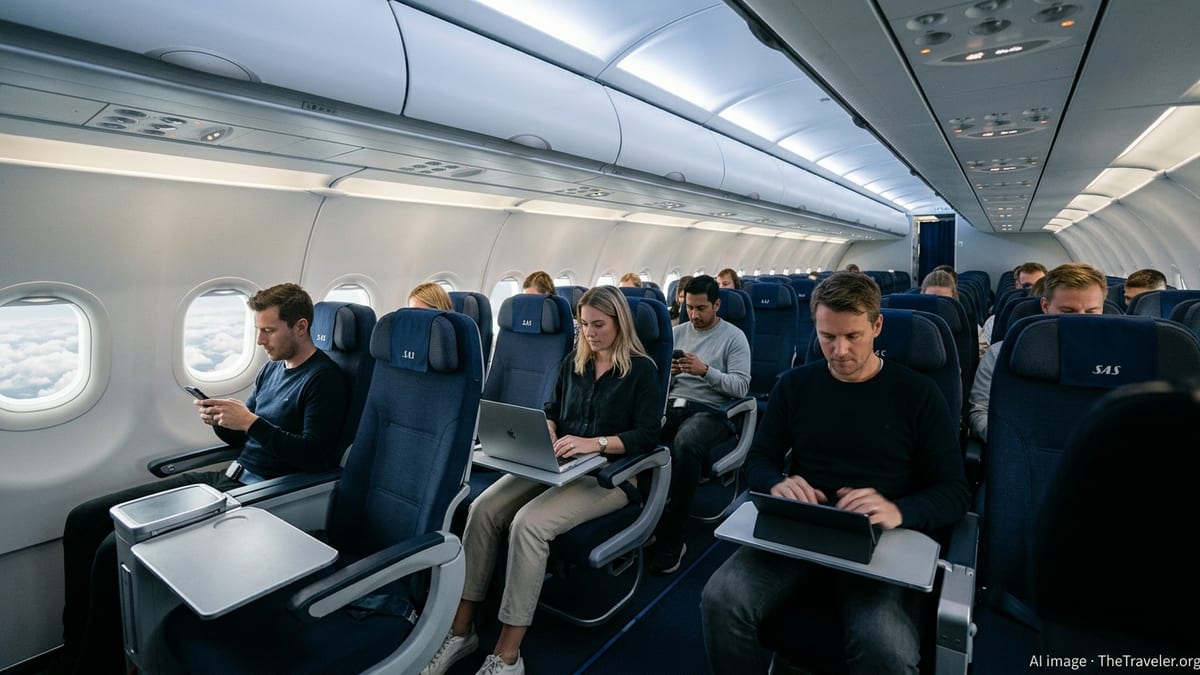
SAS Bets on Low-Earth-Orbit Satellites for Next-Generation Connectivity
According to publicly available information from SAS, the airline is replacing its current inflight connectivity systems with a new solution built around Starlink, SpaceX’s low Earth orbit satellite network. The technology is designed to deliver high-speed, low-latency internet that more closely resembles a home or office connection than the limited, bandwidth-constrained systems many passengers still encounter in the air.
Starlink’s constellation operates much closer to Earth than traditional geostationary satellites, which typically sit tens of thousands of kilometers away. This reduced distance allows signals to travel more quickly, cutting latency and enabling activities that have previously been difficult at cruising altitude, such as video calls, cloud-based work and high-definition streaming.
Publicly available coverage indicates that multiple global airlines are beginning to adopt Starlink or similar low Earth orbit solutions, suggesting the technology is moving rapidly from trial phase to mainstream deployment. SAS is positioning itself within this emerging group of early adopters, particularly in the European market.
The move marks a strategic shift for SAS, which has previously relied on more conventional satellite and air-to-ground links on parts of its fleet. By committing to a single, next-generation platform across aircraft, the airline is aiming to simplify its connectivity architecture while significantly raising performance.
Free High-Speed Wi-Fi as a Differentiator for Nordic Travelers
SAS has stated that the new Starlink-powered Wi-Fi will be offered free of charge to passengers, with EuroBonus loyalty members highlighted as early beneficiaries of the upgraded service. Making high-speed connectivity a standard, no-cost feature is intended to turn Wi-Fi from a paid add-on into a core element of the onboard product, especially on longer European and intercontinental routes.
Reports indicate that passenger expectations for inflight connectivity have risen sharply in recent years, particularly among business travelers and younger leisure customers. Many flyers now expect to stay continuously connected for messaging, collaboration tools and entertainment, viewing a lack of reliable Wi-Fi as a key drawback when choosing between carriers.
By removing paywalls and data caps, SAS is attempting to match or exceed offerings from other airlines that have begun to experiment with free messaging, sponsored access or loyalty-linked connectivity benefits. The airline appears to be betting that a simple promise of “fast, free Wi-Fi for everyone” will resonate with Scandinavia’s highly digital customer base.
The strategy also aligns with wider changes in the Nordic aviation market, where competition on price has been intense and service differentiation increasingly hinges on comfort, punctuality and digital services rather than just basic fares.
Fleetwide Rollout Planned From Late 2025
SAS has outlined a phased installation schedule that begins at the end of 2025, covering both short-haul and long-haul aircraft types. Publicly available information suggests that the rollout will span several years, reflecting the complexity of retrofitting existing aircraft and coordinating upgrades with maintenance windows.
The program is expected to touch the airline’s core fleet, including Airbus narrowbodies serving intra-European routes and widebody aircraft deployed on transatlantic and long-haul flights. Ensuring consistent hardware and service quality across these different platforms is likely to be a central focus of the implementation phase.
Industry experience from other carriers indicates that early installations often begin on select aircraft and routes before scaling up, giving airlines an opportunity to fine-tune hardware integration, software settings and onboard processes. SAS is anticipated to follow a similar pattern, gradually increasing the number of equipped aircraft while monitoring performance metrics and customer feedback.
Given typical retrofit timelines, travelers are likely to encounter a mix of legacy and next-generation connectivity on SAS flights during the transition period. Clear communication about which services are available on specific aircraft will be important to manage expectations as the project advances.
Competitive Pressure Builds in the Inflight Connectivity Market
The SAS partnership with Starlink comes as airlines worldwide reassess their inflight connectivity strategies. Traditional satellite providers and air-to-ground networks have improved over the past decade, but demand for bandwidth is growing even faster, driven by streaming habits, remote work and the ubiquity of personal devices.
Publicly available industry surveys suggest that passengers now rank reliable Wi-Fi alongside legroom and on-time performance as key factors influencing airline choice. This shift is encouraging carriers to treat connectivity as foundational infrastructure rather than an optional upgrade.
In this environment, low Earth orbit networks such as Starlink are emerging as a disruptive force, promising higher speeds and lower latency at scale. Several carriers in North America and the Asia-Pacific region have announced adoption plans, signaling a broader market move toward newer architectures that can support large numbers of concurrent users without severe slowdowns.
SAS’s decision places it among a cohort of airlines that see early investment in cutting-edge connectivity as a way to gain an advantage in attracting premium and tech-savvy travelers, particularly on key routes to and from its Copenhagen hub.
What Passengers Can Expect Onboard
Once activated, the new SAS Wi-Fi service is expected to support common online activities that have historically been challenging at altitude. Public information from Starlink’s aviation deployments points to speeds sufficient for streaming video, participating in video conferences, browsing social media and using real-time messaging apps with minimal lag.
Passengers can also expect broader coverage across polar routes, the North Atlantic and remote northern regions, areas that have often experienced patchy or intermittent service under older satellite models. For SAS, whose network includes long flights over these corridors, improved reliability may be as significant as headline speed figures.
The airline has indicated that the service will be available across all travel classes, which should help reduce the disparity between premium cabins and economy when it comes to staying productive or entertained. As installations ramp up, SAS is likely to promote the new connectivity as part of its wider digital ecosystem, integrating Wi-Fi access with its mobile app, onboard portal and EuroBonus program.
While exact performance will depend on factors such as aircraft load, route and atmospheric conditions, the partnership with Starlink signals a clear intent: to move beyond basic, transactional internet access and offer a level of inflight connectivity that more closely mirrors life on the ground, reshaping expectations for travelers across Scandinavia and beyond.