

More news on this day
Scandinavian Airlines is preparing a major upgrade to its inflight connectivity, introducing Starlink-powered WiFi that will be free of charge for EuroBonus members across European and long-haul routes as the system is rolled out on the carrier’s fleet.
Get the latest news straight to your inbox!
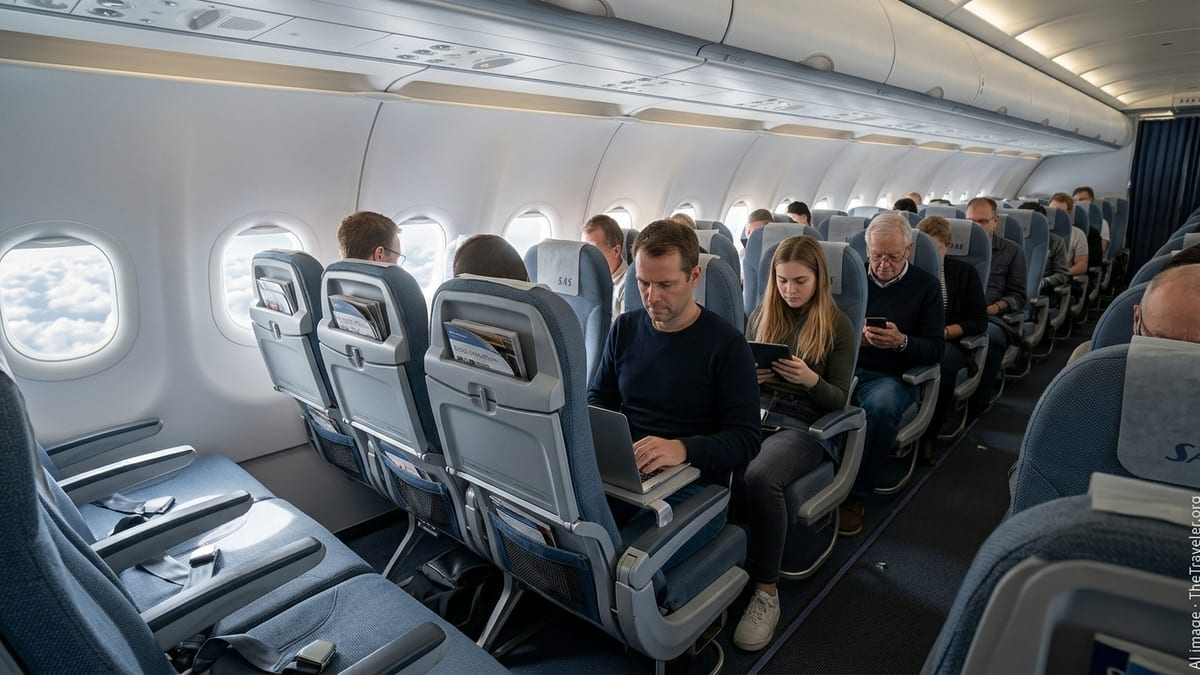
What SAS Is Changing With Starlink WiFi
According to publicly available information from Scandinavian Airlines and industry coverage, the carrier has signed an agreement with SpaceX to equip its aircraft with Starlink, a low Earth orbit satellite network designed to deliver high-speed, low-latency internet at cruising altitude. SAS has described the move as a new generation of inflight connectivity that will eventually cover its entire mainline fleet.
The Starlink upgrade is intended to replace or complement the airline’s existing systems, which have typically relied on more traditional satellite solutions and have often been limited by slower speeds, higher latency, and patchy coverage on certain routes. Reports indicate that Starlink will allow SAS to provide a more stable connection on flights within Europe as well as long-haul services over the Atlantic, the North Sea, and northern polar regions where connectivity has historically been inconsistent.
The airline’s plan positions EuroBonus, its frequent flyer program, at the center of the new offering. Public information shows that free access to the Starlink WiFi network will be a core benefit for EuroBonus members once the service becomes widely available, creating a clear incentive for travelers to enroll in the program before departure.
Recent industry summaries of free inflight WiFi in 2026 state that SAS completed the main Starlink rollout by the end of 2025, with EuroBonus members able to connect at no cost on equipped aircraft. These reports also note that gate-to-gate connectivity is a key feature of the new system, allowing passengers to remain online from boarding until arrival, subject to aircraft installation and route.
How Free Starlink WiFi Works for EuroBonus Members
EuroBonus is SAS’s loyalty program, open to travelers at no charge, and it already underpins many of the airline’s onboard benefits. Published information from SAS and partner sites indicates that under the Starlink arrangement, EuroBonus membership will be the primary gateway to complimentary high-speed WiFi, regardless of travel class.
Although technical and commercial details can vary as the rollout progresses, current descriptions suggest that EuroBonus members will be able to log in using their membership credentials on their personal devices, with no additional fee for accessing the high-speed network on Starlink-equipped aircraft. This arrangement effectively turns inflight connectivity into a loyalty benefit rather than a separate paid service for many passengers.
Reports focusing on EuroBonus updates in early 2026 state that, once fully active, the Starlink service is designed to support multiple devices per passenger, such as a smartphone, tablet, and laptop, all connected under a single user session. This is particularly relevant for business travelers and remote workers who need to balance communication apps, cloud-based productivity tools, and entertainment simultaneously during a flight.
The change also contrasts with the current SAS WiFi model, where non-eligible passengers typically purchase access by zone or route, and only certain fare types or higher EuroBonus tiers receive complimentary connectivity. As Starlink becomes more widely installed, EuroBonus membership rather than cabin class is expected to become the main dividing line between paid and free access on SAS flights.
Coverage, Speeds, and Which Flights Will See the Upgrade
Public documentation from SAS indicates that the Starlink rollout began toward the end of 2025 and is being phased across the fleet. Industry reports compiled in 2026 describe the project as largely complete for mainline aircraft, though individual flights can still differ depending on the specific airframe and route scheduling.
Starlink technology is designed to provide high-speed broadband with significantly lower latency than traditional geostationary satellite systems. Published technical descriptions mention potential peak speeds of up to several hundred megabits per second to the aircraft, which, in practical terms, should allow browsing, video streaming, cloud file access, and video calls to function more reliably than many existing inflight systems, especially on long-haul segments.
For travelers, the upgrade will be most noticeable on European and intercontinental flights where coverage gaps and slow connections have been common pain points. Reports note that Starlink’s constellation is particularly beneficial over remote stretches such as the North Atlantic or high-latitude routes toward North America and Asia, where conventional inflight connectivity has sometimes struggled.
At the same time, SAS’s general WiFi information confirms that not every aircraft and route necessarily offers identical connectivity today. Travelers are advised in public-facing guidance to check their flight details in the SAS app or during the booking process to see whether WiFi is available and, as the Starlink program matures, whether the aircraft is equipped with the new system or an earlier-generation service.
What This Means for Pricing and Non-Members
Current SAS WiFi pages show that, as of early 2026, the airline still lists paid WiFi options by region, with separate prices in local currencies for European flights and for routes to and from Asia, Canada, and the United States. These fees apply when WiFi is not already included in the ticket type or EuroBonus membership level, illustrating that a traditional pay-per-session model is still in use alongside the Starlink rollout.
As Starlink connectivity becomes more widespread, industry observers expect a gradual shift away from standalone WiFi charges for EuroBonus members on eligible flights. However, publicly available information suggests that passengers who are not enrolled in EuroBonus may continue to pay for access on some services, at least during the transition period while earlier systems remain in operation or while SAS refines its pricing approach.
For travelers who fly SAS only occasionally, the new policy effectively encourages signing up for EuroBonus before travel, since the program is free to join and is increasingly tied to digital benefits such as WiFi access. For regular SAS customers and status holders, the change further enhances the value of remaining within the EuroBonus ecosystem, complementing existing perks such as priority services and points earning.
Analysts writing about airline connectivity trends point out that tying free high-speed WiFi to a loyalty program mirrors moves by other global carriers that use digital access as a differentiator. In the case of SAS, positioning EuroBonus as the key to Starlink access helps the airline compete more directly with European and North American rivals that are also introducing faster or complimentary inflight connectivity.
How SAS Compares in the Growing Free WiFi Landscape
The decision to offer free Starlink WiFi for EuroBonus members places SAS among a growing group of carriers that treat inflight connectivity as a core part of the travel experience rather than a paid add-on. Aviation industry coverage highlights that several airlines in Europe, North America, and the Asia-Pacific region have either launched or announced high-speed satellite partnerships, with a subset committing to provide at least some level of free access to loyalty members or all passengers.
Independent roundups of airlines offering free WiFi in 2026 list SAS alongside a handful of competitors that provide complimentary connectivity on a broad portion of their networks. In this context, SAS’s focus on high-speed, gate-to-gate access and its decision to make EuroBonus the primary access key both support a more premium positioning, particularly on long-haul flights where passengers are more sensitive to digital quality.
The Starlink deployment also comes as SAS deepens partnerships and alliance links, which extend its network beyond Scandinavia into North America, Europe, and other regions through codeshares and alliance cooperation. Enhanced inflight connectivity becomes another factor in that broader strategy, aligning SAS’s onboard experience more closely with major global partners that are also investing heavily in WiFi upgrades.
For travelers choosing between carriers on competitive routes, the combination of EuroBonus benefits and free high-speed Starlink WiFi is likely to become a more prominent factor alongside schedule, price, and onboard comfort. As aircraft installations progress and legacy systems are phased out, SAS’s inflight connectivity offer is set to evolve from a patchwork of paid and complimentary options into a clearer, loyalty-centered proposition built around always-on, high-speed access.