

More news on this day
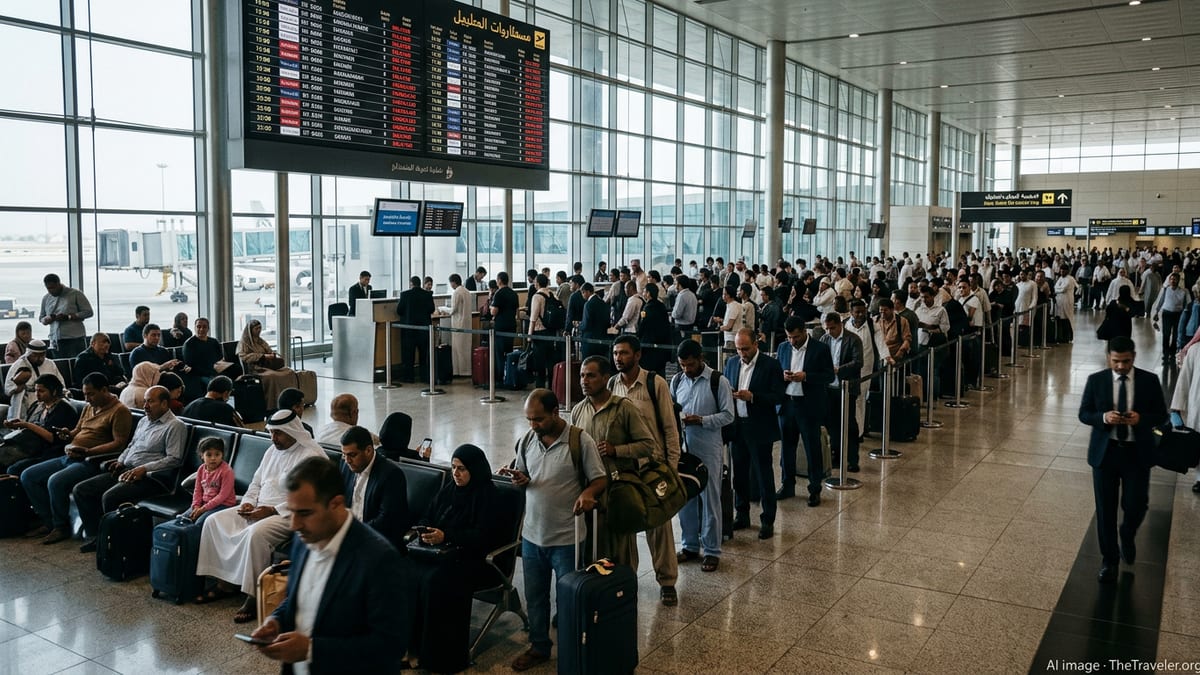
Hundreds of passengers were left stranded across Saudi Arabia on March 10 as airports in Jeddah, Riyadh, Medina and Dammam scrapped 128 flights and delayed a further 422 services, compounding days of turmoil in Gulf aviation triggered by the regional conflict.
Major Saudi Hubs Grapple With Rolling Disruptions
Operational data from Saudi Arabia’s four key international gateways show a system under sustained strain, with King Abdulaziz International in Jeddah, King Khalid in Riyadh, Prince Mohammed bin Abdulaziz in Medina and King Fahd in Dammam all reporting elevated cancellation and delay levels on Monday and into Tuesday. While exact tallies fluctuate through the day as airlines retime or reinstate operations, airport dashboards reviewed on March 10 indicated 128 outright cancellations and 422 delayed departures and arrivals across the four hubs.
Jeddah, Saudi Arabia’s busiest international gateway, again shouldered the heaviest burden, with dozens of services cut and well over a hundred pushed back by several hours. Riyadh’s King Khalid International also reported a high concentration of late-running flights, particularly on regional and South Asian routes. Smaller but still significant disruption was evident at Medina and Dammam, where both domestic connections and international feeders into major Gulf hubs were affected.
The wave of operational upheaval follows more than a week of turbulence for Middle East aviation as airlines adjust routings and schedules around conflict-affected airspace. Although Saudi airspace remains officially open, carriers have been forced to replan flight paths, build in additional block time and, in many cases, consolidate frequencies, leading to knock-on congestion at already busy terminals.
Airport authorities in Jeddah and Riyadh have reiterated that safety remains the overriding priority and have urged travellers not to proceed to the airport without checking their flight status with airlines. Long queues at rebooking desks and customer service counters have become a familiar sight, with many passengers attempting to salvage complex multi-leg itineraries at short notice.
Saudia, Qatar Airways, Flynas And Others Cut And Retime Services
Flag carrier Saudia has been at the centre of the disruption, with its extensive domestic and international network bearing the brunt of schedule adjustments. The airline has extended a series of rolling cancellations through March 10, trimming frequencies on routes to and from key regional markets while maintaining limited services on strategic corridors where operationally feasible.
Low-cost operators flynas and flyadeal have also implemented targeted cancellations and temporary suspensions, particularly on routes into neighbouring Gulf states where airspace restrictions and congestion are most acute. Both carriers have issued repeated advisories urging passengers to use digital channels to rebook or request refunds rather than crowding airport counters, in an effort to reduce terminal pressure.
Among foreign airlines, Qatar Airways has seen multiple Saudi-bound and Saudi-originating sectors disrupted as it reconfigures its broader Gulf network. Indian low-cost giant IndiGo, which has built a significant presence in Saudi Arabia serving labour and visiting-friends-and-relatives traffic, continues to warn that schedules may change at short notice, even where flights remain on sale.
EgyptAir and several other regional and European carriers have likewise trimmed their Saudi operations for the day, cancelling selected rotations and consolidating passenger loads onto fewer flights. In some cases, airlines are deploying larger-gauge aircraft on remaining services in an attempt to clear backlogs, yet seat demand continues to outstrip supply out of the kingdom’s main hubs.
Passengers Face Long Waits, Missed Connections And Uncertain Plans
The human impact of the latest cancellations and delays was on clear display across Saudi terminals on Tuesday. Travellers described hours-long queues for rebooking, scarce information on revised departure times and limited hotel availability near airports as thousands sought overnight accommodation following late-night cancellations.
At Jeddah’s King Abdulaziz International, families returning from Umrah reported being split across multiple replacement flights days apart, disrupting work and school schedules back home. Labourers transiting through Saudi Arabia en route to South and Southeast Asia have also been heavily affected, with many forced to sleep on terminal floors as they wait for open seats on repatriation flights.
In Riyadh and Dammam, business travellers complained of missed meetings and conferences as regional links to Doha, Dubai, Bahrain and Kuwait remained patchy or heavily delayed. Some passengers turned to alternative routings via secondary hubs where limited capacity remained available, although these options were often costly and involved complex overnight stops.
Medina, a key gateway for religious travellers, saw tour operators scrambling to rearrange itineraries as group bookings were disrupted. Pilgrims whose visas and hotel stays were nearing expiry expressed concern about overstays, prompting some consular missions to coordinate directly with Saudi authorities and airlines to prioritise vulnerable travellers on the next available flights.
Authorities And Airlines Roll Out Mitigation Measures
Saudi aviation authorities and airline operations control centres have activated emergency coordination mechanisms designed for periods of severe disruption. Additional staff were deployed across affected airports on March 10 to manage crowds, support rebooking and provide basic amenities such as water and snacks in congested departure halls.
Several foreign governments, notably from South Asia, reported reinforcing consular teams at Saudi airports to assist stranded nationals with documentation issues and onward travel arrangements. Dedicated helplines and online forms have been set up by embassies to log cases of vulnerable passengers, including the elderly, families with young children and those with medical needs.
Airlines have adopted a range of customer-care measures, from fee-free rebooking windows to partial refunds and travel vouchers, depending on fare rules and the extent of disruption. However, the sheer volume of affected passengers has led to delays in processing claims, with some carriers urging travellers to use self-service portals rather than call centres, which remain heavily overloaded.
Ground handling providers and airport retailers are also adjusting operations, extending opening hours to cope with the influx of passengers spending unplanned extra time airside. Hoteliers near major hubs report near-full occupancy, particularly in Jeddah and Riyadh, as airlines issue hotel vouchers or passengers independently secure rooms while they wait for new departure dates.
What Travellers Need To Know Before Flying Through Saudi Arabia
For travellers planning to transit or depart from Saudi airports in the coming days, industry experts stress the importance of proactive preparation. Passengers are advised to monitor flight status closely through airline apps and airport information channels, and to expect last-minute gate changes, retimings or aircraft swaps even where services are still operating.
Those holding separate tickets for connecting flights are particularly vulnerable to missed connections, as most airlines are prioritising protection for passengers on single, through-ticket itineraries. Travel agents recommend allowing significantly longer minimum connection times than usual, or where possible, consolidating bookings onto one carrier to benefit from built-in protection.
Travellers are also being urged to review their travel insurance policies for coverage related to conflict-linked delays and cancellations, as standard policies vary widely in their treatment of such events. Where coverage is unclear, passengers may need to rely on airline goodwill measures, which can differ by carrier and route.
With no immediate end in sight to the regional turbulence affecting airspace and schedules, aviation analysts expect Saudi hubs to remain under pressure in the short term. While Tuesday’s tally of 128 cancellations and 422 delays offers a snapshot of the disruption, the true impact for passengers is likely to play out over days, as backlogs are gradually cleared and airlines work to restore more stable operations.